Distinguishing between tire noise and wheel bearing noise is essential for ensuring vehicle safety and effective maintenance. A failing wheel bearing produces a unique, often load-dependent sound, markedly different from the consistent hum or roar associated with tire wear.
What are the Distinctive Acoustic Signatures of a Failing Wheel Bearing?
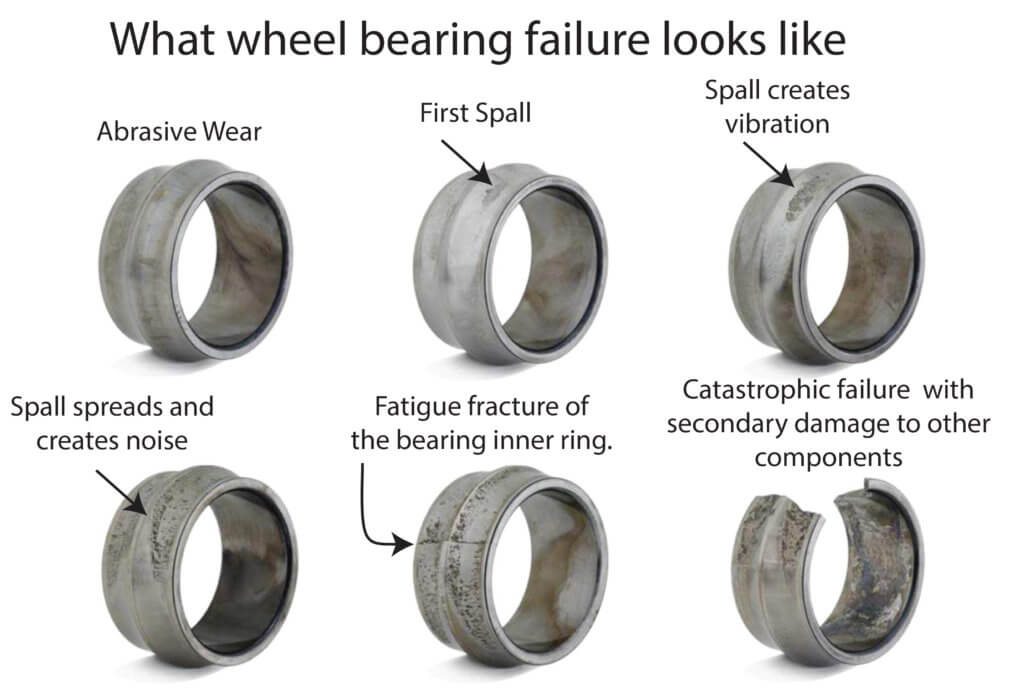
When a wheel bearing starts to fail, it typically emits a low-pitched grinding, humming, or growling noise that worsens with an increase in vehicle speed. This sound generally becomes perceptible when traveling over 40 mph (64 km/h). The underlying cause of this mechanical noise is the uneven wear of the bearing’s rolling elements and races, which leads to heightened friction and vibration within the hub assembly. As the degradation progresses, the humming can develop into a pronounced grinding or growling clamor.
A vital diagnostic feature of wheel bearing noise is the variation in pitch or volume when the vehicle turns. For example, if the sound amplifies during a left turn, the right-side wheel bearing is often suspect due to the vehicle’s weight shifting and loading that specific bearing. Conversely, turning towards the suspected defective bearing may cause the noise to diminish. During the early stages of failure, the sound might present as a subtle hum, which can easily be mistaken for tire noise. However, its persistence across different road surfaces is a clear indication of a bearing issue.
How Does Wheel Bearing Noise Differ from Tire Noise?
While both failing wheel bearings and worn tires can produce similar humming or roaring sounds, their behavioral characteristics are notably different. Tire noise is largely influenced by road surface texture, tire tread pattern, and inflation pressure. For instance, rough asphalt can amplify tire sounds, whereas smooth surfaces may lessen them. Additionally, uneven tire wear patterns, such as cupping or feathering, can generate a rhythmic roar or hum that typically increases with speed, yet this noise remains relatively consistent regardless of steering input or changes in vehicle load during turns.
A practical diagnostic method includes assessing how the noise reacts to steering input. If a gentle turn to the left or right at constant speed results in a discernible change in volume or pitch, it strongly points to a wheel bearing issue. On the other hand, if the noise stays consistent despite steering adjustments, tire-related problems are more likely. Further, tire noise generally varies more with pavement type than with light steering movements. Rotating the tires can also help in identification; if the noise shifts to a different axle post-rotation, the tires are likely the source.
What are the Common Diagnostic Procedures for Pinpointing Wheel Bearing Failure?
Accurate diagnosis of a failing wheel bearing requires both auditory assessment and tactile inspection. One primary diagnostic technique is the “lift test,” where a vehicle is raised securely with a jack, allowing the suspected wheel to be grasped at the 12 and 6 o’clock positions. Attempting to rock the wheel back and forth can reveal excess play, indicating a compromised bearing. Technicians may also conduct this test at the 3 and 9 o’clock positions. Additionally, spinning the wheel manually while lifted may help identify grinding or roughness indicative of internal bearing damage.
Professional diagnostics usually involve the use of a chassis ear or mechanic’s stethoscope to localize the noise to a specific wheel hub as the vehicle is driven at low speeds (10-20 mph or 16-32 km/h). Measuring wheel bearing end play with a dial indicator is another precise method. For conventional tapered roller bearings, a verified end play of 0.001 to 0.005 inches (0.025 to 0.127 mm) is typically mandated. If measurements exceed this standard, it necessitates replacing the wheel bearing or the entire hub bearing unit. A visual inspection for grease leakage around the wheel hub can also serve as an indicator, as compromised seals may lead to contamination and premature bearing wear.
What are the Potential Systemic Risks Associated with a Compromised Wheel Bearing?
Driving with a compromised wheel bearing can pose significant safety hazards and lead to extensive damage to crucial vehicle components. A defective wheel bearing can cause erratic handling, particularly when turning or braking, resulting in a potential loss of vehicle control. In severe instances, the bearing could fail entirely, leading to the wheel locking up or detaching from the vehicle, a catastrophic event at any speed, especially on highways.
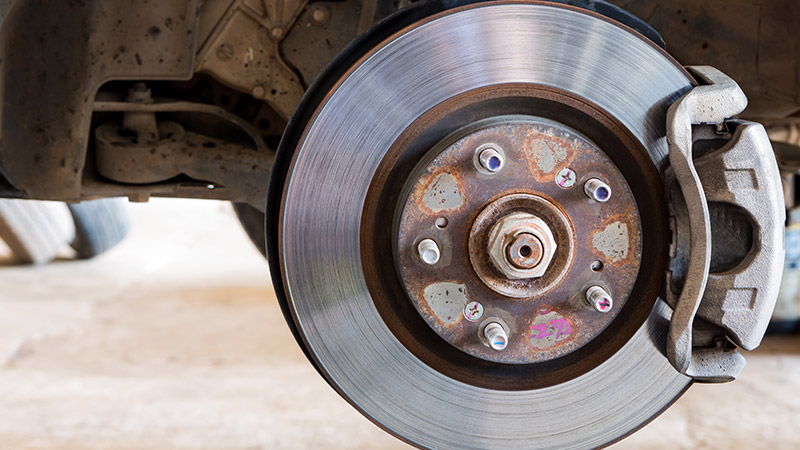
Beyond immediate risks to safety, a failing bearing can set off a domino effect of wear and damage to other associated systems. The erratic movement or “wobble” caused by a worn bearing can lead to uneven tire wear, necessitating premature tire replacements. This can also impair braking performance, causing the brake rotor to wobble, which pushes the caliper piston back into its bore. This results in unexpected brake pedal travel and diminished brake efficiency, complicating stopping and potentially causing the vehicle to pull to one side. This situation underscores the critical need for regular brake checks and maintenance, as emphasized in articles about how to know if my car brakes need to be replaced.
Moreover, a failing wheel bearing places undue stress on other suspension components, such as shock absorbers and CV joints. This increased load can accelerate wear similarly to how worn shock absorbers impair handling. The heat and friction generated by a deteriorating bearing can warp or crack the hub assembly, damage the axle shaft, and pollute nearby parts with metal debris. Such systemic failures highlight the importance of addressing bearing issues promptly, akin to the urgency required when dealing with water pump failure symptoms that can lead to severe engine damage.
| Characteristic | Failing Wheel Bearing | Uneven Tire Wear (Cupping/Feathering) | CV Joint Failure | Brake Component Wear |
|---|---|---|---|---|
| Primary Sound Type | Humming, Growling, Grinding | Roaring, Humming, Thumping (Rhythmic) | Clicking, Popping (Especially When Turning) | Squealing, Grinding (When Braking) |
| Conditions Affecting Noise | Increases with speed; Changes pitch/volume significantly with steering input (Load Shifts) | Varies with road surface (Louder on rough pavement); Less affected by steering input | Most noticeable during turns, acceleration, or deceleration | Exclusively occurs during brake application |
| Associated Symptoms | Vibrations in steering wheel/floorboard, uneven tire wear, loose steering, ABS warning light | Visible uneven tread patterns, mild vibrations at speed | Grease leaks around boot, clunking during gear shifts | Brake pedal pulsation, vehicle pulling to one side, extended braking distances, metallic dust on wheels |
| Typical Onset Mileage | 85,000-100,000 miles (136,000-160,000 km), dependent on quality/conditions | Variable, often 30,000-60,000 miles (48,000-96,000 km) for aggressive wear or alignment issues | Typically 70,000-150,000 miles (112,000-240,000 km), depending on boot integrity | Brake pads: 25,000-70,000 miles (40,000-112,000 km); Rotors: 50,000-70,000 miles (80,000-112,000 km) |
Frequently Asked Questions (FAQ)
How long can I drive with a bad wheel bearing?
Driving on a confirmed bad wheel bearing should be limited to just a few miles, and never at highway speeds. Doing so may cause the bearing to seize or the wheel to detach unexpectedly, even if noise has been present for weeks.
Does a bad wheel bearing affect fuel economy?
Yes, a bad wheel bearing can lead to increased rolling resistance due to a wobbling or misaligned wheel, which causes the vehicle to consume more fuel to maintain its speed.
Can a bad wheel bearing cause ABS warning lights to illuminate?
Certainly. A deteriorated wheel bearing can result in erratic data read by the wheel speed sensor, often integrated with the bearing assembly, triggering the ABS and traction control warning lights.
What is the typical lifespan of a wheel bearing?
Wheel bearings generally last about 85,000 to 100,000 miles (approximately 136,000 to 160,000 km), though this lifespan can vary based on factors including bearing quality, driving conditions (like potholes and exposure to water), and vehicle modifications.