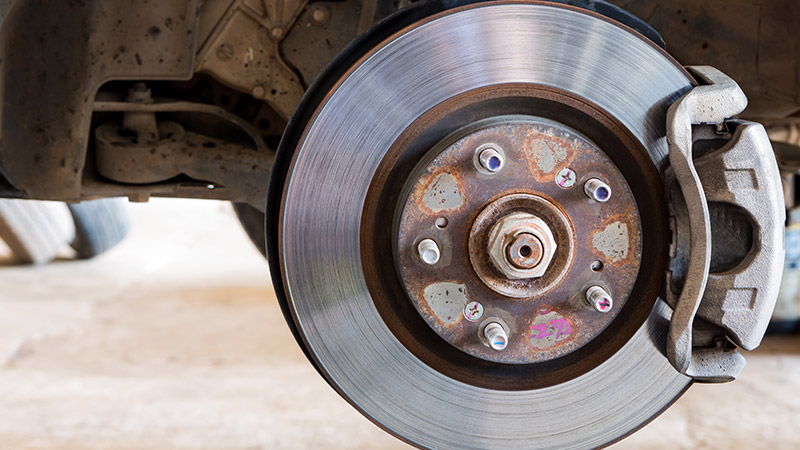
Directional brake rotors are cutting-edge components designed to elevate your vehicle’s braking performance. Engineered with advanced internal vanes, these rotors optimize airflow, significantly enhancing cooling efficiency during operation. By efficiently dissipating heat, they not only improve braking performance but also extend the lifespan of the braking system. This innovative design is essential for managing the thermal energy produced during braking, especially in high-performance or heavy-duty scenarios.
What Defines Directional Brake Rotor Vane Design?
The unique feature of directional brake rotors lies in their specific internal vane configurations, which are angled or curved to function as centrifugal pumps. Unlike traditional rotors with straight vanes, the design of these vanes is key to controlling airflow across the rotor’s friction surfaces. This specialized structure enables the rotor to expel hot air from its core while drawing in cooler ambient air, thereby optimizing its heat management capabilities.
How Do Curved Vanes Optimize Airflow for Cooling?
Curved vanes in directional brake rotors create a distinct airflow pattern, effectively acting as an internal centrifugal fan. As the rotor spins, these vanes scoop air from the hub’s center and propel it outward through the rotor’s circumference. This dynamic increases the volumetric airflow rate, enhancing the convection of heat away from the friction surfaces. Consequently, the improved airflow helps maintain lower operating temperatures, directly reducing the risks of brake fade, especially during prolonged or aggressive braking situations.
What Performance Benefits Do Directional Rotors Provide?
Directional brake rotors confer numerous advantages over non-directional models, primarily due to their superior thermal management. Key benefits include enhanced resistance to brake fade, consistent braking performance, and extended longevity of both the rotor and associated components. By effectively managing and dissipating heat, these rotors ensure reliable stopping power under demanding conditions, making them ideal for high-performance vehicles, track driving, and heavy-duty towing applications.
How Do Directional Vanes Impact Thermal Management and Longevity?
The influence of directional vanes on thermal management is significant, directly affecting the longevity and overall integrity of the braking system. By promoting the circulation of cooler air and expelling hot air, these vanes help keep the rotor temperature within optimal operating ranges. This proactive thermal control minimizes the risk of thermal stress cracking, warping, and premature wear associated with excessive heat. Maintaining stable temperatures ensures the consistent performance of brake pads and fluid, safeguarding their material properties. To maintain optimal brake performance, it’s equally vital to select the correct performance brake fluid capable of withstanding high temperatures.
Identifying and Installing Directional Brake Rotors
Identifying directional brake rotors is straightforward, requiring careful examination of their internal vane structure or discernible markings. Manufacturers usually indicate directionality with “L” for left and “R” for right, or incorporate an arrow pointing towards the front of the vehicle. Correct installation of directional rotors is crucial; misplacing a rotor can hinder its cooling benefits and lead to accelerated wear, increased heat buildup, and a higher chance of brake fade. It’s vital that the vanes rotate in the correct direction to effectively pump air inward and outward.
The following table outlines key attributes of various brake rotor vane designs:
| Vane Design Type | Vane Orientation | Cooling Mechanism | Installation Specificity | Typical Application |
|---|---|---|---|---|
| Straight Vane | Perpendicular to friction surface | Passive convection; limited airflow | Non-directional (can be installed on either side) | Standard passenger vehicles |
| Pillar Vane | Pillars between friction surfaces | Increased surface area for heat radiation | Non-directional (can be installed on either side) | Some OEM and aftermarket applications |
| Directional (Curved) Vane | Angled/curved to specific rotation | Active centrifugal fan effect; optimized airflow | Directional (Left and Right specific) | High-performance, racing, heavy-duty vehicles |
What is the primary benefit of brake rotor directional vanes?
The primary benefit of brake rotor directional vanes is their enhanced ability to dissipate heat, resulting in improved resistance to brake fade and more consistent braking performance, especially under demanding conditions.
Can directional brake rotors be installed incorrectly?
Yes, directional brake rotors can indeed be installed incorrectly if the left rotor is placed on the right side or vice versa, or if the rotational arrow is disregarded. Incorrect installation negates the cooling advantages of the design and can lead to excessive heat buildup.
Are directional brake rotors necessary for all vehicles?
Not all vehicles require directional brake rotors; however, they offer substantial benefits for high-performance cars, track racing vehicles, and those engaged in heavy towing, where the braking system encounters significant thermal loads and demands superior heat management capabilities.