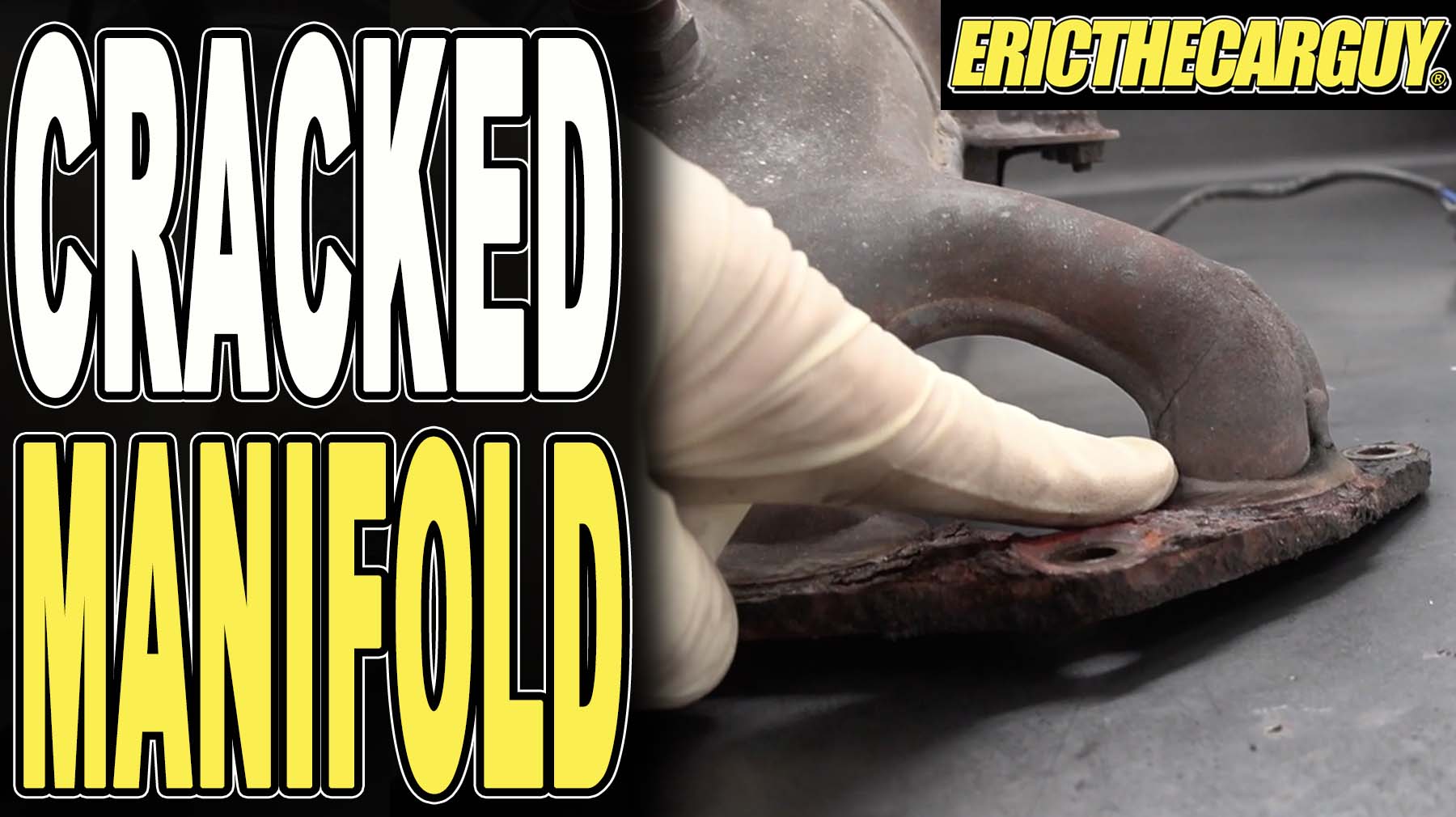
Repairing an exhaust manifold crack is not just a routine maintenance task; it’s a critical procedure that can significantly enhance engine performance and safeguard vehicle safety. When these cracks occur, often due to extreme thermal cycling and metal fatigue, they can compromise fuel efficiency and damage other engine components if not addressed promptly.
What Are the Specific Symptoms of an Exhaust Manifold Crack?
Spotting the symptoms of an exhaust manifold crack early can prevent further damage. One of the most prominent indicators is a distinct ticking or tapping noise from the engine bay, particularly noticeable during cold starts. As the engine warms up, metal expansion may temporarily reduce this sound, but it’s essential not to ignore it. Additionally, having exhaust fumes enter the vehicle’s cabin signifies a serious issue. This odor indicates the presence of toxic gases such as carbon monoxide leaking through the exhaust system, posing significant health risks and requiring immediate attention—similar to the urgent concerns surrounding brake fluid leaks.
Other alarming signs include a noticeable drop in engine performance, such as sluggish acceleration, revealing that escaping exhaust gases disrupt airflow and backpressure essential for combustion. Fuel economy may also decline, as the engine works harder to compensate for these inefficiencies. Drivers should be wary of an illuminated Check Engine Light (CEL), often triggered by oxygen sensors detecting imbalances in exhaust gas due to air entering the system through the crack. This discrepancy may lead to diagnostic trouble codes (DTCs) like P0420 or P0430, indicating catalytic converter inefficiency—a potential secondary effect of the exhaust leak.
During a visual inspection, look for black soot marks or discoloration around the manifold, especially near flange connections or welds. These visual cues are direct evidence of escaping gases. In more severe cases, significant cracks may lead to a rough idle, particularly during cold starts, as shifts in air-fuel ratios disrupt combustion stability.
How Can Exhaust Manifold Cracks Be Technically Diagnosed?
Diagnosing an exhaust manifold crack requires a systematic approach and technical expertise to find the issue’s exact location and severity. A thorough visual inspection of the manifold is a great starting point, focusing on cylinder ports, welds, and mounting flanges. Technicians should look for cracks, soot trails, or discoloration. For cracks that are less apparent, performing a cold engine start can be invaluable. This method allows for the identification of the characteristic ticking or hissing sounds that usually indicate a leak, which might seal momentarily as the engine heats up.
Advanced methods for diagnosis include the use of a smoke test. By sealing the tailpipe and introducing smoke into the exhaust system, any cracks—even minute ones—will reveal themselves through visible smoke escaping. Moreover, for removed manifolds, a pressure test can be conducted: sealing off manifold openings and applying low-pressure air while observing any bubbling with soapy water indicates a leak. Professional facilities may also employ magnetic particle testing (MT) or magnaflux methods for cast iron manifolds, which can uncover even microscopic cracks. Such methods yield a more accurate diagnosis, preventing misinterpretation of other engine noises.
What Causes Exhaust Manifolds to Crack?
Exhaust manifolds are notably vulnerable to cracking due to the significant thermal stress they endure. Operating temperatures can range from 400°C to beyond 900°C, especially in turbocharged or high-performance vehicles. This relentless heating and cooling—transitioning from ambient temperatures during starts to peak operational heat—causes the metal to continuously expand and contract. Over time, this cyclical stress results in material fatigue and cracking.
Additional factors contributing to these cracks include material quality; impurities in cast iron can create weak points prone to failure. Engine vibrations or improper installation—like overtightening bolts—can also introduce stresses that accelerate crack formation. Corrosion, such as that from road salt or moisture, further weakens the manifold, making it more susceptible to failing. Moreover, excessive back pressure due to issues such as a clogged catalytic converter compounds the risk, underscoring the necessity of a well-functioning exhaust system, akin to how failures in the ABS brake system can escalate safety hazards.
What Are the Effective DIY Repair Methods for a Cracked Exhaust Manifold?
If you’re considering tackling a cracked exhaust manifold yourself, two primary approaches are commonly used: high-temperature sealants or welding. The method you choose will depend largely on the crack’s nature, size, and location. While these approaches can provide effective temporary or semi-permanent solutions, it’s essential to understand that total replacement is usually the most reliable long-term fix, especially in cases of severe damage.
Can High-Temperature Sealants and Epoxies Effectively Seal Cracks?
High-temperature sealants and epoxies serve as practical solutions for smaller, non-structural cracks up to about 1/8 inch wide. These products, such as Permatex Ultra Copper RTV Silicone Gasket Maker (Part No. 81878), can withstand continuous temperatures of up to 600°F (316°C) and even higher intermittent heat. They cure tack-free in about an hour and fully within 24 hours in ideal conditions. Another excellent choice is J-B Weld ExtremeHeat Metallic Paste (Part No. 37901), designed for high-temp environments and capable of enduring temperatures up to 1000°F (538°C) continuously or even 2400°F (1315°C) intermittently. This paste cures within 2-4 hours but requires a full day to cure completely.
Before applying sealants, ensure that the manifold surface is thoroughly cleaned and dried with a residue-free solvent for optimal adhesion. For deeper cracks, enhancing contact between the surfaces—by roughening or slightly widening them—can improve bond strength. These sealants typically are water-based and non-flammable but should not be used on parts that come into contact with gasoline.
Is Welding a Practical Solution for Exhaust Manifold Cracks?
Welding can often provide a robust and more permanent fix for larger cracks in exhaust manifolds, especially those made from cast iron or stainless steel. However, welding cast iron presents challenges due to its brittleness and high carbon content, which can lead to further cracking. Often, nickel alloy electrodes are employed for this task. For instance, pure nickel (ENi-CI) or nickel-iron (ENiFe-CI, frequently with 55% nickel) electrodes are preferred for their ability to absorb thermal stresses and reduce cracking, offering a good fusion with cast iron. When welding gray cast iron, preheat cycles should remain between 500-1200°F (260-650°C) to prevent cracking. Additionally, using a “stitch welding” technique—employing short, intermittent welds—can mitigate heat concentration, followed by a gradual cooling process. For stainless steel manifolds, either TIG or MIG welding is common, utilizing appropriate filler rods such as 308L or 309L for better results.
Comparative Analysis of Exhaust Manifold Crack Repair Methods
When selecting the best repair method, consider several crucial factors: the crack’s nature, the desired durability, and the resources at your disposal.
| Repair Method | Typical Crack Size | Temperature Resistance | Durability/Lifespan | Required Skill Level | Average Material Cost (USD) |
|---|---|---|---|---|---|
| High-Temperature Sealant (e.g., Permatex Ultra Copper 81878) | Hairline up to 1/8″ (3mm) | Up to 700°F (371°C) intermittent | Temporary to Semi-permanent (6 months – 2 years) | Low (DIY-friendly) | $10 – $25 |
| High-Temperature Metallic Paste (e.g., J-B Weld ExtremeHeat 37901) | Hairline up to 1/4″ (6mm) | Up to 1000°F (538°C) continuous, 2400°F (1315°C) intermittent | Semi-permanent (1-3 years) | Low (DIY-friendly) | $15 – $30 |
| Welding (Nickel Alloy for Cast Iron) | Small to large, structural (over 1/4″ / 6mm) | Over 1650°F (900°C) | Permanent (often matches manifold lifespan) | High (Professional welder recommended) | $80 – $775 (rods, plus equipment) |
| Repair Sleeve/Clamp | Small to medium cracks, holes in pipes (not strictly manifold body) | Dependent on material/gasket, typically up to 1200°F (650°C) | Temporary to Semi-permanent (6 months – 2 years) | Medium (Basic tools) | $20 – $70 |
Regardless of the chosen repair method, proper surface preparation is key. This includes meticulous cleaning, degreasing, and possibly grinding or wire-brushing the area around the crack to ensure maximum adhesion for sealants or optimal penetration for welds. For any DIY venture, personal protective equipment (PPE)—including gloves, eye protection, and respiratory protection when working with exhaust fumes—is non-negotiable.
Frequently Asked Questions About Exhaust Manifold Cracks
Can a small exhaust manifold crack affect engine performance?
Absolutely. Even small cracks can disrupt the meticulously balanced backpressure and air-fuel ratio, causing noticeable reductions in horsepower and fuel efficiency. In fact, you might experience a 5-10% decrease in MPG.
Is it safe to drive with a cracked exhaust manifold?
No, it’s unsafe to drive with a cracked exhaust manifold due to the risk of toxic exhaust gases, including carbon monoxide, entering the vehicle’s cabin, which can cause severe health issues or even be fatal.
How long does an exhaust manifold crack repair typically last?
Repairs using high-temperature sealants can last anywhere from 6 months to 3 years, while professional welding, if executed properly on suitable material, can provide a permanent repair that lasts as long as the manifold itself.
What specific materials are most exhaust manifolds made from?
Most exhaust manifolds are constructed from cast iron, often utilizing ductile cast iron with silicon molybdenum (SiMo) for enhanced high-temperature strength and resistance to cracking. Some are made from stainless steel (e.g., 304, 321, 347 ferritic or austenitic grades), focusing on weight reduction and corrosion resistance.
Can a cracked exhaust manifold trigger a Check Engine Light (CEL)?
Yes, a cracked exhaust manifold can indeed trigger a CEL. If oxygen sensors detect fresh air entering the exhaust stream, leading to incorrect readings, this can result in diagnostic trouble codes (DTCs) associated with exhaust system inefficiencies.