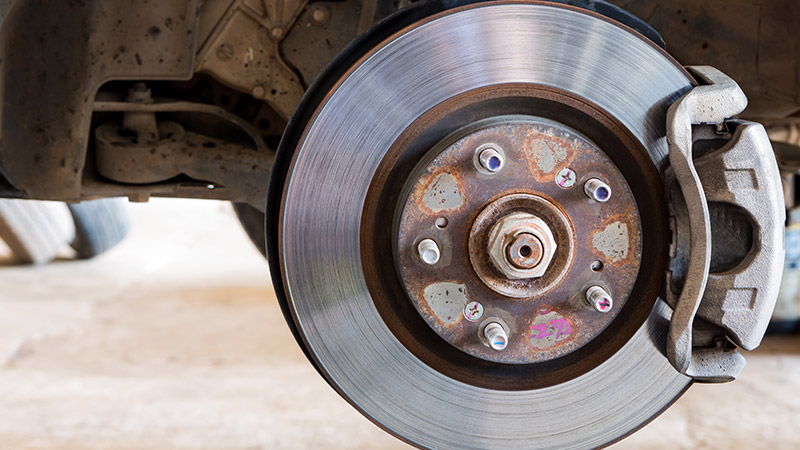
Brake rotor warping is an all-too-common issue that surfaces unexpectedly, presenting itself as unsettling vibrations during your vehicle’s braking process. This phenomenon isn’t merely a result of excessive heat; it is often more accurately described through disc thickness variation (DTV) or excessive lateral runout. These conditions signify that the rotor’s surface has lost its uniform flatness, significantly impairing the brake pads’ ability to grip effectively. The result? A noticeable decrease in braking efficiency, accompanied by a characteristic pulsating sensation felt through the brake pedal or steering wheel.
What is Brake Rotor Warping and Why Does it Occur?
At its core, brake rotor warping manifests as surface deformities on the brake rotor, rather than a physical bending of the rotor itself. This unevenness, known as disc thickness variation (DTV), disrupts the consistent friction surface necessary for effective braking. When you apply the brakes, the pads may only intermittently make contact, leading to vibrations felt in the steering wheel or brake pedal. While high temperatures are significant contributors, the primary culprit is often localized thermal shocking, where specific areas of the rotor overreact to heat, rather than a uniform bending under stress.
Hidden Mechanical Causes of Brake Rotor Deformation
How Does Excessive Lateral Runout Contribute to Brake Rotor Warping?
Excessive lateral runout characterizes the side-to-side wobbles of the brake rotor as it spins. This wobbling leads to inconsistent contact between the brake pads and the rotor’s surface, causing localized heating and uneven material transfer between the pads and rotor. Even a minuscule runout of 2/1000ths of an inch can spark symptoms of warped rotors. Typically, this condition originates from rust formation between the hub and rotor surface or inconsistencies during installation, which go unnoticed until significant issues arise.
What Role Does Improper Wheel Torque Play in Rotor Distortion?
Improperly or unevenly tightened lug nuts can distort the brake rotor by clamping it off-center against the hub. Such uneven clamping creates unnecessary stress points that induce lateral runout, leading to uneven brake pad contact and resulting localized heating and wear. It’s critical to follow correct torque specifications in a star pattern during wheel installation. This ensures the rotor is mounted evenly against the hub, thus preventing stress concentrations that lead to warping.
Can Caliper Issues Lead to Uneven Rotor Wear and Warping?
Yes, sticking or seized brake calipers can prevent brake pads from retracting fully after the brake pedal is released. This results in continuous, irregular friction against the rotor, which generates excessive localized heat, facilitates disc thickness variation, and ultimately leads to the sensation of warped rotors. To avoid this, regular maintenance and lubrication of caliper slide pins are essential. It’s also beneficial to understand brake caliper piston types for comprehensive brake system upkeep.
Material and Environmental Factors Affecting Rotor Integrity
How Do Material Inconsistencies Influence Brake Rotor Warping?
Typically manufactured from cast iron, brake rotors can suffer from inconsistencies in the metallurgy or casting process. Such flaws result in uneven density and structural weaknesses, leading to abnormal swelling or wear under thermal and mechanical stress during braking. High-quality rotors, especially those with a higher carbon content, are engineered to withstand and dissipate heat more effectively, reducing the risk of warping. High-performance vehicles often take it a step further by using materials like carbon-ceramic, enhancing heat resistance and minimizing warping risk.
Is Galvanic Corrosion a Factor in Brake Rotor Distortion?
Often overlooked, galvanic corrosion can indeed contribute to brake rotor issues. This occurs when dissimilar metal components, such as a cast iron rotor and certain hub metals, have electrical contact within an electrolyte—like road salt or moisture. Corrosion on the mating surfaces between the rotor and hub can lead to uneven mounting, introducing lateral runout and causing uneven wear that resembles warping. Cleaning mating surfaces and applying anti-seize compounds can significantly mitigate these risks.
Comprehensive Strategies for Preventing Brake Rotor Warping
To prevent brake rotor warping, adopt a multi-faceted approach that emphasizes proper installation, regular maintenance, and cautious driving habits. Properly bedding in new brake pads and rotors establishes an even friction layer, crucial for avoiding uneven wear. Additionally, minimizing aggressive or prolonged braking, particularly immediately after new component installation, helps reduce thermal shock and heat buildup. Utilizing DIY brake ducting can further enhance cooling for performance applications.
Moreover, selecting top-tier brake components—specifically rotors designed for optimal heat dissipation—is vital. Features such as ventilation vanes found in directional brake rotors significantly enhance cooling, thereby bolstering resistance to thermal stress.
| Cause of Rotor Distortion | Description | Prevention Method |
|---|---|---|
| Excessive Lateral Runout | Side-to-side wobble of the rotor during rotation, causing uneven pad contact. | Thoroughly clean hub mating surfaces, ensure proper rotor installation, measure runout with a dial indicator. |
| Improper Wheel Torque | Uneven tightening of lug nuts, distorting the rotor’s mounting to the hub. | Use a torque wrench to apply manufacturer-specified torque in a star pattern. |
| Sticking Calipers | Brake calipers failing to fully retract, leading to continuous, uneven friction. | Regularly inspect and lubricate caliper slide pins, maintain brake fluid. |
| Material Inconsistencies | Flaws in rotor metallurgy or manufacturing leading to uneven thermal expansion/wear. | Invest in high-quality brake rotors from reputable manufacturers. |
| Galvanic Corrosion | Corrosion on hub-to-rotor mating surfaces causing uneven seating and runout. | Clean hub surfaces thoroughly, apply anti-seize compound before rotor installation. |
Frequently Asked Questions About Brake Rotor Warping
What are the immediate signs of brake rotor warping?
The immediate signs of brake rotor warping manifest as a pulsating sensation felt through the brake pedal and/or vibrations in the steering wheel, especially during braking. If the warped rotor is located on a rear wheel, you may experience vibrations felt beneath your seat. These symptoms indicate inconsistency in contact between the brake pads and the rotor surface.
How often should brake rotors be inspected to prevent warping?
To prevent warping, it is advisable to inspect brake rotors regularly as part of routine vehicle maintenance. Ideally, inspections should coincide with every brake pad inspection or replacement. A professional mechanic can evaluate rotor thickness, assess disc thickness variation, and measure lateral runout to ensure all components remain within manufacturer specifications. This proactive approach helps identify potential issues before they escalate into serious warping problems.
Can warped brake rotors be resurfaced, or should they always be replaced?
Warped brake rotors have the potential to be resurfaced, restoring a flat, even surface, as long as they stay above the manufacturer’s minimum thickness after machining. However, should the rotor be deemed too thin, show deep grooves, cracks, or significant pitting, replacement is essential for safe and effective braking. Resurfacing may only serve as a temporary fix if the underlying cause of the warping has not been addressed.