Single, Dual, or Multi-Piston? Understanding Brake Caliper Piston Types and Their Impact
Brake calipers serve as the essential components of a vehicle’s braking system, converting hydraulic pressure into mechanical force to stop the vehicle. The number of pistons, their diameter, material composition, and design have a significant impact on braking power, modulation, and heat resistance of the system. Understanding these technical details is crucial for optimizing performance and distinguishing between the economical solutions of single-piston systems and the superior capabilities of multi-piston configurations.
The choice among single, dual, or multi-piston calipers directly affects clamping force and pressure uniformity during braking. While single-piston calipers prioritize cost-effectiveness for daily drivers, multi-piston fixed calipers deliver increased power and better control ideal for high-performance settings. This analysis will delve into each type’s technical aspects, materials used, market significance, and provide a comprehensive guide for selection.
What is the Fundamental Function of Pistons in Brake Calipers?
The pistons in brake calipers translate hydraulic pressure into linear motion, forcing the brake pads against the rotating brake rotors. When the driver presses the brake pedal, brake fluid is pressurized and acts against the rear surface of the pistons, extending them. This hydraulic force pushes the pads against the disc, generating friction and dissipating kinetic energy as heat to decelerate the vehicle, which is vital for automotive safety and control.
The clamping force (F) is governed by the equation: Clamping Force (F) = Hydraulic Pressure (P) × Total Piston Area (A). Any increase in piston diameter results in a squared increase in area and therefore clamping force. The combined area of all pistons within a caliper determines the total clamping force applied.
What Are the Main Types of Brake Calipers: Fixed vs. Floating?
Before analyzing piston configurations, it is crucial to understand the two primary designs of calipers: floating and fixed. These designs dictate piston placement and force application, significantly impacting efficiency and performance.
Understanding Floating Calipers
Floating (or sliding) calipers are economical and commonly found in daily driver vehicles. They typically feature one or two pistons on one side. Hydraulic pressure pushes these pistons, activating the inside brake pad. The caliper body slides on guide pins, bringing the outer pad closer to the disc. They are usually made from nodular cast iron, providing a robust and cost-effective option.
- Advantages: Compact design, economical, and simpler serviceability. They deliver adequate performance for daily driving needs.
- Disadvantages: Lower rigidity and inferior heat dissipation compared to fixed calipers. This can cause uneven pad wear (conical wear) due to inconsistent pressure application. They also exhibit more flex, leading to a “soft” or prolonged pedal feel.
Understanding Fixed Calipers
Fixed calipers are rigidly mounted, allowing no lateral movement during operation. They feature two or more pistons facing each other on both sides of the disc, applying force simultaneously and evenly. This design is prevalent in high-performance vehicles due to its superior braking power and control, often made from lightweight aluminum alloys to reduce unsprung mass.
- Advantages: Enhanced rigidity, better pedal feel, and more consistent pad wear. They offer stronger and more responsive braking, with improved thermal efficiency in demanding conditions. Fixed calipers significantly minimize flex, resulting in a firmer and more linear pedal feel.
- Disadvantages: Greater complexity and manufacturing costs due to intricate designs and machining processes.
How Do Different Piston Configurations Impact Braking Performance?
The number, diameter, and arrangement of pistons directly determine braking force and uniformity, fundamentally affecting vehicle stopping capability, pedal modulation, and heat management.
Single Piston Calipers: Technical Description
These are always floating calipers with a single piston that pushes against one pad. The caliper body slides to engage the opposite pad. This configuration is common in small, economical vehicles, mid-range cars, and light commercial vehicles (LCVs), especially on rear axles for daily urban use.
- Mechanism: One piston applies hydraulic force; the caliper body slides on guide pins to engage the other pad.
- Applications: Small cars, entry-level and mid-range passenger vehicles, motorcycle lightweights, and some LCVs.
- Advantages: Most affordable to manufacture and maintain. Provides sufficient braking for daily use.
- Disadvantages: Limited braking force and a higher risk of overheating. An uneven pressure distribution may cause irregular pad wear, rendering it more susceptible to flex under heavy loads.
Dual Piston Calipers: Increased Force and Distribution
Dual piston calipers increase clamping force through two pistons. They can be either floating (two pistons on one side of the disc) or fixed (two opposing pistons, one on each side of the disc). The dual opposing piston design evenly distributes the force, enhancing efficiency and reducing hot spots on the pads.
- Mechanism: Two pistons apply force, improving pressure uniformity and total clamping force from both sides of the disc.
- Applications: Mid-range to premium passenger vehicles, some SUVs and light commercial vehicles, typically on front axles.
- Advantages: Increased clamping force and contact area compared to single-piston designs, with enhanced braking power and more consistent pressure distribution. Better heat dissipation.
- Disadvantages: More complex and costly than single-piston units.
Multi-Piston Calipers (3, 4, 6, 8+ Pistons): Maximum Performance
Multi-piston calipers, featuring three to ten pistons, are used in high-performance applications, racing, and heavy-duty uses. They are exclusively fixed calipers with opposing pistons, enhancing hydraulic pressure area for superior clamping force. Some designs use “differentiated pistons” (variable diameters) to optimize pressure distribution, ensuring even pad wear and maximizing longevity. The total piston area is directly proportional to braking force.
- Mechanism: Multiple opposing pistons apply direct, even pressure on the brake pad. Differentiated piston sizes adjust pressure distribution, with smaller pistons at the leading edge and larger at the trailing edge for optimal contact and pad wear.
- Applications: High-performance vehicles, sports cars, racing cars, heavy trucks, high-performance motorcycles, and advanced bicycles.
- Advantages: Superior braking power, significantly improved brake modulation, and excellent heat management. Reduction of brake “fading” and even pad wear. High rigidity, minimizing caliper flex.
- Disadvantages: Higher costs, increased manufacturing complexity, and potentially greater weight, although lessened by lightweight aluminum alloys. May require larger wheels due to caliper size.
What Technical Specifications Define Brake Caliper and Piston Materials?
The materials used in calipers and pistons are crucial for performance, durability, thermal properties, and system integrity, all impacting weight, heat resistance, and corrosion susceptibility.
Materials and Construction of the Caliper Body
- Cast Iron: Commonly used in floating calipers due to its durability and cost-effectiveness. It is heavier than aluminum and susceptible to surface corrosion. Cast iron calipers are resilient and handle stress well. With appropriate coatings, they offer corrosion resistance.
- Aluminum Alloys (Cast, Forged, CNC Machined): Predominantly used in fixed and high-performance calipers due to their lightweight and superior heat dissipation properties. Aluminum calipers can reduce unsprung mass by up to 30%. They are also less prone to corrosion than uncoated cast iron.
- Construction Types:
- Monoblock: Machined from a single block or forged piece, offering maximum rigidity and minimal flex.
- Multi-piece: Assembled with bolts. Can be easier and more cost-effective to manufacture.
Piston Materials and Their Performance Characteristics
The choice of piston material significantly influences heat transfer to the brake fluid, corrosion resistance, and durability.
| Piston Material | Key Advantages | Key Disadvantages | Typical Applications |
|---|---|---|---|
| Steel (often Chrome Plated) | Strong, highly durable, wears well, and corrosion-resistant (with coating). Handles high pressure and heat effectively. Cost-effective. Low thermal expansion compared to aluminum. | Heavier. Conducts heat faster than phenolic or titanium, risking brake fluid boiling under extreme conditions if not managed. Susceptible to corrosion if the coating is compromised. | OEM floating calipers, general passenger vehicles where durability and affordability are key. |
| Aluminum | Lightweight, good thermal conductivity (aids in dissipating heat from the caliper body). Reduces unsprung mass. Good strength-to-weight ratio. | Transfers heat to the fluid more readily than phenolic or ceramic, increasing the risk of “fading.” More expensive than steel or phenolic. Can corrode in hostile environments if untreated. May warp at extreme temps if not alloyed or thermally treated correctly. | High-performance street applications, track use, some OEM multi-piston calipers, where weight reduction is prioritized. |
| Phenolic (Resin Composite) | Excellent thermal insulator, significantly slows heat transfer to the brake fluid, preventing boiling and reducing “fading.” Lightweight and corrosion-resistant. Cost-effective compared to metal options. | Lower mechanical strength and stiffness than metals; may deform or crack under extreme heat or lateral loads. May swell over time due to absorption of brake fluid moisture, leading to sticking issues. Typically not recommended for reuse after removal. | Everyday passenger cars, especially in corrosive climates or where fluid boiling is a concern with minimal cost increases. |
| Titanium | Highest mechanical strength among lightweight options, exceptional durability, and great corrosion resistance. Very low heat transfer to the fluid (similar to ceramics, providing a much higher thermal barrier than stainless steel), virtually eliminates “fading.” High strength-to-weight ratio. Maintains dimensional stability due to low thermal expansion. | Most expensive material for pistons. Complex machining required. Slightly heavier than aluminum but lighter than steel. | Motor sports, ultra-high-performance vehicles, competitive applications where thermal stability and durability are paramount. |
| Ceramic | Superior heat resistance and excellent thermal insulation, preventing brake “fading.” Very lightweight. Corrosion-free. Consistent performance even under extreme heat. | Brittle, prone to cracking or chipping from impact or repeated heat cycles. Very high cost due to complex manufacturing processes. Replacement parts often unavailable individually, requiring complete caliper replacement. | Specialized racing applications and ultra-high-performance vehicles where every gram and every degree of heat matters. Used as thermal barrier pads in some high-performance OEM calipers. |
Hydraulics and Geometry
- Total Piston Area: According to F = P × A, the clamping force is directly proportional to the total effective area of all pistons combined. Multi-piston calipers achieve larger total areas than a single large piston, distributing force effectively.
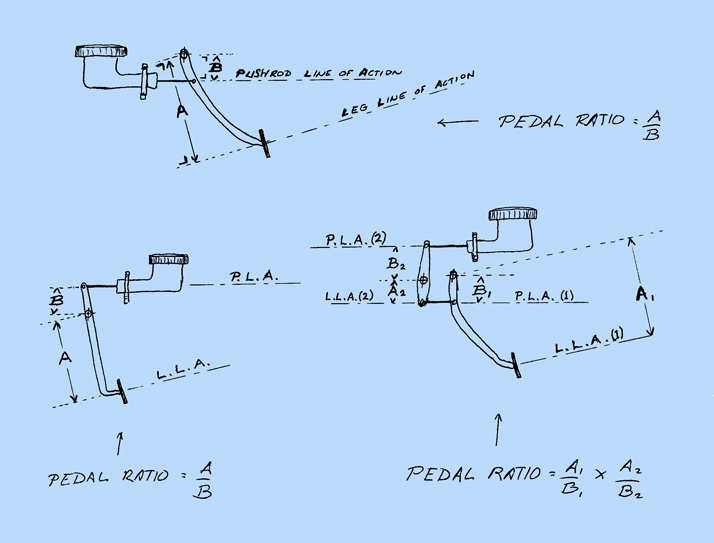
- Piston Diameter/Master Cylinder Ratio: This ratio is crucial for pedal feel, travel, and force. A smaller master cylinder diameter, relative to the caliper piston area, increases the mechanical advantage (greater clamping force for pedal effort) but results in a longer pedal travel. Conversely, a larger diameter yields a firmer pedal with a shorter travel but requires more pedal effort for the same clamping force.
- Stepped or Differentiated Pistons: In multi-piston calipers, pistons of different sizes (e.g., smaller pistons at leading edge, larger at trailing edge) are designed to balance pressure distribution across the brake pad. This design counters the rotational force of the disc and ensures even pad wear and increased longevity.
- Piston Seals: Rubber piston seals (typically EPDM for DOT fluids or HNBR for mineral oil systems) play a critical role beyond sealing. They also facilitate piston retraction post-braking and act as a “lock” to prevent excessive retraction if the disc is slightly warped, ensuring a consistent brake pedal travel. These seals are designed to withstand pressures of up to 350 bar and temperatures ranging from -40°C to +200°C.
- Boots: External boots protect the piston and seal from road debris and contaminants, preventing corrosion and ensuring smooth piston movement.
- Brake Lines: Flexible brake lines (rubber with metal braid) and rigid metal tubing are crucial components. Rigid lines may provide thermal insulation to protect flexible parts from the caliper’s high temperatures.
Heat Management and Dissipation
Disc brake calipers offer superior heat dissipation compared to drum brakes due to their open design. Modern designs optimize internal channels and utilize materials like aluminum to enhance cooling efficiency. The large aluminum bodies of fixed calipers act as radiators, drawing heat from the pads and fluid. Airflow through the rotor vents, in conjunction with suitable pad materials, significantly aids thermal regulation and reduces brake “fading.”
Impact on Pad Wear, Pedal Feel, and Modulation
Multi-piston and fixed calipers distribute pressure uniformly, resulting in even pad wear and increased lifespan. This uniform contact maintains braking effectiveness by preventing localized overheating and uneven material transfer. Fixed and multi-piston calipers provide enhanced rigidity and a firmer, more linear pedal feel with improved modulation. This precision is crucial for progressive braking and precise control in sports driving or emergency situations.
Comparative Analysis: Single Piston vs. Dual vs. Multi Piston Calipers
Understanding the distinctions among piston types is essential for appreciating their specific applications and performance characteristics.
| Feature/Type | Single Piston Caliper | Dual Piston Caliper | Multi-Piston Caliper (4-10+ Pistons) |
|---|---|---|---|
| Piston Configuration | 1 piston (on one side) | 2 pistons (on one side for floating, opposing for fixed) | 3+ pistons (always opposing, 2+ per side) |
| Caliper Type | Floating (Sliding) | Floating or Fixed | Fixed (often Monoblock) |
| Clamping Force | Basic to Moderate | Moderate to Stronger | Significantly Stronger, the highest in its class due to total piston area |
| Brake Modulation | Sufficient for daily use | Enhanced feedback and control | Excellent, highly consistent control throughout pedal travel |
| Heat Dissipation | Limited, prone to “fading” under sustained braking | Better, more uniform heat distribution on pads | Superior, high resistance to “fading” due to increased surface area and material choices |
| Pad Wear Uniformity | Less uniform, prone to conical wear due to uneven pressure application | Improved uniformity | Highly uniform, optimized by differentiated diameters and balanced pressure |
| Rigidity/Flex | Lower rigidity, more prone to flex under intense braking | Improved rigidity, less flex compared to single piston | Maximum rigidity, minimal flex due to fixed construction, often monoblock |
| Common Application | Standard passenger cars, light trucks, rear axles, economical vehicles | Mid-size cars, SUVs, some performance models, front axles, light commercial vehicles | Sports cars, luxury vehicles, heavy trucks, racing vehicles, motorsport applications |
| Cost | Lowest (typically $50 – $150 for OEM replacement) | Medium ($150 – $400 for OEM replacement) | Highest ($1,000 – $3,000+ for high-performance kits; up to $10,000+ for racing systems) |
| Weight | Lowest (for the type, typically cast iron) | Medium (may be cast iron or aluminum) | Potentially higher in raw form, but significantly offset by lightweight aluminum alloys (up to 30% unsprung mass reduction) |
What is the Current Market Outlook for Brake Calipers?
The global brake caliper market is experiencing significant growth, driven by technological advancements, increased vehicle production, and demand for enhanced safety and performance.
Market Size and Growth Factors
The global automotive brake caliper market was valued at approximately USD 8.28 billion in 2021, with projections to reach USD 10.70 billion by 2027, growing at a Compound Annual Growth Rate (CAGR) of 3.5%. Other reports estimate the market at USD 9.50 billion by 2024, expected to grow to USD 13.70 billion by 2034, with a CAGR of 3.9%. An additional estimate positions the 2024 market value at USD 11.79 billion, with a CAGR of 4.29% between 2025 and 2033. Additionally, the market is projected to steadily expand, reaching a valuation of USD 15.31 billion by 2030, corresponding to a CAGR of 5.0%. The global automotive brake caliper market is expected to increase from USD 10.1 billion in 2025 to USD 14.1 billion by 2035, with a CAGR of 3.4% during the forecast period.
Growth drivers include rising SUV and performance vehicle production, stringent global safety regulations, rapid adoption of electric (EV) and hybrid vehicles (HEV), and a continuous focus on fuel efficiency and emissions reduction. Passenger vehicles account for approximately 65% of the total market.
Market Segmentation and Key Trends
The market is segmented by vehicle type (passenger cars, commercial vehicles, motorcycles), caliper type (fixed, floating), piston material (aluminum, steel, phenolic), end-user (OEM, aftermarket), and geography.
Key trends include the integration of advanced materials for lighter and stronger designs, the proliferation of electromechanical brake (EMB) systems for precise control in EV and ADAS, and increasing demand for high-performance braking systems in premium vehicles. Further innovations focus on electronic brake control, the integration of smart sensors for predictive maintenance, 3D printing for customized designs, and aesthetic customization options, such as custom-painted calipers, which are a growing trend for personalization.
Leading Global Brands in the Market
- OEM and High-Performance: Continental AG, Robert Bosch GmbH, ZF Friedrichshafen AG, Aisin Seiki Co. Ltd., Mando Corp., Brembo S.p.A., Akebono Brake Industry Co. Ltd.
- High-Performance and Aftermarket Specialists: Wilwood Engineering, AP Racing, Alcon Components Ltd., StopTech, Tarox, Baer Brakes.
- Motorcycle and Cycling: Accossato, Shimano, SRAM, Hayes, Hope Technology, Magura.
Pricing and Availability
- Single Piston Calipers: OEM replacements typically range from $55 to $165 per caliper.
- Dual Piston Calipers: OEM replacement costs generally range from $150 to $400 per caliper.
- Aftermarket and Performance Multi-Piston Calipers:
- Complete 2 or 4-piston caliper kits can start from $330 – $880.
- High-performance 6 or 8-piston systems from premium brands like Brembo may exceed $1,100 – $3,300+; competition-grade systems can reach $10,000+.
- Brembo calipers vary widely depending on design (for example, monoblock designs are significantly more expensive) and application.
- Replacement Costs: The average cost to replace an individual brake caliper typically varies between $350 and $950, including parts and labor. Most drivers can expect a total bill ranging between $700 and $1,200 for a pair of calipers. Labor costs can range between $150 and $450 per wheel, including software resets for electronic systems. Parts only for a standard floating caliper range between $100 and $300, while aluminum alloys and multi-piston designs command higher prices ($100 – $600+).
- Availability: Components are widely available through authorized automotive parts distributors, online retailers (e.g., Summit Racing, Amazon, eBay), and specialty performance shops. Complete kits are often recommended to ensure compatibility with all system components.
What are the Key Maintenance and Long-Term Considerations for Brake Calipers?
Proper maintenance of brake calipers is essential to ensure long-term safety, reliability, and optimal braking performance.
Regular Inspections and Service Intervals
Brake calipers should be inspected during routine vehicle maintenance, typically every 10,000–15,000 miles or annually. Key checks include brake fluid level and condition (replacement every 2-3 years or per manufacturer specifications), proper operation of guiding pins in floating calipers, and signs of fluid leaks. Any sticking piston or damaged boot should be addressed immediately to prevent further damage.
Brake Pad Replacement and Caliper Health
Timely replacement of brake pads is critical. Worn-out pads can lead to excessively extended pistons, increasing the risk of seal damage or piston seizing. Pads typically last between 30,000 and 70,000 miles, depending on driving habits and material type. Ignoring worn pads also exposes the caliper directly to the disc, causing irreversible damage.
Caliper and Piston Lifespan
Modern calipers are designed for long lifespans, often exceeding 75,000–100,000+ miles with proper maintenance. They are generally replaced upon failure (e.g., seizing, leaks, physical damage). Piston replacement usually only becomes necessary if the piston itself is damaged or severely corroded. Common causes of failure include corrosion from road salt, contamination from old or degraded brake fluid, and overheating due to aggressive driving.
System Compatibility is Paramount
When upgrading or replacing calipers, it’s crucial to ensure compatibility with the entire braking system. This includes the master cylinder, ABS modules, Electronic Stability Control (ESC), suspension geometry, and rotor size. Incompatible calipers can compromise braking efficiency, lead to premature component wear, adversely affect pedal feel, and present significant safety risks. Always consult manufacturer specifications or a qualified mechanic for compatibility.
How to Select the Right Brake Caliper Configuration for Your Vehicle?
The optimal brake caliper configuration depends on the intended use of the vehicle, performance needs, and budget. Matching the caliper type to the application is critical for safety and performance.
- Daily Driving / Urban Use: Single piston or dual piston floating calipers offer a solid balance of affordability, ease of maintenance, and adequate stopping performance for typical road conditions.
- Sport Driving / High-Performance Road Use: Fixed dual piston or 4-piston calipers are recommended. They provide improved braking power, optimized heat management, and a more responsive pedal feel essential for spirited driving.
- Track / Competitive Use: Fixed multi-piston calipers (4, 6, 8, or 10 pistons) are essential. Their superior braking power, exceptional resistance to “fading,” and precise modulation capabilities are critical for demanding racing conditions.
- Heavy Vehicles / Towing: Multi-piston calipers are highly recommended for their greater clamping force and superior heat dissipation. These attributes are crucial for safely managing heavy loads, maintaining control, and preventing brake “fading” during prolonged descents or intense braking situations.