Have you ever felt your steering wheel shake violently while braking at high speeds? This unnerving sensation is not just an irritating quirk; rather, it signals a significant issue within your vehicle’s braking system. Understanding the root cause of this vibration is essential for your safety and comfort on the road.
Often, this unsettling problem can be traced back to what many refer to as “warped brake rotors.” While the term conjures an image of distorted metal, the truth is more complex. The actual culprit may be a phenomenon known as disc thickness variation (DTV), which causes uneven pressure from the brake pads, intensifying those distressing shakes you feel in your steering wheel.
What Exactly Are “Warped” Brake Rotors, and What Causes Them?
The phrase “warped brake rotors” can be misleading. In reality, rotors don’t bend like metal subjected to extreme heat. Instead, the real issue arises from microscopic variations in the rotor’s thickness or uneven application of brake pad material onto the rotor’s surface.
Brake rotors, constructed primarily from grey cast iron with a carbon content of 2-4%, exhibit remarkable thermal stability. They are engineered to endure temperatures ranging from 93°C to 260°C (200°F to 500°F) under regular conditions, and can withstand even higher temperatures up to 650°C (1,200°F) in high-performance scenarios, well below cast iron’s melting point of around 1,200°C (2,200°F).
Key factors contributing to DTV include improper bedding-in procedures, aggressive braking without allowing the rotors to cool, and incorrect wheel lug nut torque. For instance, if one side is tightened to 150 Nm while the other is at 90 Nm, it induces noticeable rotor runout.
One common suspect in this scenario is a sticking brake caliper. If a caliper fails to release properly, it can apply continuous pressure to the rotor. This leads to localized hot spots, eventually causing uneven material transfer and the vibrations you feel through your steering wheel.
How Does Disc Thickness Variation (DTV) Manifest in Steering Wheel Shake?
Disc thickness variation manifests when parts of the rotor exhibit thickness differences as minor as 0.05 mm (0.002 inches), or 36 micrometers. This seemingly trivial difference can trigger substantial brake judder and noticeable steering wheel fluctuations.
As the rotor rotates, the brake pads exert uneven pressure, creating a pulsating brake force that travels through the caliper to the steering components, ultimately reaching the steering wheel. The faster you drive, the more pronounced this vibration becomes, amplifying the alarming shake.
What are the Key Symptoms of Warped Brake Rotors at High Speeds?
Identifying specific symptoms is crucial for distinguishing warped brake rotors from other vehicle problems. When rotors are compromised, vibrations are often most pronounced during braking, particularly when slowing down from highway speeds (around 96-105 km/h or 60-65 mph).
The issue arises from increased rotational energy and heat that exacerbates the effects of DTV. Here are the primary indicators to look for:
- Steering Wheel Shake: A marked rhythmic pulsation in the steering wheel during braking, especially at higher speeds, indicates problems with the front brake rotors or calipers.
- Brake Pedal Pulsation: A distinct vibration through the brake pedal, often described as a “push back,” is indicative of DTV affecting the rotor.
- Abnormal Braking Noise: Strange sounds like groaning or high-pitched squealing from the wheels during braking signal inconsistent contact between the brake pads and the irregular rotor surface.
- Increased Stopping Distance: A decline in braking effectiveness results in a significantly longer distance needed to come to a complete stop.
Different symptoms may suggest varying issues. For example, a constant steering wheel vibration at high speeds without braking could indicate unbalanced tires, misaligned wheels, or worn suspension components. Conversely, vibrations worsening during turns might highlight a faulty wheel bearing.
Can a Sticking Brake Caliper Lead to Warped Rotors?
Absolutely. A malfunctioning brake caliper can directly contribute to disc thickness variation. If a caliper doesn’t disengage properly, or if its slide pins seize, the brake pad may maintain slight constant contact with the rotor.
This ongoing friction generates excessive localized heat on the rotor surface, leading to uneven wear and material transfer. Symptoms associated with “warped rotors” may manifest within just 15,000 miles, even after new rotors are installed. An unmistakable sign of a sticking caliper is when your vehicle pulls to one side during braking, creating drag on that wheel.
What is the Role of Rotor Runout in Brake Performance?
Lateral runout, or the side-to-side movement of the rotor while it rotates, is vital for the overall effectiveness of your brake system. Most modern vehicles have strict lateral runout specifications, often requiring a tolerance of less than 0.05 mm (0.002 inches).
For specific models like the 1997-2002 Chevrolet Malibu, 1997-1999 Olds Cutlass, 1999-2002 Olds Alero, and 1999-2002 Pontiac Grand Am, GM stipulates a maximum allowable rotor runout of no more than 0.0015 inch (approximately 0.038 mm). Exceeding these specifications can lead to notable DTV.
Even a minimal thickness variation of just 0.0005 inches (approximately 12.7 micrometers) can produce an observable steering wheel shake. A common issue leading to excessive lateral runout is rust accumulation on the hub assembly; even a tiny piece of rust on the mating surface can cause the rotor to wobble.
How Do Different Brake Pad Materials Impact Rotor Wear and Warping Risk?
The material composition of brake pads significantly affects heat generation, material transfer, and the potential for rotor wear and DTV. While pads are engineered to wear down and protect the rotor, their properties directly influence the overall performance and durability of the braking system. This is particularly vital when comparing regenerative braking vs. traditional brakes, given their differing wear characteristics.
| Brake Pad Material Type | Key Characteristics | Impact on Rotor Wear/Warping Risk | Typical Application |
|---|---|---|---|
| Organic (Non-Metallic) | Made from synthetic materials such as cellulose and aramid; these pads offer quiet operation, softer material, moderate friction, and minimal heat generation. | Least abrasive on rotors, presenting a lower risk of uneven material transfer but often leading to a shorter lifespan. | Standard driving, commuting, regular vehicles. |
| Semi-Metallic | Comprising 30-65% metal particles (copper, steel, iron) mixed with non-metallic materials; known for excellent heat conductivity and strong bite, though they can be noisy. | Potential for increased abrasiveness which may elevate rotor wear and DTV risk if not properly bedded or if calipers are malfunctioning. | Numerous Frontier™ and Pathfinder™ models, high-heat, heavy-duty applications, performance vehicles. |
| Ceramic | Combining ceramic fibers and copper threads; recognized for quiet operation and low dust production, stable across a broad range of temperatures, albeit at a higher cost. | Less abrasive and lower dust production; may transfer more heat into the braking system, potentially stressing other components due to lower heat absorption capacity. | Altima™ and Sentra™ models, premium vehicles, daily drivers desiring quiet performance. Not ideal for extreme conditions. |
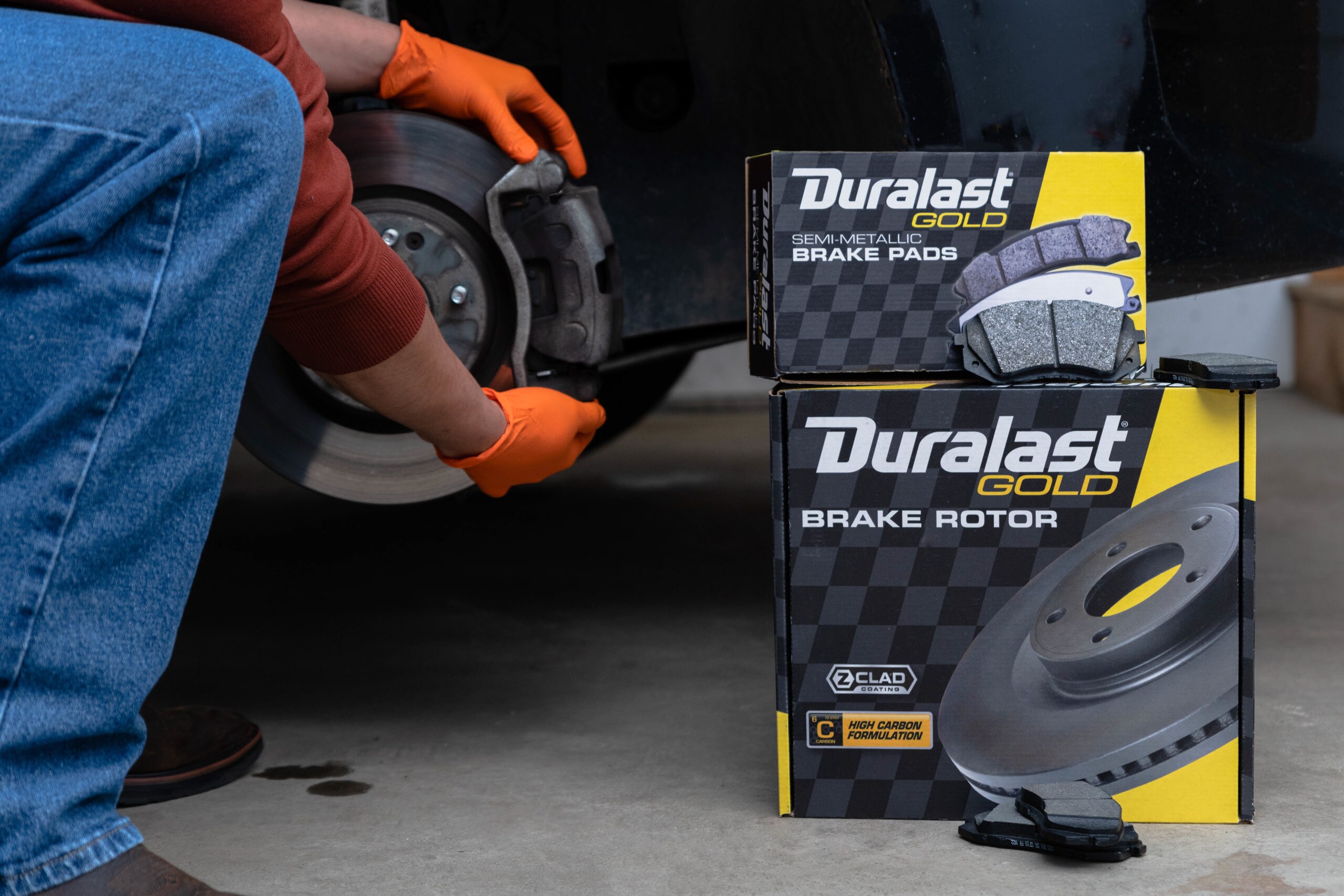
Proper bedding-in of new pads and rotors is crucial to ensure an even layer of friction material transfer, minimizing the risk of DTV. Without this essential step, uneven deposits may develop, resulting in unwanted vibrations.
Replacing pads before their friction material wears below 2/32 inches (approximately 1.6 mm) is critical to prevent metal-on-metal contact, which can severely damage rotors.
What Immediate Actions Should Be Taken When Experiencing Steering Wheel Shake While Braking at High Speeds?
If you notice your steering wheel shaking while braking at high speeds, you must take immediate action to diagnose and repair the problem to maintain your vehicle’s safety and performance. Although your brake system might appear to function, compromised rotor integrity can increase stopping distances and challenge vehicle control in emergencies.
Timely intervention is crucial, as failing Anti-lock Braking System (ABS) may eliminate an essential safety feature that prevents wheel lock-up and ensures steering control, heightening risk in critical situations. For more detailed information, you can refer to our article: What to Do When Your ABS Brakes Fail While Driving: A Safety Guide.
A qualified technician should conduct a comprehensive inspection, measuring rotor runout with a dial indicator and assessing disc thickness variation across several locations. Generally, the maximum allowable run-out in most modern vehicles should not exceed 0.05mm (0.002 in).
It’s also advisable to check brake calipers, brake fluid levels, and suspension components to rule out other potential contributors. Occasionally, problems such as a clogged catalytic converter could cause vibrations but are less commonly related to braking issues. Addressing these concerns is vital for ensuring effective braking performance and preventing more severe mechanical complications.
Frequently Asked Questions (FAQ)
Can warped rotors fix themselves?
No, warped rotors—or more accurately, rotors showing disc thickness variation (DTV)—cannot repair themselves. They typically require resurfacing (if still within minimum thickness specifications) or complete replacement to restore a smooth braking surface.
Is it safe to drive with a shaking steering wheel when braking?
No, driving with a shaking steering wheel while braking poses serious safety risks. It significantly increases stopping distances and jeopardizes vehicle control, especially at high speeds or during emergency maneuvers.
Does a shaking steering wheel always mean warped rotors?
While warped rotors are a prime suspect, a shaking steering wheel during braking may also indicate other issues such as worn or unbalanced tires, misaligned wheels, loose wheel bearings, or worn suspension components.
What is the allowable runout for brake rotors?
The maximum allowable lateral runout for most modern brake rotors is generally around 0.05 mm (0.002 inches), with sensitive models requiring even tighter tolerances, such as 0.0015 inches (0.038 mm).