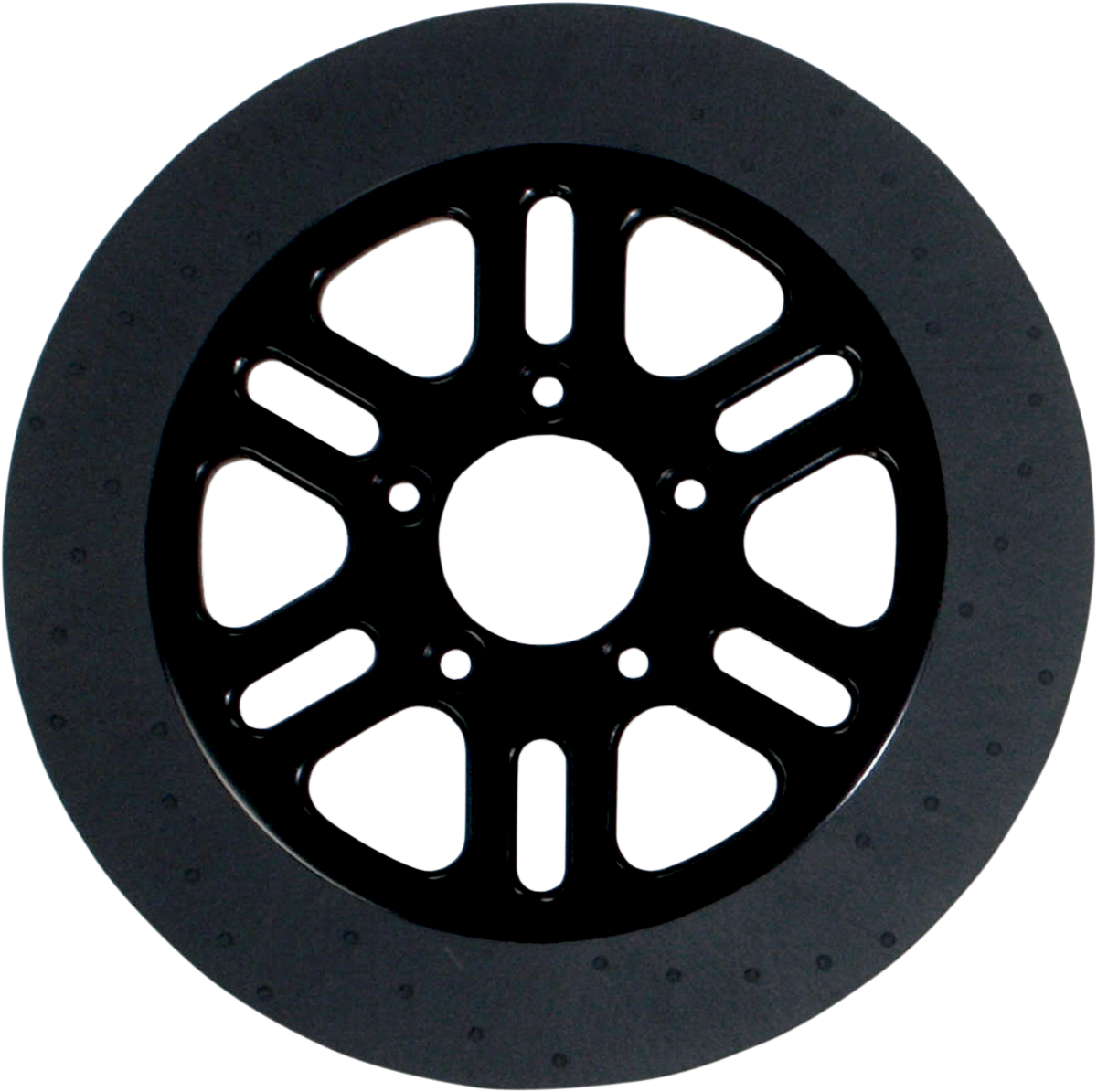
When should you replace your brake rotors? This fundamental question is paramount for ensuring the integrity of your vehicle’s braking system, directly impacting safety, control, and overall performance. Brake rotors are precision-engineered discs, typically cast from high-grade iron alloys, that work in tandem with brake pads to convert kinetic energy into thermal energy, effectively slowing or stopping your vehicle. Over time, friction and heat cycles cause these critical components to wear, thin, and potentially warp, diminishing their effectiveness and posing significant safety risks. Proactive monitoring and adherence to manufacturer-specified replacement guidelines are indispensable for preventing catastrophic braking failure and maintaining optimal vehicle operation.
While a general guideline for brake rotor replacement often falls within the range of 30,000 to 70,000 miles, this interval is highly variable. Factors such as vehicle type, prevailing driving conditions, the specific metallurgy of the rotors, and the driver’s habits profoundly influence their lifespan. For instance, a heavy-duty pickup truck frequently used for towing in mountainous terrain will likely require rotor replacement far sooner than a compact sedan driven primarily on flat highways. Understanding the nuanced indicators and technical specifications for rotor wear is not merely a recommendation; it is a critical safety imperative. For a complementary perspective on brake system maintenance, refer to The Ultimate Guide: How Often Should You Change Your Brake Pads?, which elaborates on the co-dependent relationship between pads and rotors.
What Are the Definitive Signs That Indicate It’s Time to Change Your Brake Rotors?
Identifying the precise moment to replace your brake rotors hinges on recognizing a distinct set of auditory, tactile, and visual cues. One of the most common and concerning indicators is the presence of pulsations or vibrations felt through the brake pedal or, less frequently, the steering wheel during braking. This phenomenon is technically known as Disc Thickness Variation (DTV), often mislabeled as “warped rotors.” DTV occurs when uneven heating and cooling cycles, combined with material transfer from the brake pads, create localized thin and thick spots across the rotor’s surface. As the brake pad encounters these variations, it causes the caliper piston to push and retract unevenly, manifesting as a pulsating sensation. This condition typically intensifies under moderate to heavy braking, severely compromising brake modulation and driver confidence. For a deeper dive into this specific issue, consult Identifying Common Brake Rotor Problems: Warping, Grooves, and Cracks.
Beyond tactile feedback, distinct audible signals often precede or accompany the need for rotor replacement. A high-pitched squealing or squeaking noise during braking often signifies worn brake pads approaching their wear indicators, but a persistent, harsh grinding sound is a direct red flag for rotor damage. This grinding typically indicates that the friction material of the brake pads has been completely depleted, leading to direct metal-on-metal contact between the brake pad’s backing plate and the rotor’s surface. Such contact rapidly degrades the rotor, creating deep circumferential grooves and potentially compromising its structural integrity. Addressing this immediately is crucial, as prolonged metal-on-metal braking can lead to significant heat buildup, caliper damage, and even complete brake failure. You can learn more about related issues by reading Top Signs Your Brake Pads Need Replacement.
Visual inspection also provides critical insights into rotor health. Deep grooves, often exceeding 0.030 inches (0.76 mm) in depth, are a clear sign of excessive wear or abrasive material contamination, necessitating replacement. Furthermore, visible cracks, especially those radiating from the wheel stud holes or near the rotor’s edge, indicate severe thermal stress and fatigue, rendering the rotor unsafe for continued use. Blue or purple discoloration on the rotor surface suggests extreme overheating, which can alter the metal’s microstructure, reduce its friction coefficient, and make it more susceptible to DTV and cracking. Any of these visual anomalies warrant an immediate professional assessment and likely replacement to restore optimal braking performance and safety. For a comprehensive overview of various rotor ailments, refer to Common Brake Rotor Problems & How to Diagnose Them.
How Does Driving Style and Vehicle Application Significantly Affect Rotor Longevity?
The lifespan of your brake rotors is not solely determined by mileage but is profoundly influenced by driving style and the specific application of the vehicle. Aggressive driving, characterized by frequent, hard braking from high speeds, subjects rotors to extreme thermal shock. Each deceleration event generates significant heat, with rotor temperatures potentially soaring from ambient to over 700°F (370°C) in seconds. Repeated exposure to these rapid heating and cooling cycles accelerates material fatigue, increases the likelihood of DTV, and can lead to micro-cracking, particularly in rotors not designed for high-performance applications. Conversely, a smooth, anticipatory driving style that minimizes abrupt stops helps maintain more consistent rotor temperatures, significantly extending their service life.
The operational environment plays an equally critical role. Vehicles primarily driven in dense urban areas, characterized by constant stop-and-go traffic, experience a much higher frequency of braking events compared to those predominantly used for highway cruising. This increased frequency of friction and heat generation in urban settings rapidly contributes to rotor wear and tear. For example, a taxi operating in New York City might require rotor replacement every 20,000 miles, whereas a similar vehicle used for long-distance commuting might easily exceed 60,000 miles on the original rotors. The continuous engagement of the braking system in congested environments also limits the cooling time between stops, exacerbating thermal stress and accelerating the degradation of the rotor’s surface.
Furthermore, the vehicle’s application and load factors significantly impact rotor durability. Commercial vehicles, such as delivery vans or heavy-duty trucks, routinely operate with substantial payloads, necessitating greater braking force to achieve deceleration. This increased demand translates to higher friction, more intense heat generation, and consequently, accelerated rotor wear. Similarly, passenger vehicles frequently used for towing trailers, even within their specified towing capacity, impose additional strain on the braking system. The added mass requires the rotors to dissipate more energy, leading to higher operating temperatures and a reduced lifespan compared to the same vehicle driven unladen. Manufacturers often specify heavy-duty braking components for such applications, but even these have finite limits influenced by the demanding conditions.
What is the Minimum Thickness Requirement for Brake Rotors, and Why is it Crucial?
The most definitive criterion for determining when to replace brake rotors is their adherence to the manufacturer’s specified minimum thickness, often referred to as the Minimum Thickness Specification (MTS) or discard thickness. This critical measurement, typically stamped on the rotor’s edge or hat (e.g., “MIN THK 22.0mm” for a rotor originally 24.0mm thick), represents the absolute thinnest the rotor can safely be before it compromises braking efficiency and structural integrity. For a typical passenger car, this reduction in thickness might range from 1.0 mm to 3.0 mm from its original dimension. For instance, a new rotor might measure 28 mm, with an MTS of 26 mm. Operating a rotor below its MTS is perilous because it significantly reduces the rotor’s ability to dissipate heat, making it prone to overheating, warping (DTV), and cracking under stress. This can lead to brake fade, extended stopping distances, and an increased risk of complete rotor failure, particularly during emergency braking scenarios.
Professional automotive technicians utilize a specialized tool called a micrometer, specifically designed for brake rotor measurement, to accurately determine the rotor’s current thickness. This measurement must be taken at multiple points around the rotor’s circumference, typically at 120-degree intervals, and at varying distances from the edge to account for uneven wear patterns. The lowest measurement obtained is then compared against the manufacturer’s MTS. It’s imperative that the rotor thickness does not fall below this threshold, even if the surface appears visually sound. Ignoring the MTS is not only a safety hazard but can also void warranties on new brake pads, as inadequate rotor mass can cause premature pad wear and overheating. The reduced thermal mass of an excessively thin rotor cannot effectively absorb and dissipate the heat generated during braking, leading to a vicious cycle of accelerated wear for both pads and rotors.
Furthermore, operating below the MTS also compromises the mechanical strength of the rotor. Modern rotors are designed with specific structural integrity to withstand the immense clamping forces exerted by the brake calipers. As the rotor thins, its resistance to these forces decreases, making it more susceptible to catastrophic failure, such as cracking or shattering, especially during severe braking events. This is why attempting to “stretch” the life of a rotor by operating it beyond its discard limit is a false economy that prioritizes minor short-term savings over critical safety considerations. Adhering strictly to the MTS is a non-negotiable aspect of brake system maintenance, ensuring that the vehicle can consistently achieve its designed stopping performance under all conditions.
Are All Brake Rotors Created Equal? A Comparative Analysis of Rotor Types and Materials.
The perception that all brake rotors are identical is a common misconception; in reality, there exists a diverse array of rotor types and material compositions, each designed to meet specific performance requirements, durability expectations, and budget constraints. The most prevalent type is the standard gray cast iron rotor, often found as Original Equipment Manufacturer (OEM) parts on many passenger vehicles. These offer a good balance of cost-effectiveness, sufficient heat capacity for daily driving, and adequate friction characteristics. However, for vehicles with higher performance demands or heavier loads, more specialized options become necessary, offering superior heat dissipation, greater resistance to warping, and enhanced longevity. Understanding these differences is crucial for selecting the appropriate replacement part that matches your vehicle’s specifications and your driving habits.
High-carbon cast iron rotors, for instance, contain a higher percentage of carbon than standard rotors, typically between 3.5% and 4.0%. This increased carbon content improves the rotor’s thermal conductivity, allowing it to dissipate heat more efficiently, and enhances its damping properties, which helps reduce brake noise and vibration. These are often found on luxury or performance vehicles as OEM equipment and are a popular upgrade for standard vehicles. Drilled and slotted rotors are another common performance-oriented option. Drilled holes provide additional surface area for heat dissipation and help vent gases and debris, while slots continuously scrape away friction material and water, maintaining a clean pad surface. Both designs aim to improve initial bite, reduce fade under heavy use, and enhance wet weather performance, though drilled rotors can sometimes be prone to cracking under extreme thermal stress.
At the pinnacle of rotor technology are ceramic-composite rotors, frequently found on high-performance sports cars and exotic vehicles. These rotors, made from carbon-ceramic compounds, offer exceptional heat resistance, significantly reduced unsprung weight, and an incredibly long lifespan (often exceeding 100,000 miles under normal driving conditions). However, their prohibitive cost, often thousands of dollars per rotor, and specific operating temperature requirements make them impractical for most consumer vehicles. Furthermore, the choice between OEM and aftermarket rotors presents another consideration. OEM rotors are designed to meet the exact specifications of your vehicle, ensuring optimal performance and fitment. Aftermarket rotors, while potentially more affordable, vary widely in quality and material specifications. Reputable aftermarket brands, however, can offer superior performance upgrades over standard OEM parts, provided they meet or exceed industry standards like SAE J431 for material strength and thermal stability.
Comparative Analysis of Common Brake Rotor Types
| Rotor Type | Primary Material | Key Performance Characteristics | Typical Cost Range (per rotor) | Best Application |
|---|---|---|---|---|
| Standard/OE (Original Equipment) | Gray Cast Iron | Balanced performance, good daily driver reliability, moderate heat dissipation. | $30 – $80 | Everyday commuting, standard passenger vehicles. |
| High-Carbon | High-Carbon Cast Iron | Enhanced heat dissipation, reduced noise/vibration, improved thermal stability. | $60 – $150 | Luxury sedans, light performance vehicles, spirited daily driving. |
| Drilled & Slotted | Cast Iron (various grades) | Improved initial bite, better wet performance, reduced fade under moderate-heavy braking. | $80 – $200 | Performance vehicles, towing applications, aggressive driving styles. |
| Ceramic Composite (PCCB) | Carbon-Ceramic Matrix | Extreme heat resistance, significantly reduced unsprung weight, minimal fade, very long lifespan. | $1,000 – $5,000+ | High-performance sports cars, racing applications. |
How Often Should Brake Rotors Be Inspected, and What Does a Professional Inspection Involve?
Brake rotors should be professionally inspected at every tire rotation, which typically occurs every 5,000 to 7,500 miles, or at least once a year during routine vehicle maintenance. This frequency ensures that any developing issues, such as minor surface imperfections, early signs of DTV, or approaching minimum thickness limits, are identified and addressed proactively before they escalate into significant safety concerns. A comprehensive professional inspection goes far beyond a cursory visual check. It involves dismounting the wheels to gain full access to the braking components, allowing for a thorough evaluation of both the inboard and outboard surfaces of the rotors. This detailed examination is critical because the inner surface of the rotor, often less visible, can sometimes exhibit more severe wear or damage due to uneven caliper operation or specific driving conditions.
During a professional inspection, technicians meticulously assess several key parameters. First, they visually inspect both rotor surfaces for signs of deep grooves, pitting, cracks, heat spots (blue/purple discoloration), and any signs of uneven wear. They also check for corrosion, particularly on the rotor hat and cooling fins, which can affect balance and heat dissipation. Second, the technician will use a precision micrometer to measure the rotor’s thickness at multiple points, comparing the lowest reading against the manufacturer’s Minimum Thickness Specification (MTS). This is a non-negotiable step to confirm if the rotor has enough material remaining to safely perform its function. Third, a dial indicator may be used to measure lateral runout, which quantifies any side-to-side wobble of the rotor, a common cause of brake pedal pulsation if exceeding 0.002 inches (0.05 mm).
Finally, the inspection includes checking the overall condition of the entire braking system, including the brake pads for wear levels and proper movement, the calipers for seizing or sticking pistons, and the brake lines for leaks or damage. The technician will also evaluate the rotor’s mounting to the wheel hub, ensuring there is no excessive rust or debris that could cause misalignment. This holistic approach ensures that any rotor-related issues are not merely symptoms of a larger problem within the braking system. A detailed inspection report, including measurements and photographic evidence if necessary, should be provided to the vehicle owner, outlining any recommendations for service or replacement, always prioritizing safety and adherence to OEM specifications.
Can Brake Rotors Be Resurfaced Instead of Replaced, and When is it Advisable?
The question of whether to resurface or replace brake rotors is a common one, and the decision hinges on several critical factors, primarily the rotor’s remaining thickness relative to its Minimum Thickness Specification (MTS) and the nature of the damage. Resurfacing, also known as “turning” or “machining,” involves removing a thin layer of material from the rotor’s friction surface using a specialized brake lathe. The primary goal of resurfacing is to eliminate surface imperfections such as minor grooves, light scoring, or Disc Thickness Variation (DTV), thereby restoring a flat and smooth contact surface for the brake pads. This process can be a cost-effective alternative to full replacement, typically costing between $15 to $30 per rotor, compared to $30 to $200+ for a new rotor, provided the rotor has sufficient material to safely undergo the procedure.
Resurfacing is generally advisable only if the rotor’s current thickness is significantly above its MTS, allowing for the removal of material without dropping below the safety limit. Most manufacturers recommend that a rotor can only be resurfaced if it will remain at least 0.005 to 0.010 inches (0.127 to 0.254 mm) above the MTS after machining. If, after removing the minimum necessary material to achieve a smooth surface, the rotor’s thickness falls below or is too close to the MTS, it must be replaced. Attempting to resurface a rotor that is already near its discard limit is dangerous, as it further reduces the rotor’s thermal mass and structural integrity, accelerating future wear and increasing the risk of DTV, cracking, and brake fade. A professional technician will always measure the rotor’s thickness before and after machining to ensure it remains within safe operating parameters.
However, there are specific scenarios where resurfacing is not recommended or even possible. Rotors exhibiting severe damage such as deep cracks, significant pitting, or extensive heat spots (blue/purple discoloration) often cannot be safely resurfaced, as these issues indicate structural fatigue or material changes that machining cannot rectify. Similarly, some modern vehicle designs, particularly those with lightweight or composite rotors, may not be designed for resurfacing at all. High-performance or heavy-duty rotors, which operate under extreme conditions, are also often designed to be replaced rather than resurfaced due to the precise balance and thermal properties required. In all cases, the decision to resurface versus replace should be made by a qualified technician, relying on accurate measurements, manufacturer guidelines, and a comprehensive assessment of the rotor’s overall condition and the vehicle’s intended use.
What Specific Groove Depth on a Rotor Indicates the Need for Immediate Replacement?
While minor surface scoring on brake rotors is a normal byproduct of friction and wear, specific groove depths unequivocally indicate the need for immediate replacement, as they signify compromised braking effectiveness and potential safety hazards. Generally, any groove exceeding 0.030 inches (approximately 0.76 millimeters) in depth on the rotor’s friction surface is considered severe enough to warrant replacement. This threshold is not arbitrary; deeply grooved rotors reduce the effective contact area between the brake pads and the rotor, which significantly diminishes braking force and can lead to extended stopping distances. Furthermore, these deep grooves create uneven wear patterns on new brake pads, preventing them from achieving full contact and proper bedding-in, thereby reducing their lifespan and performance from the outset.
The formation of deep grooves is typically caused by abrasive contaminants embedded within the brake pad material, such as small metal particles or grit, or by prolonged metal-on-metal contact due to completely worn-out brake pads. Once these deep grooves are present, they act as channels that can trap debris, further exacerbating the wear process and potentially contributing to persistent brake noise, such as squealing or grinding, even with new pads. Attempting to install new brake pads on deeply grooved rotors is a futile exercise; the new pads will quickly conform to the irregular surface, resulting in reduced braking efficiency, premature pad wear, and often, the continuation of brake noise. In essence, the new pads will “wear into” the existing grooves rather than establishing a full, flat contact patch, compromising the entire braking system’s performance.
Beyond the direct impact on braking performance, deep grooves also compromise the structural integrity of the rotor. They create stress concentrators, particularly if the grooves are sharp or numerous, making the rotor more susceptible to cracking, especially under the thermal stresses of heavy braking. While very minor scoring (less than 0.010 inches) might be acceptable if the rotor is otherwise within its minimum thickness specification and free of cracks, any visual evidence of significant, pronounced grooves demands a professional assessment. If the grooves are substantial enough to be clearly felt with a fingertip or if they cover a large portion of the friction surface, replacement is the safest and most effective course of action to restore the vehicle’s designed braking capability and ensure driver safety.
What are the Long-Term Safety and Performance Risks of Delaying Brake Rotor Replacement?
Delaying the replacement of worn or damaged brake rotors presents a spectrum of severe long-term safety and performance risks that extend far beyond mere inconvenience. The most immediate and critical danger is a significant reduction in braking effectiveness. Rotors that are too thin, severely grooved, cracked, or warped (exhibiting DTV) cannot generate the necessary friction or dissipate heat efficiently. This leads to extended stopping distances, a condition known as “brake fade” under repeated heavy use, and an overall unpredictable braking response. In an emergency situation, even a slight increase in stopping distance—perhaps just a few feet—can be the difference between avoiding a collision and a catastrophic accident. Compromised rotors directly undermine the vehicle’s primary safety system, placing occupants and other road users at undue risk.
Beyond the immediate safety implications, neglecting rotor replacement can lead to costly damage to other components of the braking system. For instance, operating with excessively thin rotors that overheat frequently can prematurely wear out new brake pads, even high-quality ones, necessitating more frequent and expensive pad replacements. Furthermore, warped or deeply grooved rotors can cause uneven pressure on brake calipers, leading to seized caliper pistons or damaged caliper slides, which are significantly more expensive to repair than simply replacing rotors. The continuous vibration from DTV can also transmit stress through the suspension components, potentially accelerating wear on wheel bearings, steering linkages, and even tire sidewalls, creating a cascading effect of mechanical failures throughout the vehicle’s front end.
Finally, the long-term performance degradation impacts not only safety but also the overall driving experience and vehicle value. A vehicle with compromised brakes will exhibit poor pedal feel, persistent noise, and a general lack of confidence in its stopping ability. This diminished performance can make driving stressful and less enjoyable, particularly in challenging conditions like heavy traffic or adverse weather. Moreover, if a major brake component fails due to neglected maintenance, the resulting repair costs can be exponentially higher than the proactive replacement of worn rotors. From a financial perspective, delaying rotor replacement is a false economy, ultimately leading to greater expenditures and a substantial compromise of vehicle safety, reliability, and resale value.