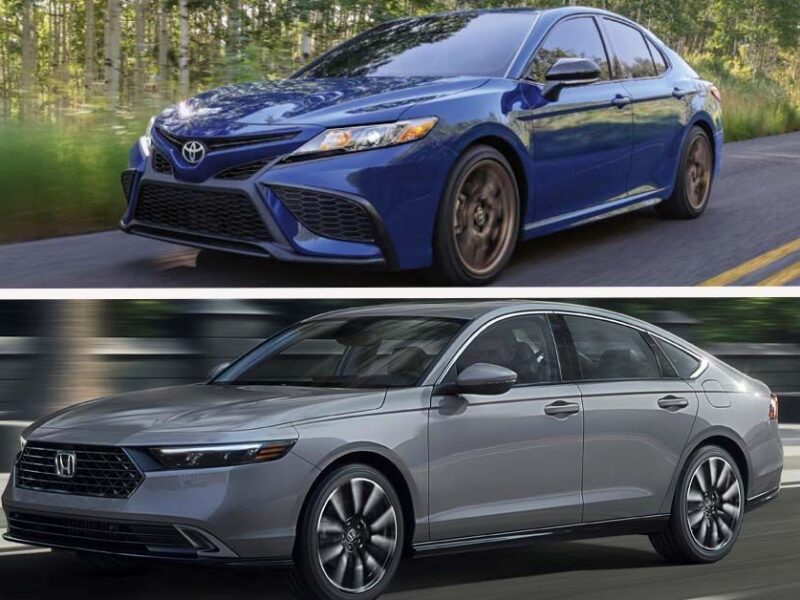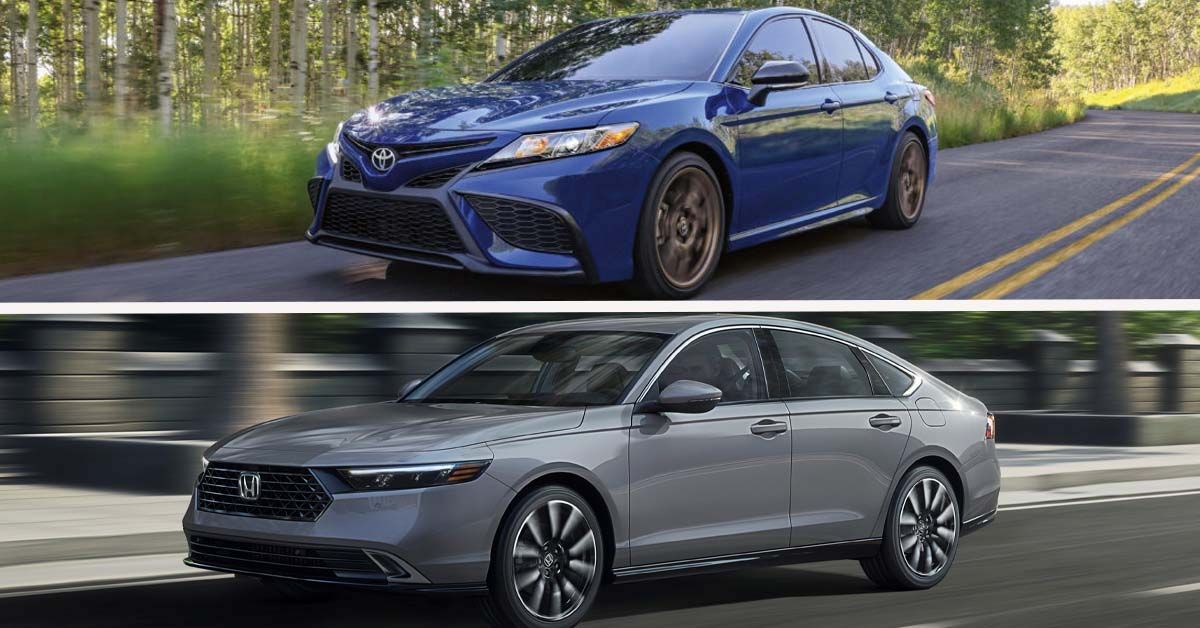
In the realm of midsize sedans, the reliability quotient holds paramount importance for prospective buyers. The Toyota Camry and Honda Accord have consistently emerged as leaders in this category, earning significant acclaim for their durability over decades. Both models offer a blend of longevity, performance, and excellent resale value, making them staples in the American automotive landscape.
This detailed comparison aims to explore the nuances of long-term ownership for these two titans, revealing critical insights on reliability, performance metrics, features, and how they stand against each other in the marketplace. By the end of this analysis, readers will be equipped to make an informed decision between the Toyota Camry and Honda Accord.
History of Toyota Camry and Honda Accord
The Toyota Camry made its debut in 1982, quickly establishing itself as a reliable family sedan. Over its seven generations, the Camry has evolved to meet consumer demands, balancing comfort, power, and fuel efficiency. Innovations such as hybrid technology have placed it at the forefront of environmentally-conscious vehicles.
On the other hand, the Honda Accord has been a part of the automotive scene since 1976. Initially a compact car, the Accord transitioned to a midsize model and has become synonymous with quality and performance. Its continuous evolution reflects Honda’s commitment to driver satisfaction and technological advancement.
Reliability Comparison
Key Reliability Metrics for Toyota Camry
The Toyota Camry has long been synonymous with reliability, regularly achieving mileage milestones of 200,000 to 300,000 miles with proper upkeep.
- Reliability Ratings: According to RepairPal, the Camry carries a reliability score of 4.0 out of 5.0, placing it 3rd out of 24 in the midsize car segment. J.D. Power’s ratings for 2023 reflect a score of 88/100, with scores for subsequent years being 86/100 and 80/100.
- Annual Repair Costs: The Camry incurs an average annual repair cost of around $388, significantly lower than the midsize average of $526 and the overall market average of $652.
- Repair Frequency: Owners generally face unscheduled repairs just 0.3 times per year, matching the average for midsize cars and bettering the overall average of 0.4.
- Severity of Repairs: About 11% of repairs for the Camry are categorized as severe, which is slightly below the average for both midsize cars and the general market, which sits at 12%.
Key Reliability Metrics for Honda Accord
- Reliability Ratings: RepairPal rates the Accord at an impressive 4.5 out of 5.0, placing it at the top of the midsize car category. J.D. Power awarded the 2021 model an 80/100, while the 2024 and 2026 models scored 79/100 and 80/100, respectively.
- Average Maintenance Costs: The annual repair and maintenance costs for the Accord are about $400, which is still below the midsize car average.
- Repair Visits Frequency: Accord owners typically require unscheduled repairs 0.3 times per year, aligning with the midsize segment average.
- Repair Severity: The Accord experiences severe repairs only 9% of the time, reflecting superb reliability status.
Comparative Analysis of Maintenance Costs
Both vehicles present commendable long-term ownership costs, with their annual maintenance expenses considerably below industry averages. Details on their maintenance costs are outlined in the table below:
| Metric | Toyota Camry | Honda Accord |
|---|---|---|
| Average Annual Repair Cost | $388 | $400 |
| Average Annual Unscheduled Repair Visits | 0.3 | 0.3 |
| Severity of Repairs (Major Issues) | 11% | 9% |
Regarding common maintenance items, both sedans maintain comparable costs, although specific expenses can vary. For instance, brake replacements are common costs for both models. Ensuring timely maintenance, including oil changes and fluid checks, will help mitigate more severe repair costs down the line. More on maintenance can be read in The Ultimate Guide to Car Maintenance.
Common Issues: Camry vs. Accord
Despite their strong reliability records, both the Camry and Accord face some recurring issues:
Toyota Camry Common Issues:
- Transmission Problems: Models from the mid-2000s and 2010-2011 have shown issues like slipping or hard shifting.
- Oil Consumption: Some 2007-2011 and 2012-2017 Camry models are known to consume oil at above-average rates.
- Interior Deterioration: Generations from 2002-2006 may experience sticky dashboards or deteriorating speaker covers due to heat exposure.
- Power Steering Leaks: Often seen in older, high-mileage Camrys.
- Brake Issues: Instances of warped rotors and poor paint quality have been reported.
Honda Accord Common Issues:
- Transmission Problems: Primarily in early 2000s models, with some 8th-generation Accords experiencing gear delays and failures.
- Oil Consumption: Excessive oil consumption reported in certain 2008-2013 models.
- Brake Vibration: Warped rotors causing braking issues is a consistent complaint.
- Electrical Problems: Infotainment and sensor failures as well as battery drainage have been reported.
- Compliance Bushing Cracking: Squeaking and shuddering issues when turning in older models.
Expected Lifespan: Camry or Accord?
Both the Toyota Camry and Honda Accord are celebrated for their impressive longevity.
- Toyota Camry: With meticulous maintenance, a Camry can achieve life spans of 200,000 to 300,000 miles, with some surpassing even 400,000 miles. An average lifespan, as reported by iSeeCars, is about 162,955 miles, with a noteworthy 26% chance of reaching 200,000 miles.
- Honda Accord: Similarly, with proper care and driving habits, Accords can also reach 200,000 to 300,000 miles, with some celebrating over one million miles. iSeeCars estimates average mileage at 162,356, and slightly better odds of 26.5% reaching 200,000 miles.
Ultimately, many factors affect the lifespan of each vehicle: regular maintenance, driving habits, and timely resolution of mechanical issues are paramount. For more insights on preventative care, visit this article about vehicle maintenance best practices.
Resale Value Insights
Both the Toyota Camry and Honda Accord retain their value well, showcasing their perceived long-term reliability and desirability within the used car segment.
- Toyota Camry: The Camry typically retains about 55-60% of its original value after five years, with the 2025 model earning a “Best” resale value rating from J.D. Power (92/100).
- Honda Accord: Similarly, the Accord holds a substantial share of its initial cost, with the 2026 model receiving a “Great” resale value rating (87/100).
A high resale value indicates that these vehicles are expected to remain reliable for future owners, significantly reducing long-term depreciation.
Frequently Asked Questions
Is a Toyota Camry more reliable than a Honda Accord?
Both vehicles exhibit outstanding reliability. The Honda Accord has a marginally higher reliability score (4.5/5.0) compared to the Toyota Camry (4.0/5.0).
What is the average lifespan of a Toyota Camry?
This sedan can reliably reach 200,000 to 300,000 miles, with many owners reporting mileage beyond those figures.
What is the average lifespan of a Honda Accord?
The Accord’s lifespan generally ranges between 200,000 and 300,000 miles, illustrating its durability and resilience.
Which car has cheaper parts, Camry or Accord?
Both models benefit from cost-effective parts and labor due to their enduring market presence. Their average annual repair expenditures are quite close: Camry at $388 and Accord at $400.