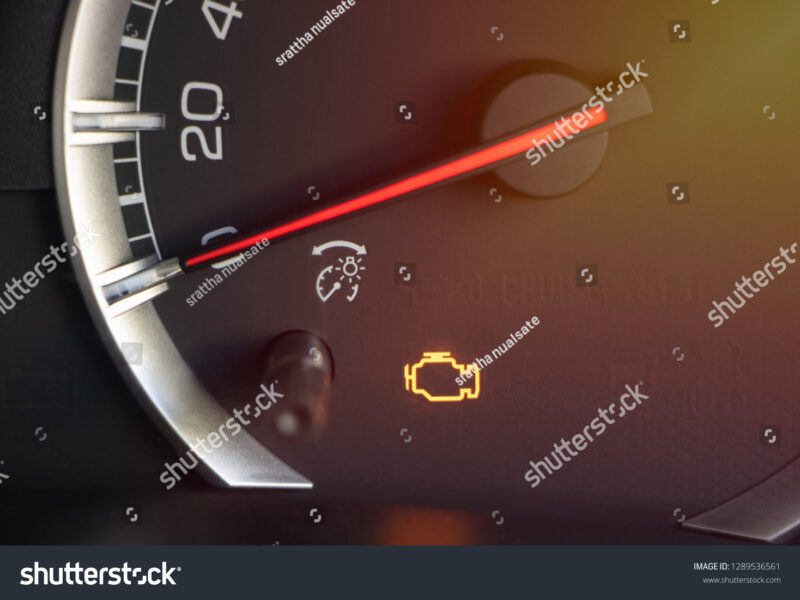
A malfunctioning oxygen sensor, also known as a lambda probe, can severely mislead the Engine Control Unit (ECU) or Powertrain Control Module (PCM). This indecision can compromise vehicle performance, fuel efficiency, and emissions control. Introduced in the early 1980s to meet new emission regulations, the oxygen sensor has become a pivotal component for ensuring the proper functionality of the On-Board Diagnostics II (OBD-II) system.
When an oxygen sensor fails, its inaccurate readings regarding unburned oxygen in the exhaust mislead the ECU. This prevents the system from maintaining the ideal stoichiometric ratio of 14.7:1 (air-to-fuel for gasoline). Consequently, it leads to an undesirable mixture—either too rich or too lean—resulting in inefficient combustion, increased pollutant emissions, and a noticeable decline in overall engine performance and fuel consumption.
What is an Oxygen Sensor and How Does It Function in Your Vehicle’s Exhaust System?
The oxygen sensor measures the concentration of residual oxygen in the exhaust gases by comparing it to ambient air. This difference generates an electrical signal that the ECU interprets to adjust the fuel injection, aiming to optimize combustion and minimize harmful emissions.
Most modern vehicles employ at least two O2 sensors: one “upstream” (before the catalyst) to regulate the fuel mixture and another “downstream” (after the catalyst) to monitor its efficiency. Typically constructed with zirconium dioxide (ZrO2) and platinum-coated, these sensors operate efficiently at temperatures starting from 300°C.
Types and Placement of Oxygen Sensors
There are two primary types of oxygen sensors, each serving distinct functions based on their design and placement:
- Narrowband Sensors: Common in older vehicles, these detect a narrow range of the air-fuel mixture and signal if the engine is near the stoichiometric ratio (14.7:1). Their voltage fluctuates rapidly between ~0.1V (lean mixture) and ~0.9V (rich mixture) in upstream sensors.
- Wideband Sensors: Found in modern and high-performance applications, these measure a much broader range of air-fuel ratios (e.g., from 11:1 to 22:1). They provide more precise signals to the ECU, allowing for finer engine control.
Placement is crucial for their specific function:
- Upstream Sensor (Pre-catalytic): Located in the exhaust manifold or before the catalytic converter, its reading is vital for real-time fuel injection regulation. Its voltage must fluctuate rapidly, indicating that the ECU is actively adjusting the mixture.
- Downstream Sensor (Post-catalytic): Situated after the catalytic converter, its primary role is to monitor the efficiency of the catalyst. Its voltage should remain relatively stable, usually between 0.4V and 0.6V, indicating proper gas conversion. If its voltage fluctuates like the upstream sensor, it may indicate a faulty catalyst.
How Do Oxygen Sensors Operate at an Electrochemical Level?
Oxygen sensors utilize electrochemical technology. Exhaust gases diffuse into a fuel cell (typically made of zirconium dioxide), where zirconium dioxide acts as a solid electrolyte sensitive to oxygen. The difference in oxygen concentration between the exhaust and ambient air creates an electric potential difference. This process generates an electrical current or voltage signal that is directly proportional to the oxygen concentration, enabling the ECU to calculate and adjust the air-fuel mixture.
What Are the Common Symptoms of a Malfunctioning Oxygen Sensor Affecting Exhaust System and Performance?
A defective oxygen sensor can significantly impact vehicle performance and operability. Recognizing its symptoms is crucial for timely diagnosis and repair.
How Does a Faulty Oxygen Sensor Affect Engine Performance?
A broken oxygen sensor disrupts the air-fuel balance, leading to degraded engine performance. The ECU receives incorrect data, which may cause inadequate fuel injection, resulting in:
An unstable idle, poor acceleration, engine misfires, and marked power loss. A rich mixture (too much fuel) can slow down performance and cause hesitation during acceleration, while a lean mixture (too much air) can similarly result in an irregular idle and misfires, potentially damaging the engine.
What Is the Relationship Between a Defective O2 Sensor and Vehicle Emissions?
The oxygen sensor is pivotal in emissions control. A failure in this component prevents the engine from operating with the optimal fuel ratio needed to minimize pollutants. This increases emissions of harmful gases such as hydrocarbons (HC), carbon monoxide (CO), and nitrogen oxides (NOx), often resulting in failure during emissions testing. Additionally, excessive unburned fuel can overheat and damage the expensive catalytic converter.
The most common symptoms of a malfunctioning oxygen sensor include:
- Illuminated “Check Engine” (CEL) light: A frequent indicator as the ECU detects irregular readings.
- Decreased fuel efficiency: An incorrect air-fuel mixture can increase consumption by up to 10-15%, according to some sources.
- Strong exhaust odors: Incomplete combustion results in a sulfurous, “rotten egg” smell or the scent of unburned gasoline.
- Black smoke from the exhaust: A visual sign of an excessively rich fuel mixture and incomplete combustion.
- Unstable idle and performance issues: Including poor acceleration, jerking, and a “heaviness” sensation in the vehicle.
- Damage to the catalytic converter: Prolonged operation with a defective sensor can lead to premature failure of the catalyst, resulting in costly repairs.
The following table summarizes common oxygen sensor failures and their impacts:
| Malfunction Type | Main Cause | Key Symptoms / Impact |
|---|---|---|
| Slow Response | Contamination (oil, coolant, silicone, lead), aging, carbon buildup | Delayed ECU adjustments, up to 15% reduction in fuel economy, increased emissions, uneven performance. |
| Heater Circuit Failure | Electrical failure, thermal shock, faulty wiring | The sensor takes longer to reach optimal operating temperature, triggering the CEL (P0135, P0141, P0155, P0161). |
| Internal Contamination | Engine leaks (oil, coolant), unsafe fuel additives, lead, silicone, sulfur | Inaccurate readings, irreversible sensor damage, drastic reduction in lifespan. |
| Open/Short Circuit | Wiring issues, physical damage, crystallized harness | No signal to the ECU, constant CEL, engine in “limp mode.” |
| Fixed Rich/Poor Reading | Internal sensor failure, severe contamination, vacuum leaks | The engine consistently operates with either a rich or poor mixture, significant fuel loss, potential catalyst damage. |
What Trouble Codes (DTCs) Indicate a Malfunctioning Oxygen Sensor?
When the “Check Engine” light activates due to an issue with the oxygen sensor, it often accompanies specific DTCs stored in the ECU, retrievable with an OBD-II scanner. Common DTCs related to oxygen sensor failures include:
- P0130-P0161: General malfunction codes for the O2 sensor circuit, often specific to a bank and sensor number (e.g., P0133: Slow Response of O2 Sensor Circuit, Bank 1 Sensor 1).
- P0135, P0141, P0155, P0161: Indicate problems in the oxygen sensor heater circuit. These codes are critical as heated sensors reach their operating temperature more quickly.
- P0171 (System Too Lean – Bank 1): Suggests excess oxygen in the exhaust, possibly due to a faulty O2 sensor reporting incorrect data that leads the ECU to reduce fuel injection.
- P0172 (System Too Rich – Bank 1): Indicates very little oxygen in the exhaust, which could result from a faulty O2 sensor instructing the ECU to add too much fuel.
- P0420 (Catalytic System Efficiency Below Threshold – Bank 1): While often pointing to a faulty catalyst, a defective downstream O2 sensor could trigger this code by misreporting the catalyst’s efficiency.
How to Diagnose and Replace a Malfunctioning Oxygen Sensor?
Diagnosing a malfunctioning oxygen sensor involves several steps to confirm failure. First, utilize an OBD-II scanner to retrieve DTCs that will identify the specific faulty sensor or circuit. Conduct a visual inspection of the sensor and wiring for physical damage, corrosion, or contamination.
For a deeper evaluation, a multimeter can measure the sensor’s voltage output and the heater circuit’s resistance. Upstream sensors should show rapid voltage fluctuations between 0.1V and 0.9V, while downstream sensors should maintain a more consistent voltage around 0.45V under correct operating conditions.
Replacing the oxygen sensor is a task manageable by those with mechanical experience, although professional assistance is advisable if difficulties arise. The process involves locating the sensor(s) in the exhaust system (either in the exhaust manifold or along the exhaust tubing). It’s crucial to allow the engine to cool completely to avoid burns. Special sockets or wrenches are needed for oxygen sensors due to their location and wiring.
Applying penetrating oil to the sensor threads before attempting to remove it can ease the process, as sensors may seize due to high temperatures and corrosive gases. When installing the new sensor, apply anti-seize lubricant to the threads, avoiding the sensor tip. Hand-tighten to prevent damage, then adjust according to the manufacturer’s specifications. Finally, reconnect the electrical connector and clear the stored DTCs with a scanner. For comprehensive exhaust system maintenance, refer to “Don’t Botch the Bolt-On: Avoiding Common Exhaust System Installation Errors”.
How Often Should an Oxygen Sensor Be Replaced?
The lifespan of an oxygen sensor varies, generally ranging from 60,000 to 100,000 miles (approximately 96,000 to 160,000 km) for heated sensors and between 30,000 to 50,000 miles (approximately 48,000 to 80,000 km) for older, unheated sensors. While some manufacturers do not specify a replacement interval, it is recommended to replace them preventively every 5 to 7 years (considering an average of 12,000-14,000 miles annually) to restore maximum fuel efficiency and minimize emissions. Factors such as fuel quality, oil or coolant leaks, and contamination can shorten their longevity.
Is It Safe to Drive with a Damaged Oxygen Sensor?
While it is technically possible to drive with a malfunctioning oxygen sensor, it is highly inadvisable. Doing so can lead to significant problems, including a drastic reduction in fuel efficiency, diminished engine power, increased harmful emissions, and long-term damage to the catalytic converter and other engine components. Addressing the issue promptly helps prevent more costly repairs down the line.
What Causes Premature Oxygen Sensor Failure?
Several factors can lead to premature failure of an oxygen sensor: internal contamination from carbon buildup, oil residue, coolant (glycol), silicone, or incompatible fuel additives. Exposure to excessive heat and extreme temperature fluctuations (thermal shock) due to engine misfires can also degrade the sensor. Additional factors include poor fuel quality, excessive oil consumption, and neglecting regular maintenance, such as spark plug or air filter replacement. Physical damage or wiring issues are also common causes of malfunction.
How Much Does It Cost to Replace an Oxygen Sensor? Cost Analysis and Options
Replacing an oxygen sensor is often the only viable solution, as they are delicate and complex components that cannot be repaired.
What Is the Average Replacement Cost and What Factors Influence It?
The total cost for replacing an O2 sensor generally ranges from $200 to $500 per sensor, including parts and labor. Other estimates place the range between $362 and $412. Parts can cost between $50 and $200, while labor can add between $100 and $300.
Factors influencing the cost:
- Vehicle Make and Model: Luxury or high-performance vehicles often have more expensive sensors and higher labor rates.
- Type and Location of the Sensor: Upstream sensors may be more accessible than downstream ones, affecting labor time.
- Quality of the Part: Original Equipment (OEM) sensors are typically more expensive than aftermarket options but often offer better durability and compatibility.
- Labor Rates: These vary by region and repair shop.
The following table compares the costs and characteristics of OEM and aftermarket sensors:
| Feature | OEM Sensor (Original Equipment Manufacturer) | Aftermarket Sensor |
|---|---|---|
| Cost (part only) | Generally higher ($60-$300+). Example: Honda/Toyota ($60-120), BMW/Mercedes-Benz ($150-300). | More economical ($20-$200). |
| Accuracy and Reliability | Maximized accuracy and reliability, specifically designed for the vehicle. | Quality can vary; while some are well-made, others may be constructed from inferior materials. Accuracy may not match that of the OEM. |
| Compatibility and Fit | Guaranteed fit and functioning for the vehicle model. | Many are “universal fit,” possibly requiring modifications (cutting, splicing wires). |
| Longevity | Tends to offer a longer lifespan and consistent performance. | Durability may be lower; dependent on brand and quality. |
| Warranty | Typically comes with strong warranty from the vehicle manufacturer. | Varies widely between aftermarket manufacturers; research needed. |
| Recommendation | Recommended for ensuring optimal performance and avoiding long-term issues. | Cost-effective option, but researching reputable brands to avoid early failures is advisable. |
Is DIY Replacement or Professional Service Recommended?
- DIY Replacement: Costs can range from $20 to $300 per sensor, depending on the vehicle. It requires mechanical knowledge and specific tools. While it’s a cost-saving option, a mistake can lead to additional problems.
- Professional Replacement: Hiring a mechanic generally costs between $150 and $600, including parts and labor. This ensures proper installation and accurate diagnosis, preventing potential complications.
Recommendations for Best Performance and Longevity of the Oxygen Sensor
To ensure your vehicle operates optimally and to avoid costly repairs, it is essential to follow these recommendations:
- Regular Inspections: Schedule periodic checks to identify potential problems early. This can prevent major failures.
- Address Symptoms Promptly: Don’t ignore the “Check Engine” light, decreased fuel efficiency, or irregular idling. Early diagnosis is key.
- Timely Replacement: Replace faulty sensors per lifespan recommendations to maintain efficiency and emissions compliance.
- Monitor Related Components: Pay attention to other sensors, like the Mass Air Flow (MAF) sensor, as their condition can influence O2 sensor performance.
- Fuel Quality and General Maintenance: Use quality fuel and conduct regular preventive engine maintenance (spark plug changes, filters) to avoid contamination and prolong sensor life.
Understanding the crucial role of your oxygen sensor and recognizing its failure signs will keep your vehicle efficient, eco-friendly, and reliable.