Recognizing the symptoms of low or bad brake fluid is paramount for maintaining vehicle safety and optimal braking performance. These critical indicators signal potential issues within your vehicle’s hydraulic brake system that, if ignored, can lead to significantly reduced stopping power and dangerous driving conditions, potentially increasing stopping distances by 15-20% under emergency braking scenarios.
Addressing these warning signs promptly can prevent serious accidents and costly repairs, ensuring your vehicle remains safe and reliable on the road. Understanding the nuanced differences between a low fluid level and degraded fluid quality, often identifiable by visual cues or specific pedal feel, is key to effective maintenance and preventing catastrophic brake failure.
A proactive approach to brake fluid maintenance, including regular inspections and adherence to manufacturer-recommended flush intervals, can mitigate risks associated with common brake fluid symptoms. This vigilance helps preserve the integrity of components such as calipers, master cylinders, and ABS units, which are integral to the vehicle’s braking efficiency.
What are the specific indicators of low brake fluid in a vehicle?
A primary indicator of low brake fluid is a soft or spongy brake pedal. This sensation occurs because there isn’t enough incompressible fluid in the hydraulic system to efficiently transmit the force from your foot to the brake calipers. Consequently, the brake pedal may travel further towards the floor, often beyond 50% of its normal stroke, before the brakes engage effectively, directly compromising stopping power.
Another unmistakable sign is the activation of the brake fluid warning light on your dashboard. This light typically illuminates when the fluid level in the master cylinder reservoir drops below a safe minimum threshold, usually indicated by a sensor set at 15-20% below the MAX line. It serves as a direct alert from your vehicle’s onboard diagnostics, demanding immediate attention to the fluid level.
You might also experience an increased stopping distance, which is a direct consequence of compromised hydraulic pressure. If your vehicle takes longer than usual to come to a complete stop, especially during normal braking or when requiring higher pedal effort, it’s a strong indication that the braking system’s efficiency is impaired, often due to inadequate fluid volume or quality, potentially extending stopping distances by several car lengths at urban speeds.
Conversely, some drivers might experience a brake pedal that feels unusually hard or requires excessive force to achieve braking. While this can sometimes point to other issues within the braking system, such as a failing brake booster, it can also be a symptom of severely low fluid levels or air contamination, where the system struggles to build sufficient hydraulic pressure, requiring more than the standard 20-30 lbs of pedal force.
Furthermore, a visual inspection might reveal fluid leaks under your vehicle, particularly near the wheels, brake lines, or around the master cylinder unit mounted on the firewall. Any visible puddles or damp spots, especially with a slightly oily, yellowish to brownish fluid, definitively confirm a leak within the hydraulic brake system that is actively contributing to a low fluid level.
What are the critical dangers associated with degraded (bad) brake fluid?
Brake fluid is inherently hygroscopic, meaning it absorbs moisture from the atmosphere over time, typically at a rate of 1-2% per year. This moisture absorption significantly lowers the fluid’s boiling point, a critical factor for brake performance. For instance, a DOT 3 fluid’s dry boiling point of 401°F (205°C) can drop to a wet boiling point of 284°F (140°C) with just 3.72% water by volume, as per SAE J1703 standards.
When brake fluid boils, it creates compressible vapor bubbles, leading to a phenomenon known as brake fade. This dramatically reduces braking power during heavy use, such as sustained downhill braking on a 6% grade or repeated hard stops from highway speeds. The presence of these vapor bubbles, unlike the incompressible liquid brake fluid, allows the brake pedal to be pushed without adequately engaging the calipers, creating a dangerous loss of control and potentially increasing pedal travel by 2-3 inches.
The color of your brake fluid is a crucial visual indicator of its condition and contamination level. Fresh brake fluid typically appears clear or light yellow, requiring no immediate action as its moisture content is usually below 0.2%. As it ages and absorbs moisture, it transitions to amber, suggesting that a fluid flush should be considered within the next 6 months to maintain optimal performance, often indicating moisture levels between 1-2%.
A brown fluid color signifies significant contamination and moisture absorption, often exceeding 3% moisture content, necessitating an immediate flush to restore safety and efficiency. If the fluid appears black, it indicates severe degradation, potential internal corrosion within the brake lines or master cylinder, and possibly metallic particles, demanding urgent replacement and a thorough inspection of the entire hydraulic brake system to prevent component failure.
Ignoring degraded brake fluid can lead to accelerated corrosion of internal components, including the intricate passages within the ABS module, the master cylinder bores, and caliper pistons. This corrosion can result in expensive repairs, often costing hundreds of dollars for component replacement, far exceeding the typical cost of a fluid flush every 2 years or 30,000 miles.
What are the differences between specific brake fluid types and their performance characteristics?
Brake fluid is categorized by DOT (Department of Transportation) standards, primarily DOT 3, DOT 4, and DOT 5.1. These classifications are based on their minimum dry and wet boiling points, which are critical for safe operation according to Federal Motor Vehicle Safety Standard No. 116. DOT 3, DOT 4, and DOT 5.1 are glycol-ether based fluids, differing primarily in their boiling point specifications and specific chemical additives that enhance moisture resistance and stability.
The “dry boiling point” refers to the fluid’s boiling point when it’s new and free of moisture, such as a brand new bottle with less than 0.1% water. Conversely, the “wet boiling point” indicates its boiling point after absorbing 3.72% water by volume, simulating real-world degradation over approximately 1-2 years of service. The wet boiling point is often a more practical measure of a fluid’s performance over its service life, as moisture absorption is an inevitable process in open hydraulic systems.
It’s important to note that DOT 5 brake fluid is silicone-based and distinct from the glycol-ether fluids. DOT 5 is non-hygroscopic, meaning it does not absorb water; however, it can trap water bubbles, which can lead to localized corrosion in specific system areas. DOT 5 fluids are not compatible and should never be mixed with DOT 3, DOT 4, or DOT 5.1, as this can cause severe damage to the braking system components, including the swelling of rubber seals and potential brake failure.
Selecting the correct brake fluid type for your vehicle, as specified by the manufacturer, is crucial for optimal performance and safety. Your vehicle’s owner’s manual will typically recommend a specific DOT rating (e.g., DOT 3 for older vehicles, DOT 4 for many modern cars). Upgrading to a higher DOT rating (e.g., from DOT 3 to DOT 4 or 5.1) is generally possible if the system is fully flushed with the new fluid, but always consult your vehicle’s manual or a qualified mechanic to ensure compatibility and prevent system failures, particularly with ABS components.
| Brake Fluid Type | Chemical Base | Dry Boiling Point (Minimum) | Wet Boiling Point (Minimum) |
|---|---|---|---|
| DOT 3 | Glycol-ether | 205°C (401°F) | 140°C (284°F) |
| DOT 4 | Glycol-ether / Borate ester | 230°C (446°F) | 155°C (311°F) |
| DOT 5.1 | Glycol-ether / Borate ester | 260°C (500°F) | 180°C (356°F) |
| DOT 5 | Silicone-based | 260°C (500°F) | 180°C (356°F) |
What are the primary causes of low brake fluid levels, beyond normal component wear?
While some minor fluctuation in brake fluid level can be attributed to the natural wear of brake pads, typically decreasing by a few millimeters over 10,000 miles, a significantly low level often points to a more serious underlying issue within the hydraulic brake system. The most common culprit for a continuously dropping fluid level is an external leak from a compromised component.
Leaks can occur at various critical points, including the brake lines themselves, which can corrode over time, especially steel lines exposed to road salt, leading to pinhole leaks. Seals in the calipers or wheel cylinders can also degrade due to age or heat exposure, allowing fluid to seep out. Any visible fluid on the ground beneath your vehicle’s wheels or near the master cylinder reservoir should prompt an immediate inspection for specific leak sources, such as a compromised rubber brake hose or a weeping caliper piston.
Severely worn brake pads can also contribute to a seemingly low brake fluid level. As the pads wear down, often below a 3mm thickness, the brake calipers must extend further to maintain contact with the rotors, which requires more fluid to fill the expanded volume within the caliper bore. This can cause the fluid level in the reservoir to drop, though it doesn’t indicate a leak but rather a need for brake pad replacement and potentially rotor resurfacing, typically every 30,000-50,000 miles.
Finally, a failing master cylinder can be a significant cause of low brake fluid, even without external leaks. The master cylinder is responsible for pressurizing the fluid to activate the brakes. If its internal primary or secondary seals degrade, fluid can leak internally between chambers or into the brake booster, causing the reservoir level to drop and leading to a spongy or “sinking” brake pedal that gradually falls to the floor under sustained pressure, even if there are no visible external drips.
A damaged or improperly tightened reservoir cap can also contribute to a gradual loss of brake fluid through evaporation or minor splashes, though this is less common than actual system leaks. Always ensure the cap is securely fastened, as this also prevents moisture ingress into the hygroscopic fluid, preserving its boiling point and overall integrity.
How often should brake fluid be checked or flushed?
Brake fluid should ideally be checked during every routine service appointment, typically every 6 months or 5,000 to 7,500 miles, to monitor its level and visual condition. This visual check should specifically confirm the fluid level is between the “MIN” and “MAX” lines on the reservoir and note any discoloration or cloudiness in the fluid itself.
Regarding flushing, most manufacturers recommend a brake fluid flush every 1 to 2 years, or every 30,000 to 50,000 miles, whichever comes first, to maintain optimal performance. However, factors such as driving conditions (e.g., frequent heavy braking, humid climates with over 70% average humidity) and the fluid’s color, as detailed in the Brake Fluid Color Guide, can necessitate more frequent changes. If the fluid appears amber, consider a flush within the next 6 months; if it’s brown, an immediate flush is recommended to prevent component corrosion and brake fade.
For high-performance vehicles or those regularly driven in demanding conditions, such as track use or mountainous terrain, a brake fluid flush might be required annually or even more frequently to ensure the highest dry boiling point is maintained. Always consult your specific vehicle’s owner’s manual for the most accurate and manufacturer-approved service intervals.
Can I mix different types of brake fluid?
Mixing different types of brake fluid is strongly advised against, especially cross-mixing DOT 3, DOT 4, or DOT 5.1 (which are glycol-ether based) with DOT 5 (which is silicone-based). While DOT 3, DOT 4, and DOT 5.1 are generally chemically compatible and can be mixed in an emergency situation, it is not recommended for long-term use as it can dilute the superior performance properties, such as the higher wet boiling point, of higher-grade fluids.
Mixing incompatible fluids, particularly glycol-ether with silicone-based DOT 5, can lead to severe chemical reactions. This can result in the degradation of rubber seals, corrosion of internal components, compromised braking performance due to fluid breakdown, and potentially lead to complete brake system failure, requiring extensive and costly repairs to the master cylinder, calipers, and ABS unit. Always use the specific DOT fluid type recommended by your vehicle manufacturer, which is typically printed on the master cylinder reservoir cap itself.
If you are unsure of the current fluid type in your vehicle’s hydraulic system, it is always safer to perform a complete system flush and refill with the manufacturer-specified DOT fluid rather than risk mixing. This ensures optimal system integrity and avoids potential safety hazards and expensive component damage.
What are the immediate risks of driving with low brake fluid?
Driving with low brake fluid poses severe immediate risks to safety. The most critical risk is a significant reduction in braking power, potentially leading to increased stopping distances by several feet and a much greater chance of collision, especially in emergency braking situations. The hydraulic pressure required to actuate the brakes effectively will be insufficient, making the pedal feel soft or spongy.
In extreme cases, if the fluid level drops too low, the hydraulic system may completely fail, resulting in a total loss of braking ability. This scenario is particularly dangerous as it leaves the driver with no primary means to stop the vehicle, except possibly the emergency brake, which is not designed for primary stopping from speed and can be unstable. Such a failure can occur suddenly, without much warning, often after repeated pedal use.
Furthermore, low fluid can introduce air into the brake lines, causing a spongy pedal and inconsistent braking performance, which compromises your ability to control the vehicle safely in emergency situations. Air in the lines, being compressible, prevents the full transfer of force to the calipers, resulting in delayed or significantly reduced braking response, making the vehicle unpredictable to stop from any speed above 10 mph.
How can I visually inspect my brake fluid level and condition?
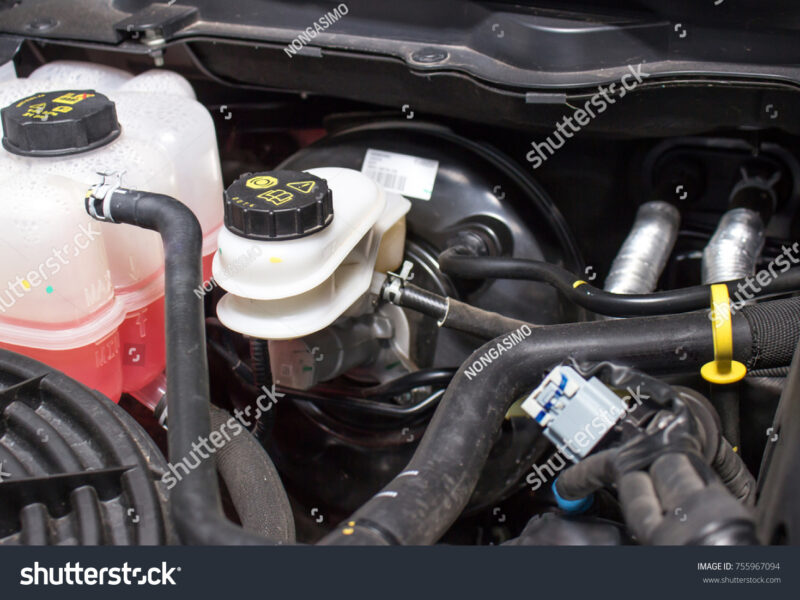
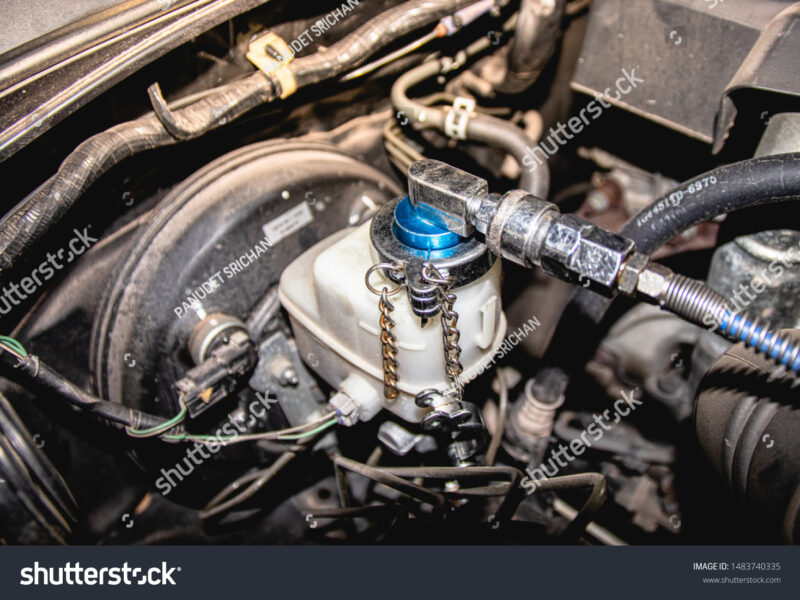
To visually inspect your brake fluid, first locate the translucent brake fluid reservoir under the hood, usually on the driver’s side, mounted on the firewall above the master cylinder. The reservoir typically has “MIN” and “MAX” lines clearly marked on its side. The fluid level should always be maintained between these two indicators; if it falls below the “MIN” line, immediate action is required.
For condition, observe the fluid’s color through the reservoir, which is often made of clear or slightly frosted plastic. Refer to the Brake Fluid Color Guide: Clear or light yellow indicates fresh fluid (less than 0.2% moisture), amber suggests aging fluid (1-2% moisture), brown signifies significant contamination (over 3% moisture) requiring immediate attention, and black indicates severe degradation, often accompanied by corrosion particles. A flashlight can help illuminate the fluid for a clearer assessment.
Additionally, check the clarity of the fluid. If the fluid looks cloudy, contains visible particles, or has a distinct burnt odor, it’s also a strong sign of contamination and degradation, irrespective of its color, and warrants an immediate brake fluid flush and system inspection by a qualified technician to assess the integrity of the hydraulic components.