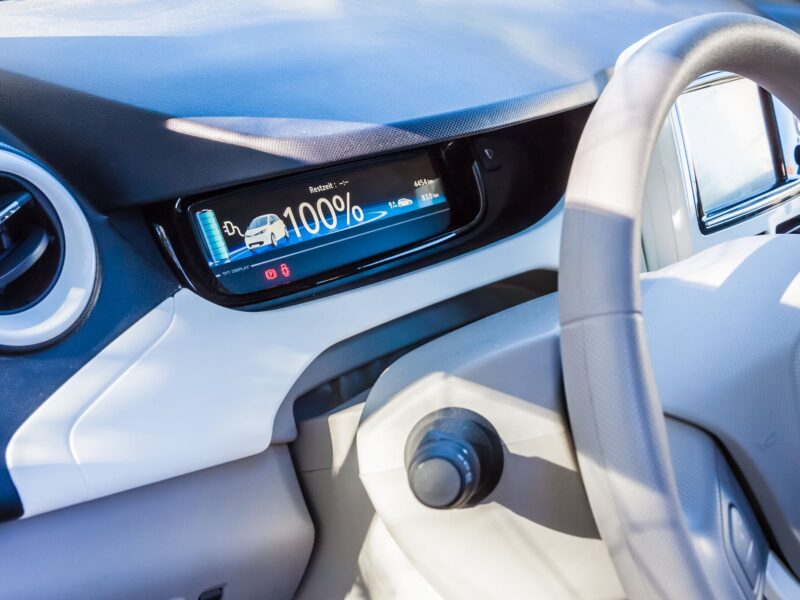
Maintaining optimal EV battery health is paramount for extending your vehicle’s reliability, maximizing its lifespan, and preserving your investment. Proactive monitoring and adherence to best practices can significantly mitigate degradation, ensuring your electric vehicle performs efficiently for years to come.
Why is Proactive EV Battery Health Monitoring Crucial?
Proactive EV battery health monitoring is critical because it allows owners to track the gradual, irreversible loss of battery capacity over time, known as degradation. By staying informed about your EV’s battery status, you can detect potential issues early and adopt strategies to slow down this natural aging process. This vigilance ensures consistent performance, preventing unexpected range reductions or power limitations that could impact daily usability.
Ignoring battery health can lead to diminished performance, particularly in extreme temperatures, and can significantly shorten the battery’s operational life, impacting your vehicle’s overall longevity. Regular monitoring empowers you to make informed decisions about charging habits and driving conditions, directly contributing to the battery’s lifespan. A well-maintained EV battery provides reliable power and supports the sophisticated electrical systems found in modern electric vehicles.
Understanding the “health” of your EV battery, often referred to as its State of Health (SoH), is distinct from its “fuel level,” which is the State of Charge (SoC). SoH measures the battery’s current usable capacity compared to its original design capacity, typically expressed as a percentage. A lower SoH means the battery can hold less total energy, leading to a reduced driving range even when displaying a 100% charge.
What Specific Methods and Tools Monitor Your EV Battery’s State of Health (SoH)?
Monitoring your EV battery’s State of Health (SoH) goes beyond simply checking the dashboard’s State of Charge (SoC). SoH quantifies the degradation level of the battery, with 100% representing a fully healthy battery. Several methods and specialized tools are available to provide detailed insights into this critical metric.
Many modern electric vehicles integrate advanced Battery Management Systems (BMS) that constantly assess SoH by analyzing capacity measurements, internal resistance changes, and degradation patterns. These systems often report an estimated SoH value, which can be accessed through the vehicle’s infotainment system or a manufacturer-specific mobile application. For a more granular understanding, especially when evaluating a used EV, dedicated diagnostic tools and third-party apps prove invaluable.
For more detailed diagnostics, a combination of an OBD2 Bluetooth adapter and a compatible smartphone application can provide deep insights into your EV battery’s health. Apps like LeafSpy Pro for Nissan Leaf owners, OBD Fusion for Chevrolet Bolt, and Car Scanner for various brands (including BMW, Hyundai, Kia, VW) can read individual cell voltages, pack temperature, and the exact SoH percentage directly from the BMS. Professional diagnostic tablets, such as those offered by Autel and XTool, also provide comprehensive battery pack health checks, state-of-charge evaluations, and component-level analysis for electric and hybrid vehicles, often supporting bi-directional testing of high-voltage systems.
How Do Optimized Charging Habits Maximize Your EV Battery’s Lifespan?
Optimized charging habits are fundamental to maximizing your EV battery’s longevity, as certain charging behaviors can accelerate degradation. Most EV manufacturers and battery experts recommend maintaining a daily charge limit between 20% and 80% for lithium-ion batteries. This “sweet spot” minimizes stress on the battery cells, which experience the most strain at very high and very low states of charge.
Regularly charging to 100% is generally discouraged for daily driving, as it keeps the battery at its upper voltage limit for extended periods, accelerating chemical degradation. While occasional full charges are acceptable and even necessary for long trips or BMS recalibration, it’s best to plan these so the vehicle begins its journey shortly after reaching full charge, rather than letting it sit at 100% for extended periods. Some vehicles with Lithium Iron Phosphate (LFP) batteries (like certain Tesla models) are more tolerant of regular 100% charges, and for these, a full charge once a week is sometimes recommended for BMS calibration.
The type of charger also influences battery health. While Level 3 DC fast charging offers rapid replenishment, frequent use can accelerate battery degradation due to the higher heat generated and the intensity of the charge. For daily use, prioritizing Level 2 (240V) or even Level 1 (120V) home charging is preferable, as these slower methods are gentler on the battery. Scheduling charging during off-peak hours can also reduce costs and ensure the battery isn’t sitting at high charge levels unnecessarily.
What are the Best Strategies for Managing Your EV Battery’s Temperature?
Effective temperature management is a cornerstone of EV battery longevity, as lithium-ion batteries perform optimally within a specific temperature range, typically between 20°C and 25°C (68°F to 77°F). Operating or charging outside this ideal window, especially in extreme heat or cold, can significantly impact efficiency, range, and long-term battery health.
One crucial strategy is utilizing your EV’s preconditioning features. Battery preconditioning involves warming or cooling the battery to its optimal temperature before charging or driving, leveraging grid power when plugged in. This practice ensures faster and more efficient charging, particularly with DC fast chargers in cold weather, and can improve driving range by reducing the energy the battery’s thermal management system needs to expend during the drive itself. Many EVs allow scheduling preconditioning via mobile apps, ensuring the battery is at its “sweet spot” when you’re ready to depart.
Parking habits also play a significant role. Whenever possible, park your EV in shaded areas, under covered parking lots, or in underground garages to shield it from direct sunlight and extreme ambient temperatures. This reduces the heat absorbed by the cabin and battery, decreasing the load on the cooling system. In cold climates, parking indoors helps preserve battery warmth. Furthermore, keeping your EV plugged in at home, even when not actively charging, allows the thermal management system to use grid power to regulate battery temperature, protecting it from both excessive heat and cold.
| EV Battery Health Factor | Optimal Practice / Recommendation | Impact on Battery Longevity |
|---|---|---|
| Daily Charging Limit | 20-80% State of Charge (SoC) for NMC/NCA chemistries; LFP batteries can tolerate 100% more often. | Reduces voltage stress, significantly extending battery lifespan by minimizing degradation. |
| Charging Frequency | Charge regularly (e.g., nightly) with smart limits; avoid frequent deep discharges below 20%. | Maintains battery in a stable operating window, reducing stress from extreme low charges. |
| Fast Charging (DCFC) Use | Use sparingly, primarily for long trips; prefer Level 2 or Level 1 for daily charging. | Minimizes heat generation and high current stress, slowing down long-term degradation. |
| Operating Temperature Range | Maintain battery between 20°C and 25°C (68°F to 77°F). | Ensures optimal chemical reactions, preventing accelerated degradation from extreme heat or cold. |
| Battery Preconditioning | Utilize vehicle’s preconditioning feature, especially before fast charging or driving in extreme weather. | Brings battery to ideal temperature using grid power, improving charging efficiency and reducing driving strain. |
| Parking Environment | Park in shade, covered garages, or indoors when possible to avoid extreme temperatures. | Protects battery from direct sunlight and harsh ambient conditions, mitigating thermal stress. |
Understanding the Financial Aspect of EV Battery Health
The financial implications of EV battery health are a significant consideration for current and prospective electric vehicle owners. One of the most reassuring aspects is the robust warranty coverage provided by manufacturers. Most new EVs sold in the U.S. come with a battery warranty of at least 8 years or 100,000 miles, whichever comes first. Some brands extend this to 10 years or even 150,000 miles. This warranty typically covers not just outright failure but also guarantees that the battery will retain a minimum capacity, often 70% or more of its original State of Health, over the covered period.
Despite these comprehensive warranties, the potential cost of an out-of-warranty EV battery replacement is a common concern. While most EV owners will never need to replace the entire battery pack during the vehicle’s lifespan due to advanced engineering and improving battery longevity, the cost can be substantial if it does occur. Average replacement costs typically range from $5,000 to $20,000, depending on the battery size, vehicle make, model, and the complexity of the replacement. For instance, compact EV battery replacements might be on the lower end, from $5,000 to $8,000, while larger, long-range luxury EVs or electric trucks can incur costs upwards of $15,000 to $25,000+.
Labor costs alone for an EV battery replacement can add $1,000 to $3,000 to the total bill, as the process requires specialized training, equipment, and safety precautions for handling high-voltage systems. However, it is important to note that module-level repairs, which address specific faulty sections within the battery pack, can be a more affordable alternative, potentially ranging from $2,000 to $5,000, avoiding the need for a full pack replacement. The continuous advancements in battery technology and the declining cost of battery cells are projected to make replacements more affordable in the future.
Extending your electric vehicle (EV) battery lifespan is crucial for maintaining performance and protecting your investment. For more general advice on vehicle power sources, consider reviewing our guide on Essential Car Battery Maintenance Tips for Longer Life and Reliability. For a deeper dive into the science of battery aging, read Understanding Electric Car Battery Degradation: Factors and Prevention Tips.
FAQs on EV Battery Health Monitoring
What is the difference between EV battery State of Health (SoH) and State of Charge (SoC)?
State of Charge (SoC) refers to the current “fuel level” of your EV battery, indicating how full it is at any given moment, typically displayed as a percentage from 0-100% on your dashboard. In contrast, State of Health (SoH) is a long-term measure of your battery’s overall condition, representing its current usable capacity compared to its original design capacity when new, also expressed as a percentage. As an EV battery ages, its SoH gradually declines, meaning that a “100%” SoC on an older battery will hold less actual energy than a “100%” SoC on a brand-new battery. For electric vehicles, the end-of-life threshold for a battery is typically considered to be around 80% SoH, at which point its reduced capacity significantly impacts driving range and overall utility.
How often should I charge my EV to 100%?
For most electric vehicles with nickel-based (NMC or NCA) lithium-ion batteries, it is generally recommended to avoid charging to 100% for daily driving. Keeping the daily charge limit between 20% and 80% is the optimal practice to minimize battery stress and extend its lifespan. Charging to 100% is best reserved for long trips where maximum range is essential, and ideally, the trip should commence shortly after reaching full charge to avoid prolonged periods at high voltage. However, some newer EV models equipped with Lithium Iron Phosphate (LFP) batteries can handle regular 100% charges better, and for these, a weekly full charge is often recommended for Battery Management System (BMS) calibration.
What is EV battery preconditioning and why is it important?
EV battery preconditioning is the process of actively warming or cooling the electric vehicle’s high-voltage battery to its ideal operating temperature before driving or charging. This process typically occurs when the vehicle is plugged in, drawing power from the grid rather than the battery itself. Preconditioning is crucial because it significantly enhances charging efficiency, especially for DC fast charging in cold weather, by allowing the battery to accept higher power levels more quickly. It also improves driving range by ensuring the battery operates efficiently from the start, reducing the energy demand on the thermal management system during the drive. Maintaining the battery within its optimal temperature range (typically 20°C to 25°C or 68°F to 77°F) through preconditioning helps reduce thermal stress and contributes to the battery’s long-term health and lifespan.
Are there specific apps or devices to monitor EV battery health?
Yes, several apps and devices allow EV owners to monitor their battery’s State of Health (SoH) and other vital metrics beyond what the standard dashboard displays. For a quick, free estimate, tools like VoltChek use real-world fleet data to benchmark your vehicle’s battery condition based on make, model, year, and mileage. For more accurate, direct readings from your car’s Battery Management System (BMS), an OBD2 Bluetooth adapter paired with a compatible app is required. Popular options include LeafSpy Pro for Nissan Leaf, OBD Fusion for Chevrolet Bolt, and Car Scanner for a wide range of vehicles, including BMW, Hyundai, Kia, and Volkswagen. These apps can display detailed information such as individual cell voltages, battery temperature history, and exact SoH percentages. Additionally, professional diagnostic tools from brands like Autel and XTool offer comprehensive battery pack analysis for workshops.