Recognizing the signs that your vehicle needs a brake fluid change is paramount for maintaining optimal braking performance and ensuring road safety. Neglecting this crucial maintenance task can lead to significant safety risks and compromised braking capabilities, as brake fluid acts as the hydraulic medium transmitting force from the brake pedal to the wheels. Regular inspections and timely fluid replacement are essential to prevent severe issues within your vehicle’s braking system.
Brake fluid is inherently hygroscopic, meaning it readily absorbs moisture from the surrounding environment over time. This absorbed moisture significantly lowers the fluid’s boiling point, which can lead to brake fade during heavy braking conditions. Understanding the critical indicators for a fluid change and the potential consequences of inaction can save you from costly repairs and dangerous situations.
5 Critical Signs You Need a Brake Fluid Change
Several indicators can alert you to the necessity of a brake fluid change, ranging from visual cues to changes in your vehicle’s braking behavior. Paying close attention to these signs is vital for preventing system degradation and maintaining safe operation.
1. Discolored or Opaque Brake Fluid
New brake fluid typically appears clear or has a slight yellowish tint, depending on its type and brand. However, as it ages and accumulates contaminants, its color can significantly darken, often turning brown or even black. This discoloration is a direct result of moisture absorption, thermal breakdown from repeated heating and cooling cycles, and the accumulation of debris, rust, or tiny bits of worn-out rubber from within the braking system components.
A cloudy or milky appearance specifically indicates that water or other foreign contaminants have infiltrated the brake fluid, drastically lowering its boiling point. If the fluid in your reservoir looks green, it might be contaminated by copper from the brake tubing’s brazed joints or by glycol ether if it’s not a silicone-based fluid, signifying severe degradation.
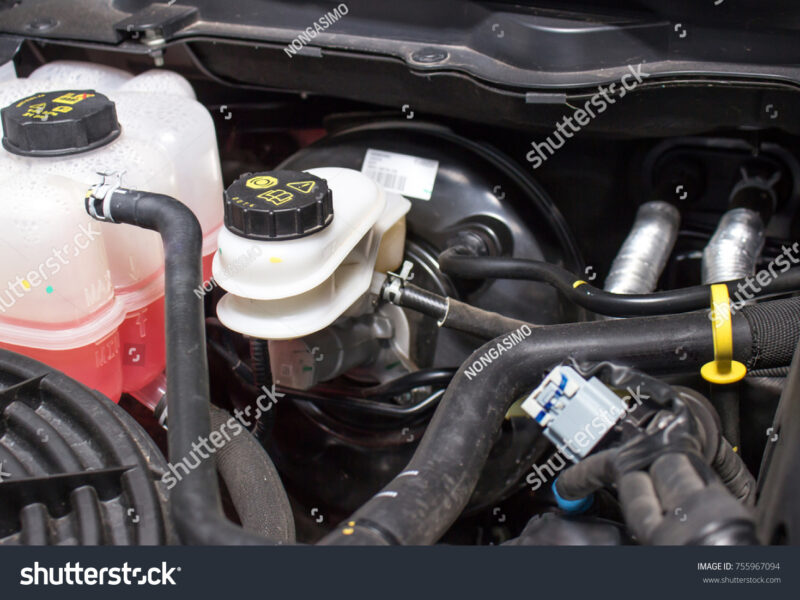
Checking your brake fluid regularly by examining the fluid level and color in the translucent reservoir under the hood can provide an immediate visual cue about its health. If you observe dark brown, black, cloudy, or green fluid, it’s a strong indication that a brake fluid flush and replacement are overdue to restore optimal performance and prevent further damage.
2. Spongy or Soft Brake Pedal Feel
One of the most concerning and common symptoms of degraded brake fluid is a spongy or soft brake pedal. Instead of a firm, responsive pedal, you might notice that it feels soft, squishy, or sinks closer to the floor when pressed. This sensation arises because water, absorbed by the hygroscopic brake fluid, lowers its boiling point.
Under heavy braking, the intense heat generated can cause the water content within the fluid to boil, creating compressible vapor bubbles in the hydraulic lines. Unlike liquid, gas (vapor) is highly compressible, meaning that when you press the brake pedal, some of the force is wasted compressing these bubbles rather than transmitting pressure efficiently to the brake calipers. This leads to a noticeable reduction in braking force and a delayed, less effective stop.
This condition, known as brake fade, significantly compromises your vehicle’s stopping capability and can lead to dangerous situations, especially during sudden stops or prolonged braking, such as driving downhill. A persistently spongy or soft pedal can also be a sign of a failing brake master cylinder, an issue detailed in our article 5 Warning Signs of a Failing Brake Master Cylinder (And How to Fix It).
3. Increased Braking Distance
An increase in the distance required to bring your vehicle to a complete stop is a critical sign that your brake fluid may be compromised. This issue is directly linked to the phenomenon of a spongy pedal and reduced hydraulic efficiency. When brake fluid has absorbed too much moisture, its ability to effectively transfer pressure from the pedal to the brake components is diminished.
Contaminated brake fluid weakens the hydraulic pressure within the system, resulting in less clamping force applied to the brake rotors and drums. This reduced force means the brakes cannot slow the vehicle down as quickly or efficiently as they should, leading to longer stopping distances and potentially dangerous situations on the road.
If you observe that your vehicle takes longer than usual to stop, or if you need to apply significantly more pressure to the brake pedal to achieve the desired deceleration, it’s a strong indicator that your brake fluid’s performance has degraded. Addressing this immediately by checking and potentially replacing the brake fluid is crucial for restoring your vehicle’s original stopping power and ensuring safety.
4. ABS Warning Light Illumination
Modern vehicles are equipped with Anti-lock Braking Systems (ABS) that rely on precise hydraulic pressure and fluid levels to function correctly. If your ABS warning light illuminates on the dashboard, it could signal various issues within the braking system, including problems related to your brake fluid. While not always directly indicating fluid degradation, it often points to a system anomaly that can be caused or exacerbated by old or contaminated fluid.
Low brake fluid levels, which can sometimes occur due to leaks or excessive wear of brake components, will trigger the ABS light. However, even if the level appears adequate, severely degraded fluid can interfere with the intricate operations of the ABS system. The presence of excessive moisture or air bubbles in the fluid can disrupt the hydraulic pressure readings and the precise modulation required by the ABS unit, prompting the warning light to activate.
Any illumination of the ABS warning light warrants immediate professional inspection. While it might indicate sensor issues or other electronic malfunctions, compromised brake fluid is a potential underlying cause that must be ruled out to ensure the proper functioning of this critical safety system. Addressing the issue promptly can prevent more extensive and costly repairs down the line.
5. Age and Mileage Exceedance
Even if you don’t observe any of the immediate warning signs, brake fluid has a finite lifespan and degrades over time regardless of driving habits. Manufacturers universally recommend changing brake fluid every 2 years or 24,000 miles (approximately 38,624 kilometers), whichever comes first.
This recommendation is based on the hygroscopic nature of glycol-based brake fluids (DOT 3, DOT 4, and DOT 5.1), which absorb moisture from the atmosphere through microscopic pores in brake lines and seals. Fresh brake fluid typically contains less than 2% water content, but after two years, this can increase to 3-4% or higher, significantly lowering its boiling point.
For instance, a DOT 3 fluid with 3% water content can see its boiling point drop from approximately 401°F (205°C) when dry to as low as 284°F (140°C) when wet. In high-performance applications, towing, or driving in mountainous regions, it’s even recommended to change the fluid if the water content exceeds 2%. Adhering to these maintenance intervals is a proactive measure that prevents the gradual degradation of your braking system and ensures consistent, reliable stopping power. For a complete guide on how to perform this maintenance, consult our article How to Change Your Brake Fluid: A Complete DIY Guide.
The Dangers of Neglecting Brake Fluid Changes
Skipping brake fluid changes can severely impair your vehicle’s hydraulic brake system and lead to a cascade of dangerous consequences. The primary danger stems from the fluid’s hygroscopic nature; as it absorbs moisture, its boiling point decreases dramatically. For example, a two-year-old car can have 2-3% water in its brake fluid, which can reduce the boiling point of DOT 3 fluid by approximately 135°F (75°C) and DOT 4 fluid by 81°F (45°C).
When the fluid boils under heavy braking, vapor bubbles form in the lines. Since gas is compressible, this leads to a spongy pedal and a significant loss of braking power, a condition known as brake fade. In extreme cases, this can result in complete brake failure, putting you and others at severe risk. The importance of this maintenance cannot be overstated; neglecting it can lead to severe safety risks and compromised braking performance, as highlighted in Why You Should Never Skip Changing Your Brake Fluid.
Beyond immediate safety hazards, old and contaminated brake fluid can also cause long-term damage to expensive components within your braking system. The absorbed moisture can lead to corrosion of internal metal parts, such as the master cylinder, ABS valves, and calipers. Additionally, the chemical composition of glycol-based fluids breaks down over time, forming acidic compounds that accelerate this corrosion. This internal damage can lead to costly repairs that could have been avoided with routine fluid changes.
Understanding Brake Fluid Types: DOT 3, DOT 4, and DOT 5
The U.S. Department of Transportation (DOT) classifies brake fluids into several categories, primarily based on their boiling points and chemical composition. The most common types for passenger vehicles are DOT 3, DOT 4, and DOT 5.1 (which is distinct from DOT 5). Understanding these differences is crucial for selecting the correct fluid for your vehicle and ensuring optimal braking performance. Always refer to your vehicle’s manual for the recommended type.
DOT 3, DOT 4, and DOT 5.1 are all glycol-ether-based fluids, meaning they are hygroscopic and will absorb moisture over time. This characteristic helps to disperse moisture throughout the system, preventing localized pockets of water that could cause corrosion or boil easily. However, their boiling points differ significantly, with DOT 4 offering superior performance over DOT 3, and DOT 5.1 providing even higher boiling points for high-performance applications.
DOT 5 brake fluid, conversely, is silicone-based and non-hygroscopic (hydrophobic), meaning it does not absorb water. While this property can extend its service life in some specific applications, DOT 5 is generally not recommended for modern vehicles with ABS systems due to its higher compressibility and potential for aeration, which can lead to a spongy pedal feel. Furthermore, DOT 5 must never be mixed with glycol-based fluids (DOT 3, DOT 4, or DOT 5.1), as this can lead to phase separation, seal issues, and inconsistent braking.
| Characteristic | DOT 3 | DOT 4 | DOT 5 | DOT 5.1 |
|---|---|---|---|---|
| Base Chemistry | Glycol Ether | Glycol Ether / Borate Ester | Silicone | Glycol Ether / Borate Ester |
| Hygroscopic Nature | Hygroscopic (absorbs water) | Hygroscopic (absorbs water) | Non-Hygroscopic (hydrophobic) | Hygroscopic (absorbs water) |
| Minimum Dry Boiling Point | 401°F (205°C) | 446°F (230°C) | 500°F (260°C) | 500°F (260°C) |
| Minimum Wet Boiling Point | 284°F (140°C) | 311°F (155°C) | 356°F (180°C) | 356°F (180°C) |
| Compatibility (with 3/4/5.1) | Compatible with DOT 4, 5.1 | Compatible with DOT 3, 5.1 | NOT Compatible | Compatible with DOT 3, 4 |
| Typical Use | Older/Standard passenger cars | Modern vehicles, ABS systems | Classic cars, military, non-ABS | High-performance, heavy-duty applications |
How to Change Your Brake Fluid: A Brief Overview
Changing your brake fluid, often referred to as a brake fluid flush or bleed, is a critical maintenance procedure that ensures the longevity and effectiveness of your vehicle’s braking system. While it can be a DIY task for experienced mechanics, it requires careful attention to detail and specific tools. The process typically involves draining the old fluid from the system and replacing it with fresh, uncontaminated fluid, simultaneously bleeding out any air bubbles that may have entered the lines.
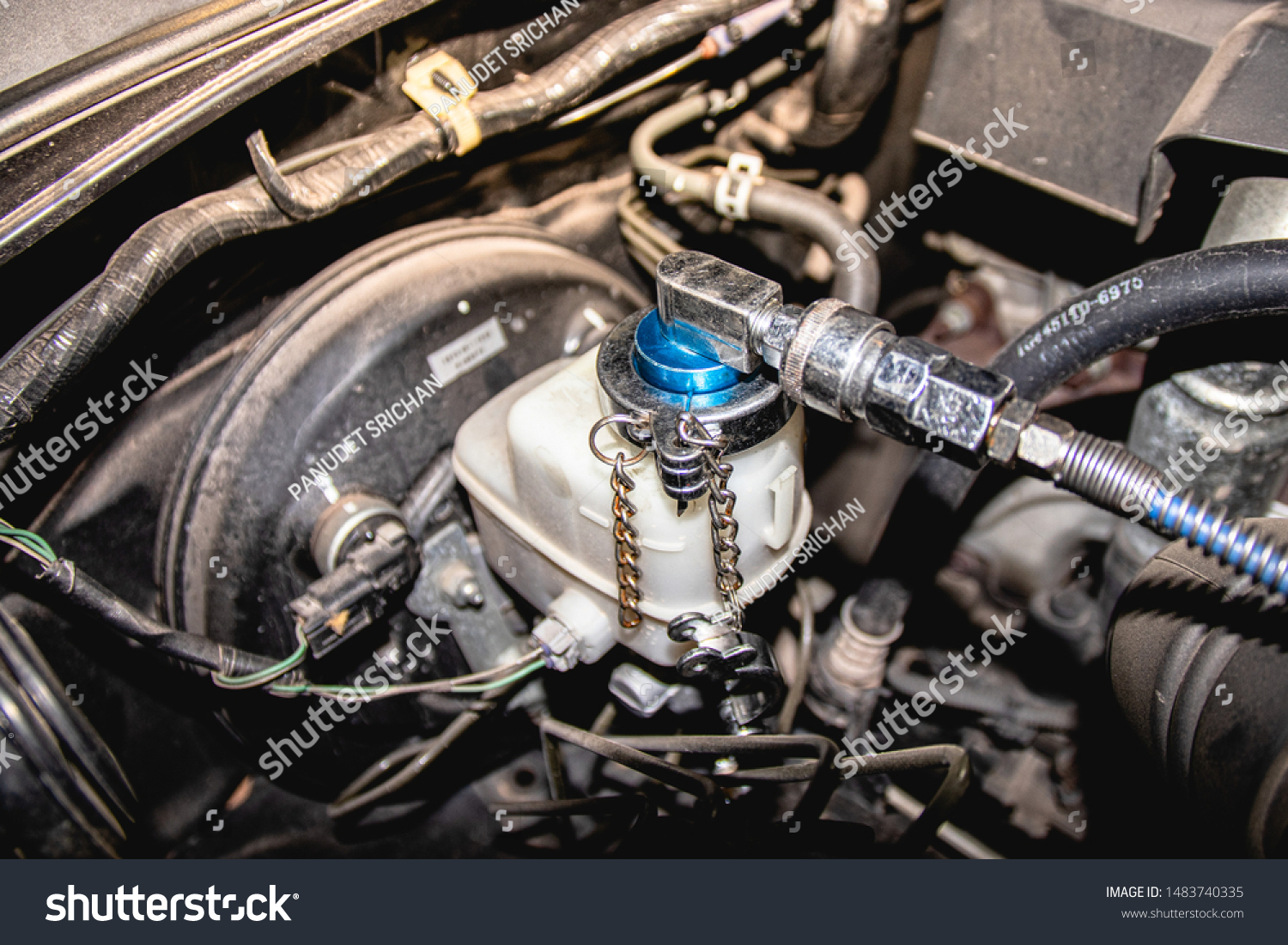
To successfully change your brake fluid, you will need the correct type of new brake fluid (e.g., DOT 3, DOT 4, or DOT 5.1, as specified by your vehicle’s manufacturer), a brake bleeder kit or a simple turkey baster for the reservoir, a wrench for the bleed nipples, and a container for the old fluid. Eye protection and gloves are also essential for safety. The general steps involve safely lifting the vehicle, accessing the brake master cylinder reservoir, removing old fluid, refilling with new fluid, and then systematically bleeding each wheel caliper to push out old fluid and air.
The physical purging of the system is a detailed process that typically begins with the wheel furthest from the master cylinder and progresses to the closest. This ensures that all old fluid and air are effectively removed. It’s often a two-person job, with one person pumping the brake pedal and the other operating the bleed valve at the caliper. For comprehensive, step-by-step instructions on performing this crucial maintenance, refer to our complete guide: How to Change Your Brake Fluid: A Complete DIY Guide.
Frequently Asked Questions (FAQs)
What is the exact percentage of water absorption that degrades brake fluid?
Brake fluid is considered significantly degraded when its water content exceeds 2-3%. New brake fluid typically contains less than 2% water. However, after just two years of service, glycol-based brake fluid can absorb 3-4% water or even higher, depending on climate and operating conditions. At 3.7% water content, which is used for the “wet boiling point” standard, the boiling point of the fluid is significantly reduced. For instance, a DOT 4 fluid might drop from a dry boiling point of 265°C to 160°C with 3.7% water. This reduction dramatically increases the risk of brake fade and compromises braking safety during demanding conditions.
Can I mix different DOT types of brake fluid?
You can mix DOT 3, DOT 4, and DOT 5.1 brake fluids in an emergency because they are all glycol-ether-based and chemically compatible. However, doing so will dilute the properties of the higher-performing fluid, causing the entire system to perform to the standard of the lowest class fluid mixed in. It is crucial to never mix DOT 5 (silicone-based) fluid with any glycol-based fluids (DOT 3, DOT 4, or DOT 5.1). Mixing silicone with glycol can lead to phase separation, aeration, seal damage, and inconsistent pedal feel, which can severely compromise your braking system’s integrity and safety.
How often should brake fluid be changed if I don’t drive much?
Even if you drive infrequently, brake fluid should still be changed regularly, typically every 2 years, regardless of mileage. This is because glycol-based brake fluids (DOT 3, DOT 4, DOT 5.1) are hygroscopic and absorb moisture from the atmosphere over time, even in a sealed system. Moisture infiltration occurs through microscopic pores in rubber brake hoses and seals, not just through active use. As moisture accumulates, the fluid’s boiling point drops, degrading its performance and increasing the risk of brake fade. The chemical integrity of the fluid also breaks down over time, forming acidic compounds that can corrode internal components.