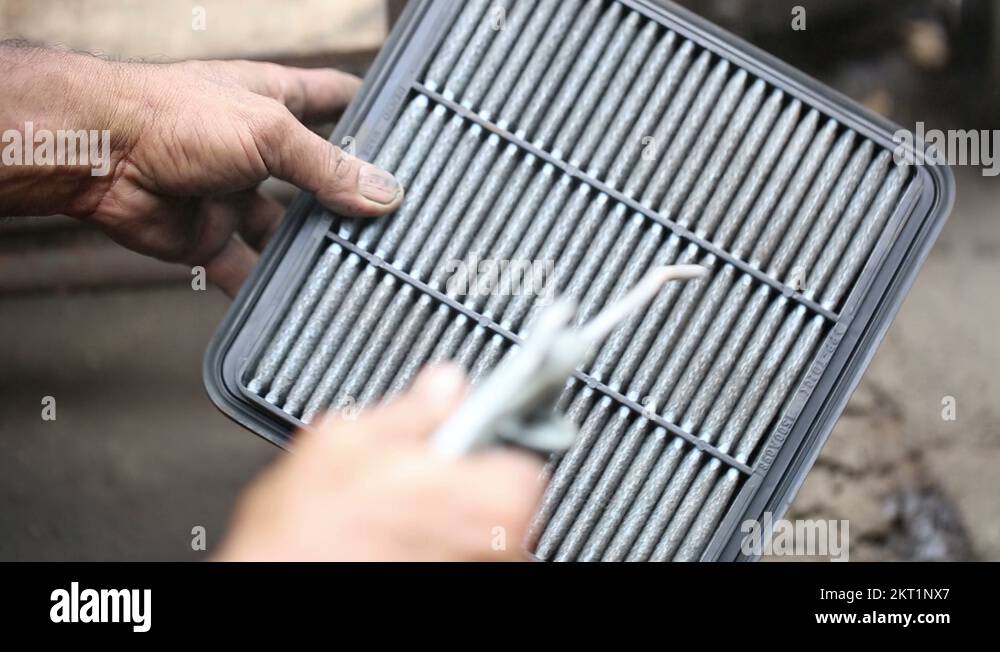
Cleaning an engine air filter using compressed air is often a misguided choice, especially when it comes to standard paper or cellulose-based Original Equipment Manufacturer (OEM) filters. The potential risks are significant, as improper cleaning can lead to damage and decreased filtration efficiency, seriously affecting the longevity of your engine. While a few specific reusable performance air filters may allow for low-pressure compressed air in a thorough cleaning regimen, manufacturers overwhelmingly recommend against high-pressure air for most types of filters.
Is it Advisable to Clean an Engine Air Filter with Compressed Air?
For the vast majority of automotive air filters, particularly standard OEM filters designed to maximize filtration efficiency, the use of compressed air is ill-advised. Typically constructed from pleated paper or synthetic materials, these filters are engineered with a precise pore structure that efficiently traps airborne contaminants ranging from 0.3 to 10 microns (µm) in size. Introducing high-pressure compressed air can damage this delicate media, creating micro-tears, enlarging pores, or even puncturing holes in the filter material, ultimately compromising its structural integrity.
In contrast to standard OEM filters, performance air filters—discussed in detail in “Unleash Your Engine’s Potential: The Top Benefits of Performance Air Filters”—are designed to enhance airflow with a less restrictive path. Nevertheless, for these filters too, adhering strictly to manufacturer instructions is essential. Typically, this involves using specialized cleaning solutions and low-pressure water rinsing, with compressed air reserved for controlled drying stages.
What are the Specific Risks Associated with Compressed Air Cleaning?
Utilizing compressed air to clean engine air filters carries multiple, quantifiable risks that can lead to decreased engine protection and performance:
- Filter Media Damage: High-pressure air at levels like 100 PSI can easily create holes or micro-tears in paper or synthetic filter media. This invisible damage allows unfiltered air and harmful particulates to bypass the filtration system and enter the engine.
- Reduced Filtration Efficiency: Even without visible damage, compressed air can distort the intricate fiber structure of the filter, enlarging the pores. This directly impacts the Minimum Efficiency Reporting Value (MERV)—a standard for measuring filtration efficiency—reducing the filter’s capability to capture particles in the 0.3 to 10 micron range. A lower MERV rating results in a higher percentage of smaller, harmful particles passing through.
- Embedding Contaminants: Instead of effectively removing dirt, compressed air can push fine dust and debris deeper into the filter’s pleats, making contamination harder to dislodge and potentially increasing airflow restrictions over time, which shortens the filter’s lifespan.
- Downstream Contamination: Blowing dirt from the dirty side may aerosolize dust, allowing it to settle on the clean side of the filter housing or intake ducts. Upon engine restart, this redistributed dust can be ingested, accelerating wear on critical components like turbo compressor wheels, cylinders, and piston rings.
- Damage to Seals and End Caps: High-pressure air can also damage non-media components such as gaskets, seals, and adhesive bonds on end caps, creating leakage points that allow unfiltered air to bypass the filter altogether, which is even more detrimental than bypass through damaged media.
When Can Compressed Air Be Used (and What are the Best Practices)?
Though generally discouraged, compressed air can be used under very specific circumstances for certain types of engine air filters, mainly to remove loose surface debris or as a drying aid, following manufacturer guidelines closely.
- Filter Type Specificity: Only certain reusable, heavy-duty air filters found in heavy equipment or some aftermarket performance applications may tolerate low-pressure compressed air. For instance, K&N and aFe POWER stress the importance of avoiding compressed air for cleaning; if at all, it can only be used for drying from a distance of at least 12 inches. aFe POWER explicitly advises against using compressed air for both cleaning and drying, stating, “DO NOT use compressed air… as it can separate the media, creating unseen holes for dirt to pass through.”
- Pressure Regulation: In cases where using compressed air is unavoidable and manufacturer-approved, pressure should be significantly lowered, ideally below 30 PSI. Additionally, many manufacturers advocate against any compressed air usage for cleaning media. Some users in agricultural sectors report success with pressures between 35-50 PSI for light cleaning of sturdy filters, ensuring they maintain a distance of 100 mm (about 4 inches) and blow air from the clean side outward.
- Direction of Airflow: If permitted and needed to clear superficial loose debris, air should be directed from the “clean” side (facing the engine) to the “dirty” side to avoid pushing particles deeper into the filter material.
- Post-Cleaning Inspection: After any cleaning effort, a thorough visual inspection for holes, tears, or damage is critical. If any damage is suspected or found, the filter must be replaced promptly.
How Does Compressed Air Cleaning Impact Filtration Efficiency (MERV)?
The Minimum Efficiency Reporting Value (MERV) system established by the American Society of Heating, Refrigerating, and Air-Conditioning Engineers (ASHRAE) quantifies an air filter’s ability to capture airborne particles. As detailed in “Decoding MERV: What Car Air Filter Ratings Mean for Your Vehicle”, MERV ratings range from 1 to 20, with higher values signifying greater efficacy at trapping smaller particles.
When compressed air is applied, particularly at pressures exceeding 30 PSI, it can physically alter the filter’s media structure. This degradation—such as enlarged pores or micro-tears—directly compromises the filter’s efficiency. Therefore, a filter rated at MERV 11, capable of capturing up to 95% of dust, may experience an unquantifiable drop in effective MERV after cleaning with compressed air. This process exposes the engine to more abrasive materials, potentially leading to increased wear and a shorter service life. Even minor reductions in filtration efficiency for particles between 0.3 and 1.0 µm (the most penetrating particle size) can have significant long-term impacts on engine health.
Comparative Analysis of Engine Air Filter Cleaning Methods
Understanding the ramifications of various cleaning methods is vital for maintaining optimal engine performance. Below is a comparative analysis of common approaches:
| Cleaning Method | Suitable Filter Types | Risk of Media Damage | Typical Effectiveness (Particulate Removal) | Required Equipment / Procedure |
|---|---|---|---|---|
| Compressed Air (High Pressure >30 PSI) | Not recommended for any engine air filter. | Extremely High (Tears, enlarged pores, upstream contamination) | Poor (Can embed particles, reduces actual filtration capability) | Air compressor, blow gun (not recommended) |
| Compressed Air (Low Pressure <30 PSI, from clean side out, distance >100mm) | Certain robust reusable fabric/gauze filters (only if explicitly approved by manufacturer, for drying only by K&N/aFe POWER) | Moderate (Reduced risk if strict guidelines followed, but still cautioned against for cleaning media) | Low to Moderate (Removes only superficial, loose dust) | Regulated air compressor, blow gun, personal protective equipment (PPE) |
| Vacuum Cleaner (Low Suction) | Paper, some dry-type synthetic (for very light surface dust only) | Low (if suction is low and care is taken) | Low (removes only surface debris, does not penetrate pleats effectively) | Household vacuum cleaner with brush attachment |
| Manufacturer Cleaning Kits (e.g., K&N, aFe POWER) | Specific reusable oiled cotton gauze or dry synthetic media performance filters. | Very Low (if instructions followed precisely) | High (Restores close to original performance and MERV rating for specified filters) | Specialized cleaner, low-pressure water for rinsing (from clean to dirty side), specific filter oil (for oiled filters), natural air drying (no heat or compressed air for drying by aFe POWER) |
| Replacement with New Filter | All filter types (especially OEM paper and heavily soiled/damaged reusable filters) | None (optimal integrity maintained) | Optimal (100% original design efficiency and MERV rating) | New filter element, basic hand tools for installation. (Refer to “Easy Steps: Your Complete Air Filter Installation Guide”) |
What are the Alternatives to Compressed Air for Engine Air Filter Maintenance?
Considering the substantial risks tied to cleaning engine air filters with compressed air, safer and more effective alternatives are available for optimal engine performance:
- Regular Replacement of OEM Filters: The best maintenance for standard OEM paper filters is timely replacement. As these filters are designed for maximum filtration efficiency, replacing them according to your vehicle manufacturer’s service intervals ensures the engine receives air filtered to its original specifications, preventing contaminants from affecting engine performance.
- Manufacturer-Recommended Cleaning Kits for Performance Filters: For reusable aftermarket performance air filters (like K&N and aFe POWER), specialized cleaning kits represent a superior solution. These kits include specific cleaning solutions and, for oiled filters, a re-oiling agent. The process involves applying the cleaner, letting it soak (typically 10 minutes for K&N), rinsing with low-pressure water from the clean side to the dirty side, and allowing the filter to air-dry naturally without heat or compressed air to protect the media. Re-oiling, when necessary, is crucial for maintaining filtration efficacy.
- Gentle Tapping: For light surface dust, gently tapping the filter element against a solid surface, like a tire, can dislodge loose debris without damaging the media. This method is only suitable for superficial cleaning and cannot replace a full filter replacement or a proper manufacturer-approved cleaning process for reusable filters.
Frequently Asked Questions (FAQ)
Can using too much compressed air pressure damage an engine air filter?
Yes, using compressed air pressures exceeding 30 PSI can cause micro-tears, enlarge pores, or rupture filter media, severely undermining filtration efficiency and leading to engine damage.
Does cleaning a paper air filter with compressed air reduce its MERV rating?
Indeed, damaging the filter media with compressed air can degrade its structure, leading to a diminished Minimum Efficiency Reporting Value (MERV) and subsequently lowering its ability to filter particles between 0.3 and 10 microns (µm).
Is it safe to use compressed air to dry a reusable air filter after washing?
Some manufacturers like K&N advise against using compressed air for cleaning filter media but suggest it may be used from 12 inches away to expedite the drying process after proper washing. Conversely, aFe POWER explicitly instructs, “Do not use compressed air… to dry faster” for their filters.
What is the recommended air pressure if I were to use compressed air on an engine filter?
The consensus among filter and engine manufacturers is to avoid using compressed air for cleaning engine air filter media due to the associated risks. If absolutely necessary for certain heavy-duty applications, and with explicit approval from the manufacturer, pressures should ideally be below 30 PSI, held at a distance exceeding 100 mm from the filter media.