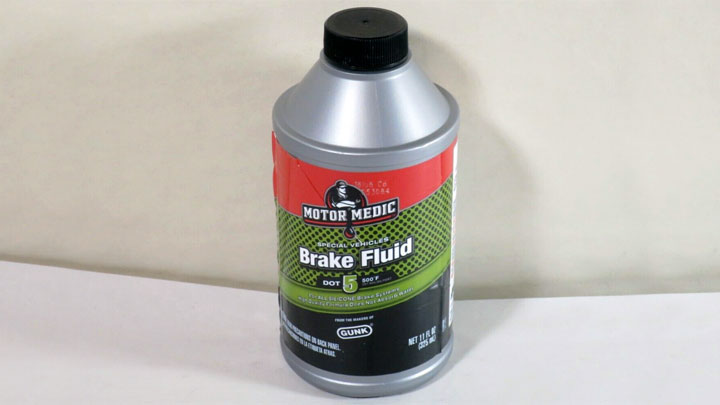
Advanced brake fluid testing serves as a critical line of defense in maintaining your vehicle’s safety. Moving beyond mere visual inspections, it rigorously evaluates the chemical and physical properties of hydraulic fluid, ensuring that your braking system functions at peak performance. By meticulously monitoring parameters like moisture content, boiling point, and copper contamination, this thorough assessment becomes essential in identifying issues before they escalate, thus ensuring the reliability of your vehicle’s braking mechanisms.
Understanding these intricate details lays the foundation for comprehensive vehicle safety. Ignoring the importance of advanced brake fluid testing may lead to hazardous driving conditions due to unnoticed degradation. The proactive approach of these tests not only enhances the longevity of your brake system but significantly reduces the risk of situations like vapor lock and corrosion.
What is the Function of Brake Fluid in a Vehicle’s Braking System?
Brake fluid is an incompressible hydraulic fluid that plays a pivotal role in ensuring vehicle safety. It transmits force from the brake pedal to the calipers or wheel cylinders, activating the braking mechanism efficiently. However, over time, brake fluid can degrade, primarily due to its hygroscopic nature, which causes it to absorb moisture from the atmosphere. The presence of moisture not only decreases the boiling point but also compromises the integrity of the braking system, thus underscoring the necessity for advanced brake fluid testing.
Why Are Traditional Brake Fluid Inspection Methods Inadequate for Optimal Safety?
Traditional inspection methods, such as simple visual checks and dipstick tests, offer insufficient information regarding the actual condition of brake fluid. Visual inspections are often misleading, as brake fluid can darken rapidly after installation due to contact with seals and hoses. Additionally, a dipstick merely indicates fluid level and fails to measure critical parameters like moisture content or copper levels. Relying on these outdated techniques could lead to undetected degradation, posing significant safety risks.
What Advanced Metrics Does Professional Brake Fluid Analysis Evaluate?
Professional brake fluid analysis takes diagnostics further, measuring crucial factors that determine fluid integrity and performance. Boiling point, moisture content, and copper contamination levels are assessed to ensure that the hydraulic fluid can withstand various thermal and operational stresses. This level of scrutiny is vital for maintaining optimal vehicle safety and preventing potential brake failures.
How Does Moisture Content Affect Brake Fluid Performance and Safety?
The moisture content directly affects the brake fluid’s boiling point. As moisture accumulates, the boiling point decreases, resulting in the risk of vapor lock. When fluid with high moisture content boils during heavy braking, compressible vapor bubbles can form in the brake lines. This effectively leads to spongy pedal feels and diminished braking power, raising alarm bells for vehicle safety. For instance, DOT 4 brake fluid has a “wet” boiling point of 155°C (311°F) with just 3% moisture content, significantly lower than its “dry” boiling point of 260°C (500°F). Such findings highlight the pivotal role that advanced brake fluid testing plays in preventing serious safety hazards.
Why is Boiling Point the Most Accurate Indicator of Brake Fluid Health?
The boiling point stands as the most definitive method for gauging brake fluid condition and moisture content. Through heating a sample, testers can accurately determine the boiling point, directly assessing the fluid’s capacity to resist vapor lock. This methodology supersedes conductivity testers, which estimate moisture levels and boiling points, often leading to unreliable results. Accurate diagnostics based on boiling point measurements are essential for maintaining braking safety and are foundational to advanced brake fluid testing.
What Role Does Copper Content Play in Brake Fluid Degradation and System Integrity?
Copper content within brake fluid serves as a critical indicator of internal corrosion in braking system components. As brake fluid degrades, copper particles accumulate, signaling a breakdown that could lead to further damage. According to Motorist Assurance Program (MAP) guidelines, brake fluid should be replaced when copper levels exceed 200 parts per million (ppm), as elevated copper can damage ABS components and extend stopping distances. Thus, assessing copper is an integral part of advanced brake fluid testing, offering vital insights into the overall integrity of the braking system.
What Are the Key Differences in Advanced Brake Fluid Testing Methods for Accurate Assessment?
Professional brake fluid testing encompasses various methods, each offering unique insights into brake fluid health. Selecting an appropriate testing method can greatly influence diagnostic precision and, as a result, vehicle safety. A comprehensive understanding of fluid conditions should always extend beyond the dipstick.
| Test Method | Primary Measurement | Accuracy | Advantages | Disadvantages |
|---|---|---|---|---|
| Boiling Point Tester | Actual Boiling Point (Wet) | High (Most Accurate) | Directly measures vapor lock risk; recommended for optimal safety in advanced brake fluid testing. | Requires a dedicated device for heating fluid samples. |
| Conductivity Tester (Pen Type) | Electrical Conductivity (Infers Moisture) | Low (Often Unreliable) | Fast, portable, easy to use for quick checks. | Inaccurate due to fluid formulation variations; not approved for boiling point determination; does not go beyond basic diagnostics. |
| Test Strips (Copper Content) | Copper Ion Concentration (ppm) | Moderate to High | Detects early corrosion; quick system integrity assessment. | Only indicates corrosion; does not provide direct boiling point or total moisture content information, thus not a complete solution. |
What are the Benefits of Professional Advanced Brake Fluid Testing?
Engaging in professional advanced brake fluid testing unlocks numerous advantages, vital for ensuring vehicle safety and preserving the life of braking components. These diagnostics proactively address fluid degradation, preventing brake fade, a spongy pedal feel, and potential brake failure. Regular testing, ideally every 2 to 3 years or 24,000 to 40,000 miles (38,000 to 64,000 kilometers), not only safeguards the integrity of the entire braking system but also fortifies brake fluid for vehicles equipped with ABS. Proactive measurement and insights found in advanced brake fluid testing are indispensable for any comprehensive preventative maintenance strategy.
Frequently Asked Questions About Professional Advanced Brake Fluid Testing for Optimal Safety
When Should Brake Fluid Be Professionally Tested?
It is advisable to have brake fluid professionally tested every two to three years or every 24,000 to 40,000 miles (38,000 to 64,000 kilometers) as part of your routine maintenance. In high-humidity areas that accelerate moisture absorption, more frequent testing is crucial to ensure the integrity of the braking system.
Can Discolored Brake Fluid Indicate the Need for Replacement?
While discolored brake fluid can imply degradation, it does not serve as a reliable standalone indicator for replacement. New brake fluid may darken quickly without a marked decline in performance, further emphasizing the necessity of advanced testing methods for an accurate assessment. For more insights, refer to What Do Different Brake Fluid Colors Mean? A Diagnostic Guide.
What Happens If Brake Fluid Is Not Regularly Tested with Advanced Methods?
Neglecting to regularly test brake fluid through advanced techniques can lead to serious declines in braking performance, manifesting as a spongy pedal feel, longer stopping distances, and the potential for brake failure due to vapor lock or corrosion. This can pose significant safety threats and incur costly repairs. Therefore, advanced brake fluid testing is fundamental for maintaining optimal vehicle safety and ensuring the longevity of your braking components.