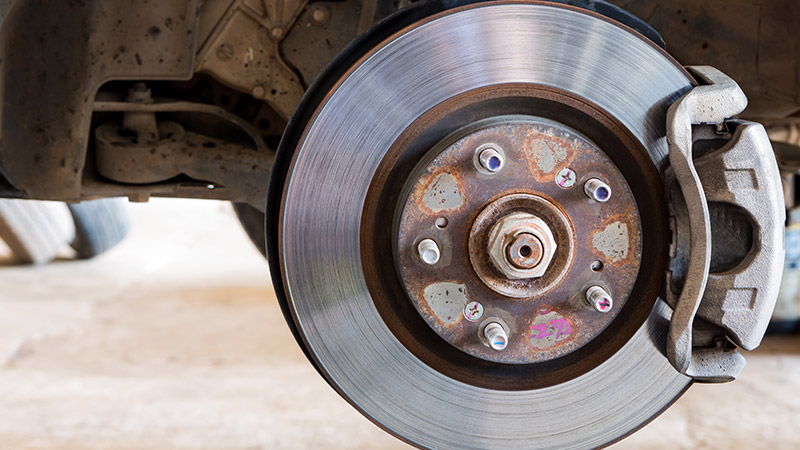
A failure in the Anti-lock Braking System (ABS) poses a significant threat to a vehicle’s ability to maintain traction and directional control during emergency braking. This critical system prevents wheel lockup, ensuring stability and maneuverability even in extreme braking conditions. When ABS malfunctions, it can hinder the precise hydraulic pressure modulation in the wheel cylinders, jeopardizing driver safety.
What Are the Common Causes of ABS System Failures?
The causes of ABS failures are diverse, impacting electrical, hydraulic, or mechanical components. A common culprit is a defective wheel speed sensor. These sensors, constantly exposed to dirt and moisture, can send faulty 0-5V signals to the ABS control unit, impeding its function.
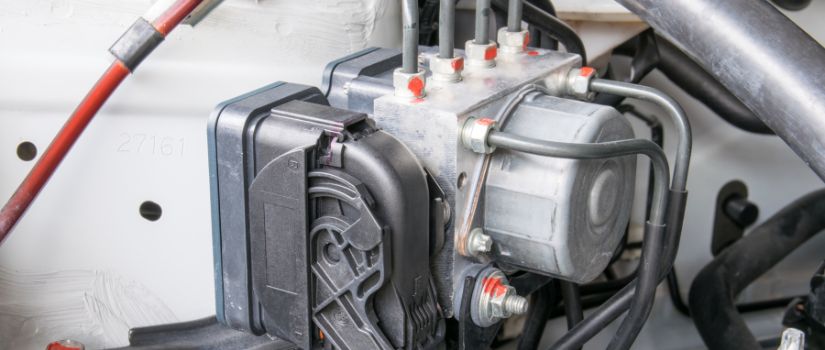
Another potential failure source is the Hydraulic Control Unit (HCU), which houses solenoid valves and a return pump. If internal solenoids become stuck, or the auxiliary electric pump fails to generate the required return pressure—up to 180 bar—ABS performance is compromised. Contaminants in brake fluid or inadequate fluid levels can further jeopardize HCU operations, as the brake fluid is essential for hydraulic pressure transmission.
Electrical issues, such as blown fuses (e.g., the main 30-amp fuse for the ABS pump), defective relays, or corroded wiring between wheel sensors and the ABS control module, can disrupt necessary communication or power supply. Moreover, if the Electronic Control Unit (ECU) fails, it typically necessitates a complete replacement, affecting ABS functionality.
What Symptoms Indicate an ABS System Failure?
The most evident sign of ABS failure is the illumination of the ABS warning light on the dashboard, represented by a standard ISO 7000-2029 icon. Other symptoms include abnormal pulsation in the brake pedal during normal braking at speeds above 10 km/h, or a lack of the expected pulsating feel during emergency braking on low-traction surfaces.
A noticeable increase in stopping distance under low traction conditions or complete wheel lockup during hard braking signifies that the ABS is failing to modulate brake pressure effectively. This endangers vehicle control and safety in critical situations. Unusual noises from the wheel area during braking may indicate issues with the toothed rings or the sensor itself.
How is an Initial Diagnosis of ABS Failure Conducted?
Diagnosing ABS failure begins with checking for the warning light, indicating an anomaly detected by the ABS control module. Utilizing an OBD-II diagnostic scanner is essential for reading specific manufacturer diagnostics trouble codes (DTCs), which often start with the letter ‘C’ (for example, C0035 indicates a front left wheel speed sensor failure). This step is crucial for identifying the affected subsystem or component.
Following code retrieval, a meticulous visual inspection of critical components is necessary. Inspect the wiring of the wheel speed sensors for damage or corrosion, and clean the sensors and their toothed rings to eliminate any debris that may interfere with the signal. It is also vital to check the brake fluid level and condition in the master cylinder, ensuring it falls between the “Minimum” and “Maximum” markings without signs of contamination.
Lastly, confirm the status of fuses and relays associated with the ABS. Many vehicles have a 30A fuse for the ABS pump and a 10A or 15A fuse for the control module. Also, ensure the battery voltage is at least 12.6 volts, as a weak battery can cause intermittent or erroneous failures in complex electronic systems like ABS.
The following scenarios illustrate common causes of ABS failures and their implications:
| Affected Component | Typical Symptoms | Example Failure Codes (DTCs) | Impact on Vehicle |
|---|---|---|---|
| Wheel Speed Sensor | ABS light illuminated, irregular braking, abnormal pedal pulsation, wheel lockage at low speeds (below 20 km/h). | C0035-C0050 (Sensor circuit/range fault), P0500 (Vehicle speed sensor). | Loss of individual brake modulation per wheel, compromising stability during braking. |
| Hydraulic Control Unit (HCU) | ABS/brake light on, spongy brake pedal, lack of ABS activation in critical braking situations, possible pump motor noises. | C1214 (Pump motor relay fault), C1234 (Solenoid valve fault), U0423 (Invalid data received from ABS control module). | Inability of the system to adjust hydraulic pressure, resulting in wheel lockup or ineffective braking. |
| ABS Electronic Control Module (ECU) | Permanently illuminated ABS/traction control light, communication failures with OBD-II scanner, multiple generic system DTCs. | U0121 (Loss of communication with ABS control module), C0077 (Incorrect module alignment). | Total inoperability of the ABS system and often other dependent safety systems (e.g., stability control). |
| Low Brake Fluid Level or Contamination | Brake warning light on, low or spongy brake pedal, decreased overall braking efficiency. | No direct ABS DTCs, but may show P0171 (System too lean) if affecting the pressure sensor signal. | Compromised hydraulic force transmission, affecting braking ability and ABS modulation. |
Frequently Asked Questions about ABS System Failures
Is it safe to drive with the ABS light on?
No, driving with the ABS light on is unsafe as it indicates the anti-lock system is inactive, increasing the risk of wheel lockup and loss of directional control during emergency braking.
Can a blown fuse cause a complete ABS failure?
Yes, a blown fuse, especially the one for the ABS pump (typically 30A), will completely disrupt power supply to the system, rendering it inoperative.
How quickly should I repair an ABS failure?
An ABS failure should be repaired immediately to restore the vehicle’s safety features, as stopping distances can increase significantly, compromising steering ability in critical situations.