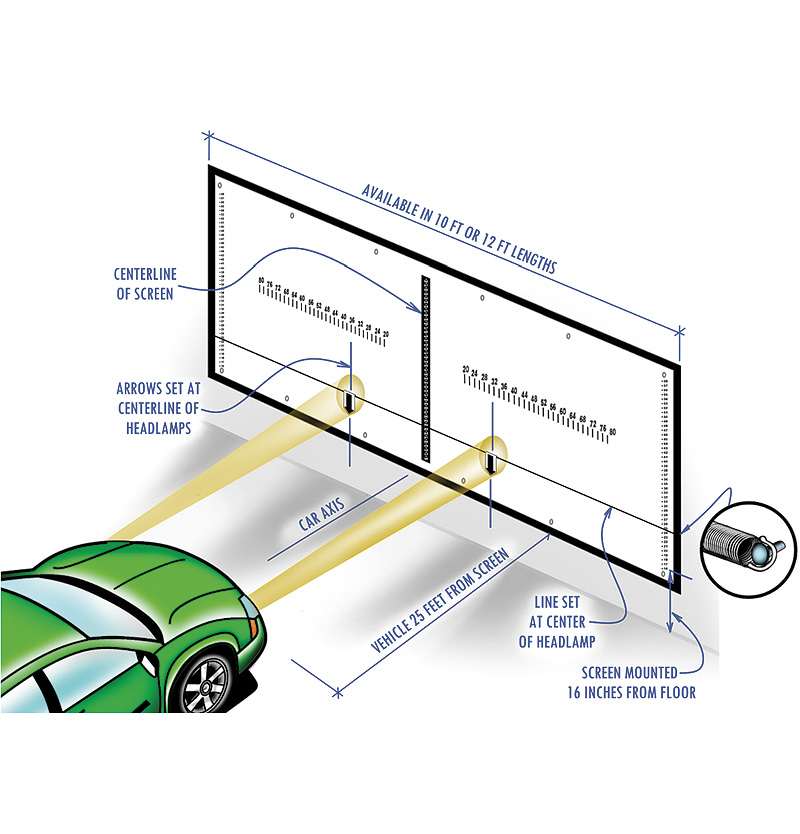
Proper headlight aiming is far more than a mere regulatory stipulation; it is an essential facet of road safety. Correctly aimed headlights significantly enhance driver visibility while minimizing hazardous glare for oncoming traffic. When headlights are misaligned, they severely reduce a driver’s sight distance, creating alarmingly dangerous conditions—particularly at speeds of 60 miles per hour, where the braking distance may surpass 200 feet. Poorly aligned headlights can profoundly impact driver performance; studies indicate that 25% of fatal crashes at night involve vehicles with improper headlight settings. Just as a spongy brake pedal indicates low brake fluid and poses a risk, headlights that shine into tree canopies rather than the roadway represent a glaring safety concern.
What are the Primary Regulatory Standards for Headlight Aiming?
Headlight aiming operates under a complex framework of regulations that vary across different regions and type of vehicle. In the United States, the Federal Motor Vehicle Safety Standard (FMVSS) 108 delineates crucial guidelines, while Europe and its adopters adhere to the UNECE Regulation No. 48 (ECE R48). FMVSS 108, as detailed in 49 CFR Part 571, Section 108, establishes stringent performance, durability, and photometric criteria for all vehicle lamps, including headlight systems. Notably, a significant amendment in February 2022 authorized the use of Adaptive Driving Beam (ADB) headlamps in new vehicles, although practical application challenges persist. This change aims to enhance visibility while reducing glare, but still requires appropriate slopes and geometries during installation.
In contrast, ECE R48 provides comprehensive guidelines aimed at optimizing vehicle safety and improving visibility for all road users. Starting in 2027, this regulation will mandate automatic headlamp leveling systems, replacing manual adjustments. These systems will optimize beam orientation and reduce glare for approaching vehicles based on load and pitch measurements, utilizing advanced technology such as Johnson Electric’s LuMEMS. This initiative reflects a growing recognition of vehicle dynamics and light management systems as pivotal factors in road safety.
How Do Vertical and Horizontal Aiming Specifications Differ Regionally?
Aiming specifications for headlights reveal notable differences across regulatory bodies. In the U.S., standard guidelines for low beams dictate parking a vehicle 25 feet (7.62 meters) from a wall on level ground. Here, the brightest point of the low beam should align 2 to 4 inches (5.08 to 10.16 cm) below the headlight’s centerline, with horizontal deviations limited to a maximum of 4 inches (10 cm) to either side. For vehicles with headlight heights under 36 inches, the vehicle height itself serves as a baseline without additional downward adjustment, in line with SAE J599.
Conversely, ECE R48 stipulates specific heights and positioning for both dipped (low) and main (high) beam headlights, ensuring essential road visibility without dazzling other drivers. Although the targeting and angles required within ECE R48 are intricate—often necessitating photometric testing—the ultimate aim is clearly defined: enhancing visibility while minimizing glare. The system’s aim must remain consistent and show relative insensitivity to minor horizontal misalignments, acknowledging that a small adjustment can have significant effects on road visibility.
| Standard | Country/Region | Low Beam Vertical Aim (at 25 ft / 7.62 m) | Low Beam Horizontal Aim (at 25 ft / 7.62 m) | Key Feature |
|---|---|---|---|---|
| FMVSS 108 (Standard Application) | United States | Top of beam cutoff 2-4 inches (5.08-10.16 cm) below headlight centerline | Within 4 inches (10 cm) left or right of vertical centerline | Manual adjustment common; focus on preventing glare for oncoming traffic |
| UNECE R48 (Current) | Europe (and many others) | Specific angles and light distribution to illuminate road without dazzling | Defined light distribution patterns to minimize horizontal glare | Mandatory automatic leveling systems from 2027 |
| SAE J599 (General Guidelines) | Industry Practice | 2-4 inches (5.08-10.16 cm) downward offset from headlight reference center height (if vehicle height > 36in) | Horizontal offset not exceeding 100 mm (4 inches) | Guidance for inspection, applies to various headlight types |
What are the Best Practices for Ensuring Safe Headlight Aiming?
To ensure proper headlight aim, adhering to best practices is essential. Begin by parking your vehicle on a flat surface, approximately 25 feet (7.62 meters) from a vertical wall or screen. Confirm that your tires are adequately inflated and your fuel tank is at least half full to ensure correct suspension height. It is also beneficial to have someone sit in the driver’s seat (around 121 lbs or 55 kg) to stabilize the suspension during adjustments and mimic realistic loading conditions.
Next, use masking tape to mark the horizontal and vertical centers of each headlight on the wall. For low beams, adjust the brightest part of the beam—known as the “cutoff line”—to fall 2 to 4 inches (5.08 to 10.16 cm) below the marked centerline. Fine-tune using the vertical and horizontal adjustment screws, typically found near the headlight housing. Generally, turning the vertical screw clockwise raises the beam, while counterclockwise lowers it. Always ensure a cooperative environment, as a poorly aimed headlight compromises not only your visibility but also the safety of fellow road users.
What Common Errors Should be Avoided During Adjustment?
Avoiding common pitfalls is crucial for successful aiming. One mistake is adjusting only one headlight while assuming the other remains aligned. It’s important to consider the vehicle’s load—such as heavy cargo—that can alter suspension height and impact beam angle. Additionally, neglecting to recheck aim after replacing bulbs or headlight assemblies can lead to oversight. Failing to level the vehicle beforehand, or relying on estimations rather than precise metrics—such as the 25-foot guideline—can result in significant misalignments and safety hazards.
Beyond simple adjustments, multiple factors can disrupt headlight alignment. Defective or improperly installed bulbs, foggy or dirty lenses, suspension issues, faulty headlight housings, or low-quality aftermarket kits can misalign even perfectly adjusted headlights. Just as a sticking brake caliper can compromise directional stability, misaimed headlights not only impair forward vision but may contribute to dangerous scenarios on the road.
When is Professional Headlight Aiming Recommended?
While basic adjustments are often feasible at home with standard tools, seeking professional headlight aiming is advisable for newer vehicles with advanced lighting systems, such as Adaptive Driving Beam (ADB) or High-Intensity Discharge (HID) headlights. These systems may require specialized equipment for precise alignment. Professional facilities utilize advanced tools like optical aimers with color-based targeting, electronic optical aimers equipped with photosensors and light intensity meters, or cutting-edge image-processing aimers that harness digital cameras and LCD displays. These tools can assess luminous intensity in candelas and lux, achieving exceptional accuracy of +/- 0.1% vertically and +/- 0.2% horizontally.
If you frequently notice oncoming drivers flashing their high beams, if your headlights illuminate the tops of trees, or if you struggle to see objects clearly at night, it’s time for a professional check. Additionally, if you have made significant modifications to your vehicle—such as alterations to tire size or suspension height—consulting a professional for headlight alignment becomes crucial. For vehicles facing electronic issues, while some resets may seem complex, resetting an ABS light without an OBD2 scanner requires specific manual processes. Remember, however, that headlight aiming fundamentally involves mechanical adjustments necessitating precise physical positioning rather than simple electronic recalibrations.
Frequently Asked Questions (FAQ)
How often should headlights be adjusted?
Headlights should be checked and adjusted whenever bulbs are replaced, aftermarket lights are installed, visibility problems emerge, or if a vehicle fails inspection. Seasonal rechecks, particularly before long drives or at the change of seasons, are also recommended for those who frequently carry heavy loads to maintain optimal aiming.
Can LED headlight bulbs improve beam pattern?
Yes, high-quality LED headlight bulbs can significantly enhance beam patterns, often providing superior intensity and clarity compared to traditional halogen bulbs; however, ensuring they are installed correctly—with chips facing the reflectors—is critical to effective light output and avoiding scattering that contributes to glare.
What is the recommended distance for aiming headlights?
The standard recommended distance for aiming headlights is 25 feet (7.62 meters) from a flat wall or screen to the front of the vehicle’s headlights, allowing for accurate adjustments based on specific regulatory requirements.
Is it legal to adjust my own headlights?
Yes, it is legal for drivers to adjust their own headlights, provided the resulting beam height and distance comply with state and federal regulations. Nonetheless, verifying alignment at an inspection station or dealership is a wise practice to ensure compliance and safety.
What vehicle conditions affect headlight aim?
Factors such as tire pressure, fuel level, passenger and cargo load, and overall suspension health can all impact headlight aim. Additionally, routine wear and tear from road conditions can result in alignment drift, making the normalization of these conditions essential for accurate results.