The boiling point of brake fluid serves as a crucial threshold for your vehicle’s braking system, playing a fundamental role in both performance and safety. As brake fluid heats up during operation, it can quickly transition from a stable liquid to a compressible gas, leading to a condition known as vapor lock. This phenomenon undermines braking efficiency, creating a soft or “spongy” brake pedal that can severely compromise your stopping capabilities.
What is the Brake Fluid Boiling Point?
In essence, the brake fluid boiling point determines how effectively the fluid resists heat-induced vaporization. This is quantified using two critical measures: the dry boiling point and the wet boiling point. The dry boiling point indicates the temperature at which fresh, uncontaminated brake fluid reaches its boiling point, while the wet boiling point reflects the boiling temperature after the fluid absorbs moisture—typically around 3.7% water by volume. This standard mirrors the reality of regular, real-world conditions encountered over time.
Why is the Boiling Point of Brake Fluid Critical for Vehicle Performance and Safety?
A high boiling point for brake fluid is essential. Braking generates substantial heat across various components, and as the fluid approaches its boiling point, it vaporizes, forming gas bubbles that severely compromise the hydraulic system’s integrity. Unlike liquid brake fluid, which is incompressible, gas is highly compressible, resulting in a “spongy” brake pedal or requiring excessive travel to engage the brakes. This not only signifies low fluid levels or poor fluid quality but also diminishes braking power, posing serious risks to vehicle safety.
Maintaining consistent hydraulic pressure from the brake pedal to the pads and drums is crucial for effective stopping power. This becomes increasingly critical in demanding situations, such as heavy towing or performance driving, where brake temperatures can easily soar beyond 500°F (260°C). For a deeper understanding of symptoms signaling compromised brake fluid, check our article on 7 Dangerous Symptoms of Low Brake Fluid You Should Never Ignore.
What Factors Significantly Affect Brake Fluid’s Boiling Point?
The most influential factor affecting the boiling point of brake fluid—particularly glycol-based fluids (DOT 3, DOT 4, DOT 5.1)—is moisture absorption. These fluids are hygroscopic, meaning they easily absorb water from the atmosphere through microscopic openings in brake lines, seals, and the master cylinder reservoir. Moisture can infiltrate even when the reservoir is tightly sealed.
When water combines with brake fluid—whose boiling point is typically 212°F (100°C)—it lowers the overall boiling point, particularly the wet boiling point. For instance, just a 2% addition of water can reduce the boiling point of DOT 3 fluid by around 135°F (75°C) and DOT 4 by 81°F (45°C). Even a mere 3% moisture absorption can lead to a staggering 25% drop in boiling point, accelerating corrosion within critical internal components like the master cylinder, calipers, and ABS modulators.
How Does Moisture Contamination Degrade Brake Fluid Performance?
Moisture leads to significant complications, not just by lowering the boiling point, but also by reducing lubricity and corrosion protection capabilities. Water infiltrating the brake system can cause rust and corrosion in metal components, such as the master cylinder and wheel cylinders. This internal corrosion can manifest as leaks, potentially leading to brake system failures. Discover strategies to diagnose and fix leaks in our guide: The Ultimate Guide to Diagnosing and Fixing Brake Fluid Leaks Safely.
Moreover, the presence of water can create localized boiling at hot spots resulting in vapor lock and a spongy pedal, regardless of whether the brake fluid reservoir appears full. This condition mimics the symptoms of dangerously low brake fluid levels, requiring urgent attention.
What are the Different Types of Brake Fluid and Their Boiling Points?
The U.S. Department of Transportation (DOT) categorizes brake fluids based on their minimum performance standards, primarily focusing on their dry and wet boiling points along with their chemical compositions. Common types include DOT 3, DOT 4, DOT 5, and DOT 5.1.
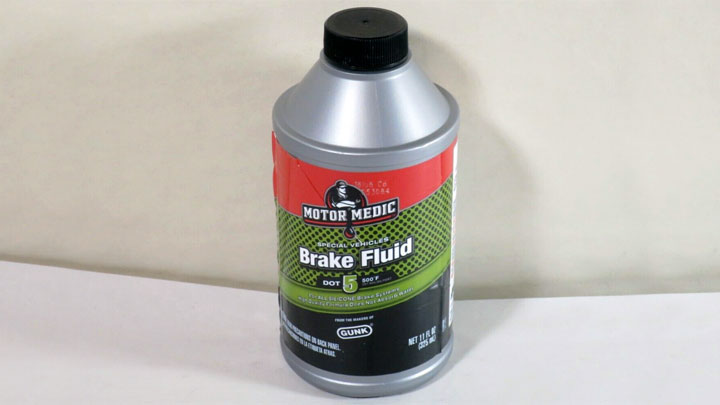
DOT 3, DOT 4, and DOT 5.1 are glycol-based fluids, whereas DOT 5 is silicone-based. The hygroscopic nature of glycol-based fluids leads to moisture absorption over time, diminishing their boiling points. In contrast, DOT 5 is hydrophobic and repels water but is incompatible with ABS systems due to its unique properties and should never be mixed with glycol-based fluids.
Comparative Table of DOT Brake Fluid Specifications
| DOT Classification | Chemical Base | Minimum Dry Boiling Point (ERBP) | Minimum Wet Boiling Point (WERBP) | Moisture Absorption | Compatibility with Other Glycol DOT Fluids |
|---|---|---|---|---|---|
| DOT 3 | Glycol Ether | 205°C (401°F) | 140°C (284°F) | Hygroscopic (absorbs 1-2% water/year) | Yes (with DOT 4, 5.1) |
| DOT 4 | Glycol Ether/Borate Ester | 230°C (446°F) | 155°C (311°F) | Hygroscopic (slower than DOT 3 but more susceptible to drop) | Yes (with DOT 3, 5.1) |
| DOT 5.1 | Borate Ester/Glycol Ether | 260°C (500°F) – 270°C (518°F) | 180°C (356°F) – 185°C (365°F) | Hygroscopic (similar to DOT 4) | Yes (with DOT 3, 4) |
| DOT 5 | Silicone-based | 260°C (500°F) | 180°C (356°F) | Non-hygroscopic (repels water) | No (not compatible with DOT 3, 4, 5.1 or ABS) |
How Can You Maintain Optimal Brake Fluid Boiling Point?
Maintaining an optimal brake fluid boiling point is vital for both safety and performance. Regular fluid flushing and replacements are typically recommended every 1 to 2 years—or every 40,000 km—due to brake fluid’s moisture absorption over time. While some manufacturers may suggest longer intervals, it’s advisable to replace the fluid once water content exceeds 2%, with immediate action needed at over 3%.
Always use fresh brake fluid from a tightly sealed container, as exposure to air can accelerate moisture absorption. Ensuring the integrity of the master cylinder reservoir cover and properly bleeding the system after any brake service will help minimize contamination from air and moisture. In high-performance driving or heavy towing scenarios, conditions may require more frequent fluid checks and changes to ensure safety—as discussed in Top 5 Best Brake Pads for Heavy Towing and Hauling in 2026.
Frequently Asked Questions (FAQs)
Can different DOT brake fluid types be mixed?
Mixing DOT 3, DOT 4, and DOT 5.1, all glycol-based fluids, is generally permissible in emergencies, but it may diminish safety and performance. It is crucial to perform a complete flush and refill with the appropriate type as soon as possible. Conversely, DOT 5, being silicone-based, is entirely incompatible with any other DOT fluid and must never be mixed.
How often should brake fluid be flushed?
Brake fluid should typically be flushed and replaced every 1 to 2 years, or approximately every 40,000 kilometers. This routine is essential to counteract the adverse effects of moisture absorption and maintain optimal boiling points.
Does brake fluid color indicate its boiling point?
New glycol-based fluids (DOT 3, DOT 4, DOT 5.1) usually range from clear to amber, while DOT 5 has a distinct purple hue. However, color alone isn’t a reliable indicator of brake fluid quality or boiling point; degradation is primarily due to moisture absorption, not just color change.
Is a higher dry boiling point always better?
A higher dry boiling point suggests better initial heat resistance; however, the wet boiling point often holds greater significance in real-world scenarios. Given that brake fluid absorbs moisture over time, a fluid with a strong wet boiling point maintains effectiveness longer in service.
Can old brake fluid cause a spongy pedal?
Absolutely. Old brake fluid that has absorbed significant moisture will exhibit a lowered boiling point. When this fluid overheats, it can produce vapor bubbles, leading the brake pedal to feel “spongy” and ultimately compromising braking effectiveness.