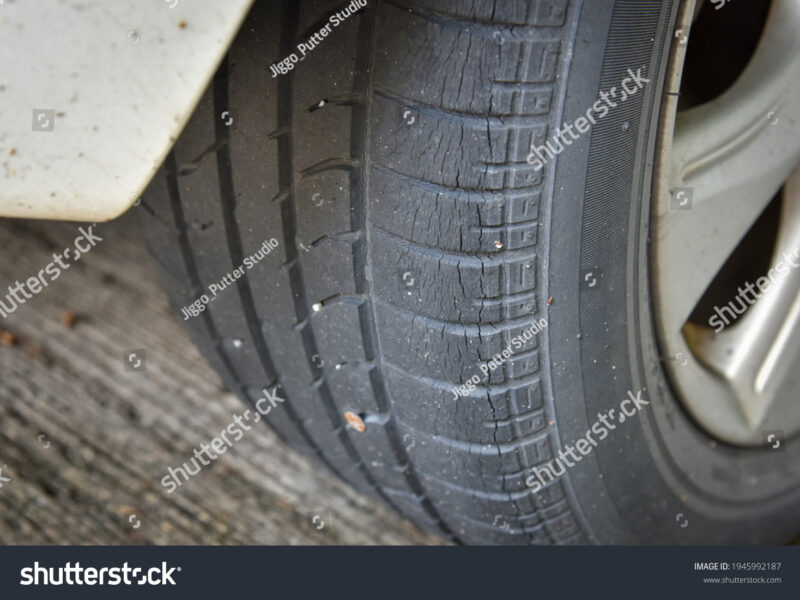
The most critical aspect of vehicle safety that is often overlooked is the health of your car’s tires. A comprehensive tire health check involves a systematic evaluation of several key parameters to ensure optimal performance and safety. This assessment goes beyond simply checking the air pressure and includes thoroughly examining tire specifications, tread depth, overall condition, tires’ age, and the necessity for alignment and balancing.
Your Tire’s Specifications: Understanding the Details
The markings on your tire’s sidewall provide a wealth of technical information crucial for understanding its capabilities and ensuring proper fitment. For instance, a common tire size like “P225/65R16 95H” decodes as follows:
- P: Indicates the tire is designed for passenger vehicles.
- 225: Represents the tire’s width in millimeters, measured from sidewall to sidewall at its widest point.
- 65: This denotes the aspect ratio, signifying the tire’s sidewall height as a percentage of its width. A lower aspect ratio (e.g., 45-55) generally offers a sportier feel with sharper handling but a firmer ride, while a higher ratio (e.g., 65-75) prioritizes comfort.
- R: Denotes the tire’s radial construction, the standard for modern vehicles.
- 16: This number indicates the diameter of the wheel rim in inches that the tire is designed to fit.
- 95: The load index, which corresponds to the maximum weight the tire can support. For instance, a load index of 95 means the tire can carry approximately 1,521 pounds.
- H: The speed rating, indicating the maximum safe speed for the tire. An ‘H’ rating signifies a top speed of 130 mph.
The Legal Minimum Tread Depth for Tires
Tread depth is critical for traction, especially in wet conditions, as it allows tires to effectively channel water away from the contact patch. While the legal minimum tread depth in many regions is 2/32 of an inch (approximately 1.6 mm), safety experts strongly recommend considering replacement once the tread reaches 4/32 of an inch (approximately 3.2 mm). Driving with tread below 4/32 of an inch can significantly reduce available friction, potentially halving grip capabilities on wet roads before hydroplaning even occurs. You can easily check tread depth with a tread depth gauge or the “penny test”: insert a penny headfirst into a tread groove; if you can see the top of Lincoln’s head, your tread is likely below 2/32 of an inch, which indicates the tire is unsafe.
| Tread Depth (32nds of an inch / mm) | Performance Impact | Recommendation |
|---|---|---|
| Above 4/32″ (3.2 mm) | Optimal traction and water displacement. | Maintain regular checks. |
| 4/32″ to 2/32″ (3.2 mm to 1.6 mm) | Reduced wet traction; increased stopping distances. | Consider replacement soon, especially before adverse weather. |
| Below 2/32″ (1.6 mm) | Critically low traction; high hydroplaning risk; illegal in many regions. | Immediate replacement required. |
Optimal Tire Pressure: A Key to Safety and Efficiency
Maintaining the correct tire pressure, measured in pounds per square inch (PSI), is vital for safety, handling, fuel economy, and tire longevity. The manufacturer’s recommended PSI is typically found on a sticker inside the driver’s door jamb or in the owner’s manual. For most passenger vehicles, this recommended pressure falls between 30-35 PSI, while larger vehicles like SUVs and trucks may require higher pressures (35-45 PSI). It’s critical to check tire pressure when the tires are cold, as driving can increase it by several PSI. Underinflated tires increase rolling resistance, potentially reducing fuel efficiency by up to 3% and significantly increasing the risk of accidents—driving with tires 25% underinflated can triple accident risk. Conversely, overinflating can reduce traction due to decreased tire contact with the road.
Assessing Tire Condition: Age and Sidewall Integrity
Sidewall Damage: A Critical Structural Concern
The sidewall is a tire’s structural backbone. Damage such as cuts, cracks, abrasions, bulges, or embedded objects compromises the tire’s integrity and often necessitates replacement. A bulge or blister indicates internal structural failure, creating a weak spot that poses an immediate blowout risk. Sidewall damage is frequently irreparable due to the compromised structural support.
Tire Age: The Invisible Degradation Factor
Rubber degrades over time, becoming brittle and losing grip regardless of tread wear. Tires should generally be replaced every six years, or at most ten years from their manufacture date, as the rubber compound deteriorates. The tire’s age can be determined by its DOT code found on the sidewall. The last four digits of this code indicate the week and year of manufacture (e.g., “3422” means the 34th week of 2022).
The Symbiotic Relationship: Wheel Alignment and Balancing
Wheel Alignment: Ensuring Even Road Contact
Proper wheel alignment ensures that your tires make optimal contact with the road, distributing stress evenly across the tread. Misalignment, often caused by impacts with potholes or worn suspension components, leads to irregular wear patterns like feathering or edge wear, ending up shortening tire life and affecting vehicle handling and stability. Key signs of misalignment include a vehicle pulling to one side or vibrations and uneven tire wear. Addressing alignment issues promptly can prevent premature tire replacement and improve safety.
Wheel Balancing: The Key to Smooth Rotation
Wheel balancing ensures that the tire and wheel assembly has an even weight distribution, allowing for smooth rotation at all speeds. Imbalance creates centrifugal forces that cause vibrations, leading to uneven tread wear, tire degradation and potential strain on suspension and steering components. Common symptoms include steering wheel vibration at highway speeds. Regular balancing, which is typically recommended every 4,000 to 6,000 miles or whenever new tires are installed, is crucial for maximizing tire lifespan and ensuring a smooth ride.
Market Landscape: Tire Costs and Leading Brands
Understanding Tire Pricing
The cost of new tires varies significantly based on size, type, brand reputation, and performance characteristics. Prices can range from approximately $50-$150 for budget tires to $300-$1,000 or more for premium or specialized options. For a set of four tires, expect an average cost between $460 and $1,280. Installation costs, which include mounting and balancing, can add about $80-$100 for a set.
Major Tire Manufacturers
The global tire market is led by several key players. As of 2022, Michelin held the largest global market share at 15.1%, followed closely by Bridgestone at 14.2%. Other prominent manufacturers include Goodyear, Continental, Pirelli, Toyo, and Cooper, each offering a diverse range of products catering to various needs and price points.
Essential Tire Maintenance: Practical Steps
Tools for a DIY Tire Inspection
A basic DIY tire inspection requires minimal tools: a reliable tire pressure gauge, a tread depth gauge, and a bright flashlight to illuminate sidewalls and tread grooves.
Signs Your Tires Need Replacement
Besides reaching the legal tread depth limit (2/32″), tires should be replaced if they exhibit:
- Visible tread wear indicators aligned with the tread surface.
- Severe sidewall cracks, cuts, punctures, or bulges.
- Tires older than six to ten years, irrespective of tread depth.
- Distinct uneven wear patterns suggesting alignment or balancing issues.
Inspection Frequency and Recommendations
Regular inspections are paramount for tire health and safety. Check tire pressure and tread depth at least monthly. Conduct a more thorough visual inspection of the tires’ overall condition with the same frequency. Professional inspections are recommended annually or before embarking on extended road trips.
Understanding TPMS
Tire Pressure Monitoring Systems (TPMS) are integrated into many modern vehicles to provide early warnings of critically low tire pressure. However, TPMS should supplement, not replace, manual pressure checks, as they might not always detect gradual pressure loss or overinflation.
Spare Tire Check
Don’t overlook your spare tire. It’s crucial to inspect it regularly for proper inflation and condition, just like your primary set of tires.
By thoroughly understanding these technical specifications, market dynamics, and practical inspection procedures, you can ensure your vehicle’s tires remain in optimal condition, significantly enhancing your safety and driving experience.
Conclusion
In summary, the health of your tires is non-negotiable when it comes to vehicle safety. Regular tire inspections not only prolong their lifespan but also enhance overall driving performance and safety. Don’t wait for signs of wear; be proactive and check your tires regularly.
The Ultimate Car Maintenance & DIY Guide provides more insights on maintaining and caring for your vehicle, including tire health. Always stay informed and safe on the road!