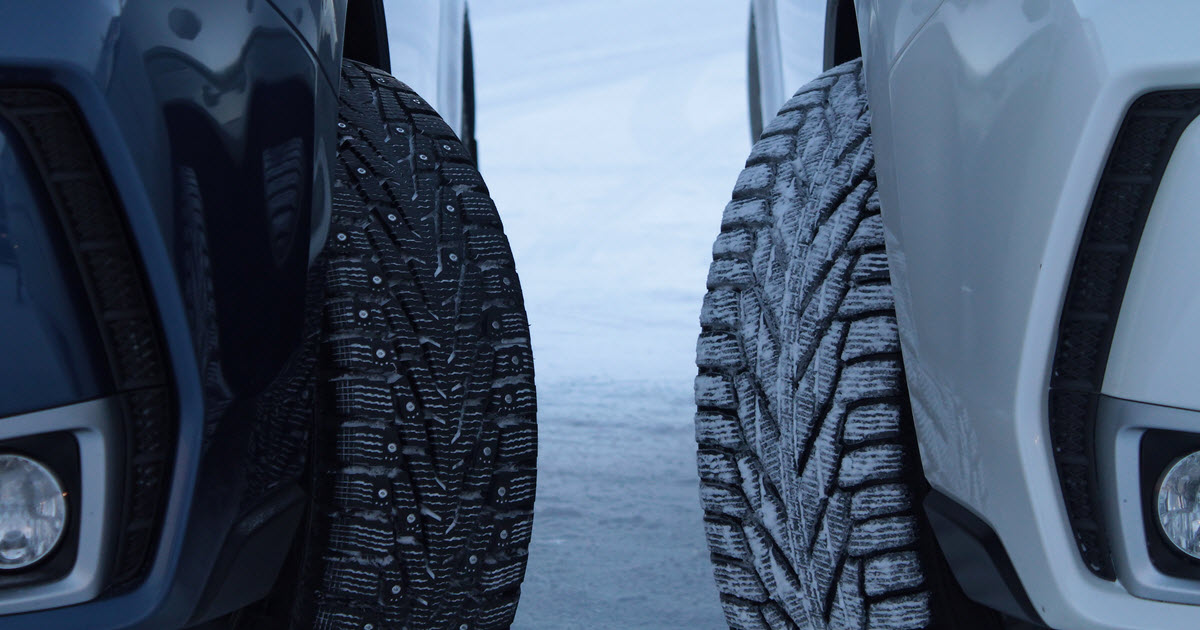
The decision between studded and studless winter tires isn’t just about personal preference; it’s about understanding the conditions you’ll face. Whether battling icy roads or navigating snowy trails, your choice can significantly affect your safety and driving experience. This guide will enlighten you on what to consider when selecting the best tires for your winter driving needs.
Studded tires are champions on clear ice, providing unmatched grip, specifically around the freezing point. Conversely, studless tires shine in versatility, delivering excellent performance across varied road conditions. Understanding these differences is crucial in making an informed choice tailored to your region and driving habits.
What Specific Braking Performance Do Studded vs. Studless Tires Offer on Ice?
When it comes to braking on ice, studded winter tires show remarkable superiority. For instance, extensive research by the University of Alaska at Fairbanks revealed that studded tires can stop up to 15% shorter on icy surfaces compared to their studless counterparts. This impressive feat translates to enhanced traction, boasting a 40% improvement over all-season tires under icy conditions.
A striking example is the Nokian Hakkapeliitta 10, which outperformed the Michelin X Ice North 4, showcasing a stopping distance difference of 0.31 meters at speeds between 5 to 30 km/h. While studless options like the Bridgestone Blizzak DM-V2 deliver good performance, especially in colder temperatures, they simply cannot rival studded tires in extreme ice scenarios. However, it’s worth noting that studded tires can increase stopping distances on dry pavements, emphasizing the importance of context in tire performance.
While assessing braking efficiency, keep in mind that external factors, such as a sticking brake caliper, can significantly impact the overall effectiveness, regardless of tire choice.
How Do Studded and Studless Tires Compare in Deep and Compacted Snow Traction?
In terms of traction in deep and compacted snow, both studded and studless tires are designed to handle slippery conditions. However, studless tires, developed with advanced rubber compounds, provide distinct advantages. These tires include specialized tread patterns that feature intricate sipes and aggressive, angular blocks, ensuring optimal grip. For instance, the Bridgestone Blizzak DM-V2 showcases excellent lateral grip with its superior design.
Although studded tires excel in icy conditions, their edge diminishes in deep or loose snow, where both types can perform comparably. A test showed that the Nokian Hakkapeliitta 10 had a slight 2.31% advantage in snow traction acceleration over the Michelin X Ice Snow. However, it remains clear that when snow conditions are consistently deep, studless options often suffice without sacrificing performance.
What is the Specific Impact of Studded vs. Studless Tires on Road Noise and Fuel Efficiency?
One major consideration when choosing between studded and studless tires is the impact on noise levels and fuel efficiency. Studded tires are inherently noisier, especially on non-icy roads due to the metal contacts. Research shows that the Nokian Hakkapeliitta 10 produces approximately 70.1 dB, a similar range to the Michelin X Ice North 4 at 70.3 dB, indicating a noticeable audio profile that can detract from comfort during everyday winter drives.
In contrast, studless tires, like the Michelin X-Ice Snow, offer a more tranquil driving experience with significantly lower noise levels—rated 10/10 for noise and damping in various tests. Additionally, fuel efficiency presents a stark comparison; while studded tires can increase fuel consumption by around 5%, due to higher rolling resistance, studless options generally contribute to better fuel economy. A comparison test recorded consumption of 5.726 l/100km for studless versus 5.946 l/100km for studded tires.
What Are the Key Regulatory Differences for Studded Tires Across Regions?
The regulations surrounding studded tires vary dramatically based on geographic location, primarily to mitigate road wear. In Quebec, for example, regulations allow their use from October 15 to May 1, with fines from $60 to $100 for non-compliance. In contrast, Ontario limits their use solely to vehicles registered in Northern Ontario during winter months.
Across the U.S., several states have seasonal restrictions, with Connecticut permitting them from November 15 to April 30, while Maine enables their use from October 2 to April 30. However, states like Florida and Texas outright ban metal studs, thus necessitating careful consideration of local laws to avoid penalties. Understanding these varying regulations is equally as critical as knowing what to do if your ABS brakes fail for ultimate driver safety.
Comparative Analysis: Studded vs. Studless Winter Tire Performance
This table presents a concise and insightful comparison of key performance metrics, characteristics, and legal guidelines for both studded and studless winter tires, leveraging data from rigorous tests and manufacturer specifications.
| Feature/Metric | Studded Winter Tires (e.g., Nokian Hakkapeliitta 10) | Studless Winter Tires (e.g., Bridgestone Blizzak WS90/DM-V2, Michelin X-Ice Snow) |
|---|---|---|
| Ice Braking Performance (e.g., stopping distance) | Up to 15% shorter stopping distance on ice (vs. non-studded tires). Nokian Hakkapeliitta 10 stops 0.31m shorter than Michelin X Ice North 4 on ice (5-30 km/h). |
Good ice performance but typically does not match studded performance in extreme conditions. Blizzaks show an 8% shorter stopping distance than all-season tires on ice. |
| Snow Traction (Deep & Compacted) | Good traction, particularly on hard-packed snow. Limited additional benefit in deep/loose snow compared to studless. Nokian Hakkapeliitta 10 is 2.31% faster in snow acceleration than Michelin X Ice Snow. | Excellent overall grip on snow and slush, aided by advanced tread compounds and sipes. Bridgestone Blizzak DM-V2 exhibits strong lateral grip on snow. |
| Road Noise Levels (dB) | Loudest tire type, especially on bare pavement. Nokian Hakkapeliitta 10 generates ~70.1 dB. | Substantially quieter, providing a more comfortable ride. Michelin X-Ice Snow scored 10/10 for low noise. |
| Fuel Efficiency Impact | Higher fuel consumption, around 5% more on highways compared to studless. Overall winter tires can increase fuel consumption by 5-15%. | Lower rolling resistance enhances fuel economy. Michelin X Ice Snow shows better fuel efficiency (5.726 l/100km vs 5.946 l/100km for studded). |
| Legal Restrictions | Significant regulations exist; banned in some states (e.g., Florida, Michigan, Texas). Seasonal use enforced in many others (e.g., Quebec Oct 15-May 1, Maine Oct 2-Apr 30). | Generally legal year-round across all regions; no seasonal limits apply. |
| Best Use Case | Ideal for consistently icy roads, rural mountain routes, and untreated backroads where extreme grip is essential. | Best for mixed winter conditions, plowed roads, occasional ice, urban driving, and those who prefer a quieter ride and improved fuel efficiency. |
Frequently Asked Questions (FAQ)
Are studded tires effective in very cold temperatures below freezing?
While studded tires excel on icy surfaces near freezing (around 32°F or 0°C), they experience a reduction in traction at lower temperatures, where studless or all-season tires may outperform them.
Can studless tires truly replace studded tires for ice traction?
Modern studless tires have significantly improved ice grip capabilities, particularly models such as the Bridgestone Blizzak. However, they typically still fall short of the extreme ice traction provided by well-designed studded tires.
Do studded tires cause significant road damage?
Yes, the use of studded tires is known to contribute to road wear, which can lead to issues such as rutting and increased hydroplaning risk, along with contributing to airborne particulate matter.
What are “studdable” tires?
Studdable tires are designed with pre-formed holes in their tread, allowing for optional installation of metal studs. This feature provides flexibility to adapt to varying winter conditions or regulatory requirements.
Does the wear of studs impact their performance?
Absolutely, the effectiveness of studded tires diminishes with stud wear; once the stud protrusion decreases to 0.024 inches (0.6 mm), their frictional impact lessens significantly, while optimal performance is retained at 0.039 to 0.043 inches (1.0-1.1 mm).