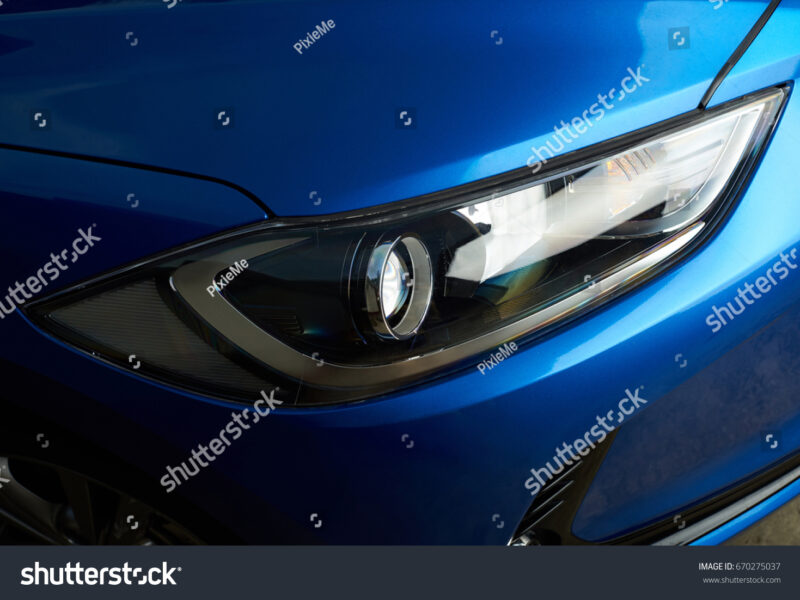
Headlight bulbs play a critical role in vehicle safety by providing essential illumination during night drives and adverse weather conditions. To select the right automotive lighting, it’s vital to grasp the technical specifications, primarily lumens and Kelvin. These two metrics do more than just quantify light; they define how we perceive brightness and color temperature, impacting visibility and even enhancing the aesthetic appeal of your vehicle’s headlights.
What are Lumens in Headlight Bulbs?
Lumens measure the total visible light emitted by a light source, directly indicating the brightness of a headlight bulb. A higher lumen rating signifies a brighter output. This increased output allows for a larger area of illumination, improving overall visibility on the road. Modern headlight technologies, including halogen, Xenon High-Intensity Discharge (HID), and Light Emitting Diodes (LED), showcase a diverse range of lumen outputs.
For example, standard halogen bulbs typically produce between 700 to 1,200 lumens per bulb. In contrast, HID bulbs can offer lumen outputs ranging from 2,800 to 3,500, delivering significantly more light. LED conversions vary but often target lumen outputs comparable to or exceeding HIDs, generally between 2,500 to 4,000 lumens per bulb, depending on their design and cooling efficiency. These lumens directly correlate with the light’s effectiveness on the road ahead.
How do Lumens Impact Driver Visibility and Safety?
Lumens profoundly affect a driver’s ability to observe and react to potential hazards, road signs, and other vehicles by extending the illuminated distance and width. Headlight bulbs with higher lumen outputs significantly enhance forward visibility, allowing drivers to notice hazards sooner and extend their reaction time. This heightened awareness is especially crucial during night driving, in poorly lit areas, or inclement weather conditions like heavy rain or fog.
Ultimately, increased lumen levels not only boost overall road safety but also provide a clearer, more comprehensive view of one’s surroundings. However, caution must be exercised, as excessively high lumens without appropriate beam pattern control can lead to a blinding glare for oncoming traffic, diminishing their visibility, and posing dangerous situations.
What is Kelvin in Headlight Bulbs?
Kelvin (K) measures the color temperature of a light source, indicating the hue or appearance of the emitted light rather than its brightness. On the Kelvin scale, colors range from warmer, yellowish tones at lower values to cooler, bluish-white tones at higher ones. Understanding how Kelvin influences light perception can improve safety and drive aesthetics.
Common Kelvin ranges for headlight bulbs include:
- 2,700K – 3,500K: Warm white, often with a yellow tint, typical of older halogen bulbs.
- 4,000K – 5,000K: Neutral to pure white, considered optimal for visibility and commonly found in OEM HID and some LED applications.
- 5,000K – 6,000K: Cool white with a slight blue tint, popular for a modern aesthetic.
- 6,000K – 8,000K+: Bluish-white to deep blue, which can reduce visibility in adverse weather and may be illegal in some areas due to excessive glare.
How does Kelvin (Color Temperature) Affect Perception and Aesthetics?
Color temperature significantly influences light perception and contributes to a vehicle’s aesthetic appeal. Lower Kelvin values, such as 3,000K, produce hazy yellow light that excels in fog or rain, thanks to its longer wavelength. Meanwhile, higher Kelvin values (5,000K to 6,000K) yield a bright white light with a faint blue hue, often linked with premium modern vehicles, enhancing object contrast in clear conditions.
However, very high Kelvin values (above 6,000K) produce distinctly blue or purple hues. While some find this striking, it can impair illumination effectiveness and cause eye fatigue. Blue light scatters more than yellow or white light, reducing visibility in challenging conditions and potentially making the light appear duller to the human eye, irrespective of its lumen output.
Lumens vs. Kelvin: A Direct Comparison for Headlights
Grasping the distinction between lumens and Kelvin is vital for evaluating headlight bulb performance. Lumens measure the actual light emitted, directly correlating with how brightly the road appears, while Kelvin describes light color. The keyword “headlight bulb lumens vs kelvin explained” encapsulates this essential differentiation.
Here’s a summary table illustrating key differences:
| Feature | Lumens (lm) | Kelvin (K) |
|---|---|---|
| Measurement Of | Perceived Brightness / Total Light Output | Color Temperature / Light Hue |
| Impact on Visibility | Increases illuminated distance and width. Higher lumens generally translate to better visibility. | Affects how light is perceived, with some temperatures being preferable for specific conditions (e.g., warmer light for fog, pure white light for nighttime). |
| Unit | Lumen (lm) | Kelvin (K) |
| Optimal Range for Road Use | Aiming for higher is advantageous, provided the beam pattern is designed to avert glare (e.g., 2,500-4,000 lm per bulb). | 4,000K – 5,000K is typically deemed ideal for clarity and minimal eye strain. |
| Common Misconception | Often confused with wattage or Kelvin. | Assuming higher Kelvin means brighter light, which is incorrect as it indicates bluer light. |
Can High Kelvin Values Mean Brighter Light?
No, high Kelvin values do not necessarily equate to brighter light. This misconception overlooks the fact that Kelvin relates to color temperature, not intensity. A headlight bulb with a high Kelvin rating, like 8,000K, emits a blue light that may seem “intense” but might yield less white luminous flux compared to a 4,500K bulb of equivalent power consumption. Additionally, blue light’s propensity to scatter in conditions like rain or fog can compromise visibility, making it less practical. Hence, higher Kelvin often correlates with diminished usable light under certain driving conditions, despite its perceived “intensity.”
Choosing the Right Headlight Bulbs: Balancing Brightness and Color
Selecting the ideal headlight bulbs demands a balance between brightness (lumens) and preferred color (Kelvin) for superior visibility and safety. For those prioritizing maximum illumination, focusing on a high lumen output and appropriate beam pattern is essential. If considering an upgrade, understanding how to upgrade your car’s headlights to LED is crucial for advancements in efficiency and output. Recommended color temperatures typically range from 4,000K to 5,000K for optimal clarity, contrast, and reduced eye strain during prolonged night drives. This spectrum emits a crisp, white light while mitigating the ill effects of excessive blue light scattering.
As with any component, from headlights to batteries, mastering the specifications can inform better decisions. Just like one might analyze specifics on decoding car battery sizes, evaluating headlight bulbs requires an understanding of both lumen and Kelvin ratings to ensure compatibility, peak performance, and compliance with legal regulations. Always check local laws regarding headlight color and intensity, as some extreme Kelvin values or lumen outputs may not be street-legal.
What is the ideal Kelvin for headlight bulbs?
The ideal Kelvin for headlight bulbs typically ranges between 4,000K and 5,000K. This range produces a pure white light that maximizes clarity and contrast for the human eye, ensuring visibility without excessive glare or diminished effectiveness in challenging weather conditions.
Are higher lumen headlights always better?
Generally, higher lumen headlights enhance visibility by emitting more light and illuminating more area. However, their effectiveness hinges on being paired with a well-designed optic or projector to direct the light onto the road while preventing excessive glare for oncoming drivers, thus maintaining safety.
Do LED headlights have higher lumens or Kelvin than halogen?
Modern LED headlights usually provide substantially higher lumen outputs and can reach a wider Kelvin range compared to traditional halogen bulbs. While halogen bulbs typically range from 700-1,200 lumens and 2,700K-3,500K (warm white/yellow), LED headlights can achieve upwards of 2,500-4,000+ lumens and color temperatures spanning from 4,000K to 6,000K+, permitting brighter, whiter, or slightly bluish light.