Engine vs. Cabin Air Filter: Understanding the Key Differences
The durability and performance of a vehicle, as well as the well-being of its occupants, are intrinsically linked to efficient air filtration systems. Although both the engine air filter and the cabin air filter purify the air, they operate within different systems, addressing diverse contaminants, and utilize unique technical specifications. Understanding these differences is crucial for informed automotive maintenance, ensuring optimal performance and a healthy interior environment.
The engine air filter protects the engine from abrasive particles, facilitating efficient combustion, optimizing fuel consumption, and preventing premature wear. Conversely, the cabin air filter purifies the air passengers breathe, capturing allergens and pollutants that impact health and comfort. This distinction is fundamental for mechanical longevity and driving experience.
What is the Primary Role of the Engine Air Filter and Its Location?
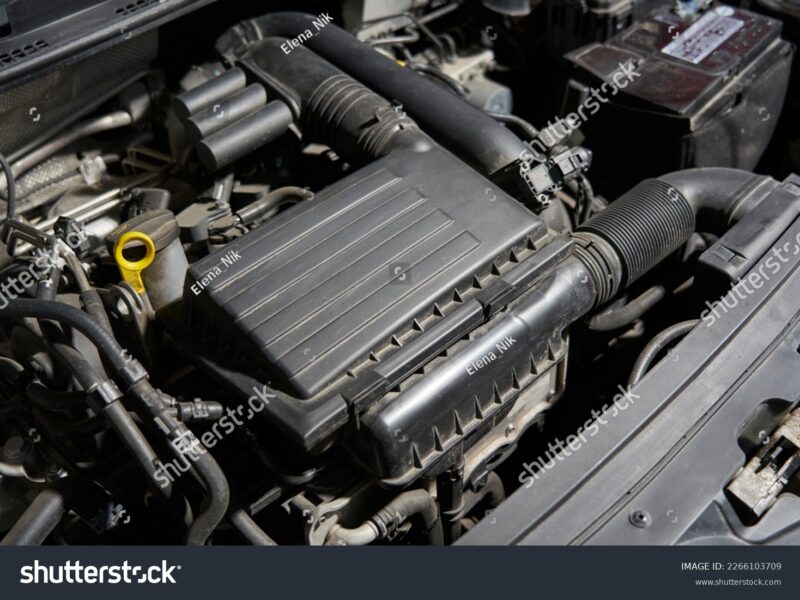
The primary function of the engine air filter is to safeguard the internal combustion engine by preventing contaminants from entering the combustion process. It is typically housed within an air box, which is usually located in the engine compartment, connected to the air intake system.
This component is vital for maintaining an optimal air-fuel mixture. A proper mixture is essential for effective power generation, reduced fuel consumption, and preventing accelerated wear of critical internal components such as cylinders and piston rings.
Technical Specifications and Materials of Engine Air Filters
Engine air filters are designed for high airflow volume and significant particle retention capacity. High-quality filters can achieve efficiencies exceeding 99% in dust retention. Key technical specifications include:
- Filtration Efficiency: Percentage of contaminants retained.
- Particle Size Captured: Capacity to filter particles of certain sizes.
- Airflow Restriction: Resistance the filter opposes to the passage of air.
- Dust-Holding Capacity: Total amount of dust the filter can retain before becoming saturated.
Performance tests typically follow the ISO 5011 standard, an internationally accepted protocol for evaluating filtration efficiency, airflow restriction during dust loading, and total dust retention capacity under controlled laboratory conditions.
Common construction materials include:
- Pleated Paper (Cellulose): The most common and economical option, offering reliable filtration for general use. These are disposable.
- Oiled Cotton Gauze: Used in aftermarket and high-performance filters, they are washable and reusable. Oil enhances fine particle capture, but improper oiling can damage sensors.
- Foam: Less common but offers greater filtration capacity, especially in dusty environments.
- Synthetic Materials: Greater durability and superior filtration capacity, more efficiently capturing finer particles while better resisting moisture and heat.
| Specification | Details |
|---|---|
| Construction Material | Pleated paper (cellulose), synthetic fibers, oiled cotton gauze, polyurethane foam. |
| Filtration Standard | ISO 5011 is the industry standard for evaluating air filter performance in internal combustion engines, measuring efficiency, capacity, and restriction. |
| Filtration Efficiency | Generally >98% for specified particle sizes (evaluated by ISO 5011). Efficiency may increase with dust accumulation until replacement. |
| Particle Size Captured | Varies by material. The ISO 5011 standard uses test dust with particles ranging from less than 2.5 microns to over 80 microns. Micron classification is more commonly used for liquid filters. |
| Airflow Restriction | Designed to minimize restriction when new. Blockage significantly increases restriction (measured in inches of water, IN-H2O). |
| Dust-Holding Capacity | Total amount of test dust retained by the filter before reaching a predetermined restriction level. Determines service life. |
When Should an Engine Air Filter Be Replaced?
Manufacturers typically recommend replacing the engine air filter every 12,000 to 15,000 miles (approximately 20,000-24,000 km) or annually. Under dusty or heavy traffic conditions, it may be necessary to replace it more frequently, every 6,000 to 10,000 miles.
Signs of a clogged filter include:
- Reduction in engine acceleration and power.
- Decreased fuel efficiency (by up to 5-10%).
- Unstable idle or engine stalling.
- Increased emissions (black smoke from the exhaust).
- Activation of the “Check Engine” light due to an improper air-fuel mixture.
- Failure of spark plugs.
- Contamination of the mass airflow sensor (MAF), affecting air measurement and engine longevity.
What is the Typical Cost of an Engine Air Filter?
Engine air filters range from $10 to $80 per unit. Reusable filters may have a higher initial cost but offer long-term savings. Professional replacement, including parts and labor, can range between $73 and $142.
What is the Primary Function of the Cabin Air Filter and Its Location?
The cabin air filter is a component of the vehicle’s HVAC (Heating, Ventilation, and Air Conditioning) system, and its purpose is to purify the air that passengers breathe. It captures dust, pollen, soot, mold spores, bacteria, and, if carbon activated, odors and harmful gases.
It is generally located behind the glove compartment, beneath the dashboard, or near the windshield cowl, varying in specific location depending on the vehicle model.
Technical Specifications and Types of Cabin Air Filters
Cabin air filters offer varying levels of filtration depending on their material and design:
- Standard Particulate Filters: The most common, trapping dust, pollen, and allergens. They can filter particles down to 0.001 microns with efficiencies of 90%-99% for particles between 5-100 microns.
- Activated Carbon Filters: Include a layer of activated carbon to neutralize odors and adsorb gases (VOCs like formaldehyde, benzene, ammonia, cooking fumes). Activated carbon, highly porous, provides a large surface area for chemical contaminants to adhere to.
- HEPA (High-Efficiency Particulate Air) Filters: Provide exceptional filtration, capturing at least 99.97% of particles down to 0.3 microns. The size of 0.3 microns is the “Most Penetrating Particle Size” (MPPS); larger or smaller particles are captured more efficiently via interception, impaction, and diffusion. They are effective against ultrafine particles, bacteria, and viruses.
- Combined Filters: Integrate HEPA-level particulate capture with activated carbon for comprehensive odor and gas removal.
| Filter Type | Key Features | Typical Efficiency | Particle Capture Range |
|---|---|---|---|
| Standard Particles | Traps dust, pollen, and allergens; made of paper or synthetic material. | 90%-99% for particles between 5-100 microns. | Down to 0.001 microns (advanced types). |
| Activated Carbon | Particle filtration plus odor and gas adsorption (VOCs). | Effective for gases/odors; particle efficiency similar to standard. | Microns (particles) + molecular (gases via adsorption). |
| HEPA Filter | Exceptional filtration for ultrafine particles, viruses, bacteria. | 99.97% for particles down to 0.3 microns (MPPS). | Down to 0.3 microns, more efficient for both smaller and larger particles. |
| Combined Filter | Integrates HEPA capture with activated carbon. | Combines HEPA particle efficiency with gas/odor adsorption. | Ultrafine particles + molecular (gases/odors). |
When Should a Cabin Air Filter Be Replaced?
It is recommended to replace cabin air filters every 12,000 to 15,000 miles (approximately 19,000-24,000 km) or annually. In areas with high pollution levels or pollen counts, or if driving frequently in dusty conditions, semi-annual replacement may be beneficial.
Indications for replacement include:
- Reduction in airflow from the ventilation ducts.
- Persistent or unpleasant odors inside the cabin.
- Increased dust accumulation inside the vehicle.
- Decreased HVAC system performance, including demisting efficiency.
- Increased noise from the fan motor as it struggles to draw air through a clogged filter.
What is the Typical Cost of a Cabin Air Filter?
Basic cabin filters typically cost between $15 and $20. Activated carbon and HEPA filters can range from $20 to $50 or more per unit. Professional replacement, including labor costs, generally falls between $78 and $106.
Key Differences: Engine Air Filter vs. Cabin Air Filter
| Feature | Engine Air Filter | Cabin Air Filter |
|---|---|---|
| Main Purpose | Protects the engine from contaminants; ensures optimal combustion and longevity. | Purifies interior air for health, comfort, and HVAC efficiency. |
| Location | Engine compartment, inside the airbox, connected to intake. | Passenger cabin (behind glove compartment, under dashboard, windshield cowl). |
| Filters | Dust, sand, dirt, debris, insects. | Dust, pollen, allergens, soot, mold spores, odors, gases (with carbon). |
| Impact of Failure | Reduced power, decreased fuel efficiency, accelerated engine wear, contamination of MAF, possible “Check Engine” light. | Reduced HVAC airflow, odors, poor air quality, ineffective demisting, fan overload. |
| Replacement Interval | 12,000-15,000 miles (20,000-24,000 km) or annually; sooner under severe conditions. | 12,000-15,000 miles (19,000-24,000 km) or annually; sooner in polluted areas. |
| Size and Design | Larger, more robust, designed for high flow and engine protection. | Smaller, often flat, for confined HVAC spaces, focused on fine particles and gases. |
| Potential DIY | Generally straightforward and accessible. | Can be simple, but some models require partial dashboard disassembly. |
Automotive Air Filter Market Overview and Trends
The global automotive air filter market was valued at approximately $5.8 billion in 2023 and is projected to grow at a CAGR of 5.5% to reach $9.3 billion by 2032. Another report estimates the market at $4.578 billion in 2024, expected to reach $7.351 billion by 2032, with a CAGR of 6.10%.
The market is driven by increased vehicle ownership, stricter emission regulations, and growing consumer awareness regarding air quality and vehicle maintenance. North America and Asia-Pacific (especially China and India) are significant contributors to market growth.
The cabin filter segment is experiencing the fastest growth, driven by health concerns. Cabin filters accounted for a dominant market share of $3.5 billion in 2023, expected to reach $5.7 billion by 2032. Activated carbon filters maintained a substantial market share of 41% in 2023 due to their effectiveness against odors and gases. Major brands include MANN-FILTER, MAHLE, FRAM, BOSCH, and DENSO.
Can a Clogged Cabin Filter Affect Defogging Performance?
Yes, a severely clogged cabin air filter can significantly impair defogging and condensation removal performance. Restricted airflow hampers the HVAC system’s ability to effectively eliminate moisture and condensation from the windshield, directly impacting visibility and safety.
Maintenance Recommendations
Regular maintenance of both the engine and cabin air filters is essential for the safety and performance of your vehicle. It not only enhances the driving experience by ensuring clean air flow but also contributes to the engine’s efficiency, ultimately affecting your vehicle’s fuel consumption and longevity. Always consult your vehicle manufacturer’s manual for specific maintenance intervals and replacement recommendations.
For detailed guides and tutorials, check out our resources on how to change your car’s air filter yourself, and why your car air filter brand choice matters.
Investing in high-quality air filters and adhering to maintenance schedules can greatly enhance your vehicle’s performance and the quality of air inside your car.