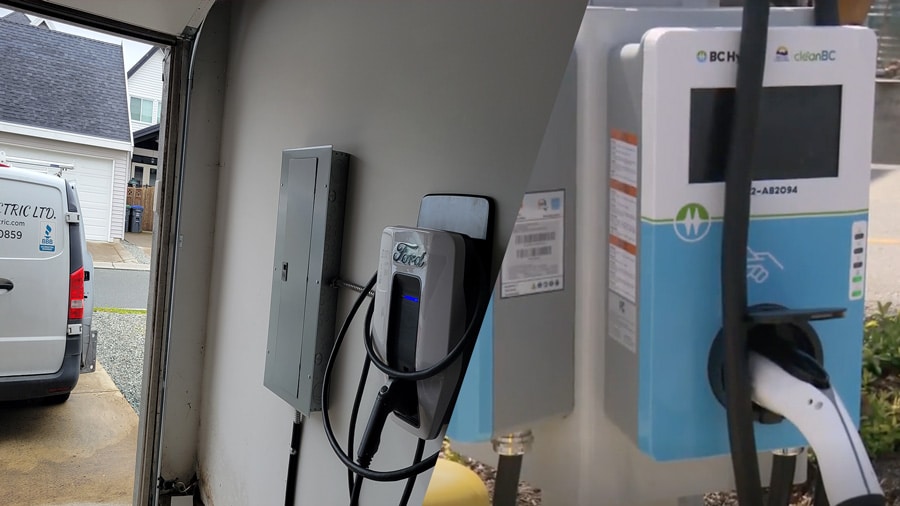
Understanding electric car charging times for home versus public chargers in 2026 is crucial for optimizing electric vehicle (EV) ownership, with home charging typically offering convenience over speed, and public charging prioritizing rapid replenishment for longer journeys. The distinction lies in power output, ranging from 1.2 kW at a standard household outlet to over 350 kW at high-speed public stations.
What Are the Primary Types of Electric Vehicle Charging for 2026?
Electric vehicle charging is categorized into three main levels based on voltage and power output, directly impacting charging speed. These include Level 1, Level 2, and Level 3 (DC Fast Charging). Each level is designed for distinct use cases, from overnight trickle charging to rapid roadside power-ups.
- Level 1 Charging: This uses a standard 120V AC household outlet, delivering approximately 1.2 kW to 1.9 kW of power. It adds about 3 to 5 miles of range per hour. While slow, it requires no special equipment beyond the portable charger often included with the EV. A full charge for a 60 kWh battery can take 30-50 hours.
- Level 2 Charging: Operating on a 208V to 240V AC power supply, Level 2 chargers typically provide 3.3 kW to 19.2 kW, with residential units commonly ranging from 7 kW to 12 kW. This significantly accelerates charging, adding approximately 15 to 40 miles of range per hour. Most EVs can achieve a full charge overnight in 4 to 8 hours using a Level 2 charger.
- Level 3 (DC Fast Charging): Unlike AC charging, Level 3 chargers deliver direct current (DC) power directly to the EV battery, bypassing the onboard charger. These stations operate at much higher power levels, typically ranging from 50 kW to over 350 kW at modern U.S. stations. DC Fast Charging can replenish an EV battery from 10% to 80% in as little as 15 to 45 minutes, depending on the vehicle and charger output.
How Do Home Charging Times Compare Across Different Levels?
Home charging primarily utilizes Level 1 and Level 2 options, offering varying speeds tailored to an owner’s daily driving habits and electrical infrastructure. While Level 1 is the most accessible, Level 2 provides a practical balance of speed and convenience for daily use.
A Level 1 charger, plugged into a standard 120V household outlet, delivers around 1.4 kW to 1.9 kW, adding 3-5 miles of range per hour. For a full battery electric vehicle (BEV) with a larger battery, like those found in some Hyundai models, a complete charge from near-empty can extend beyond 20-50 hours. This makes Level 1 best suited for plug-in hybrid electric vehicles (PHEVs) or for EV owners with short daily commutes (under 30-40 miles) who can charge overnight.
Upgrading to a Level 2 home charger, which typically connects to a 240V circuit similar to those for clothes dryers, dramatically reduces charging duration. Common residential Level 2 units provide 7 kW to 11.5 kW, translating to 25-40 miles of range per hour. For example, a Tesla Model Y with an 11.5 kW onboard charger can add approximately 30-44 miles of range per hour. Many EV battery packs are warrantied for 8 years or 100,000 miles, making consistent, controlled Level 2 home charging beneficial for maintaining battery health and longevity over the vehicle’s lifespan.
How Do Public Charging Options Affect EV Charging Duration?
Public charging networks offer a spectrum of speeds, from Level 2 destination chargers to ultra-fast DC charging stations, significantly impacting how quickly an EV can regain range on the go. As of early 2026, the U.S. has over 326,000 public Level 2 and DC fast charging ports.
Public Level 2 chargers typically deliver the same 7 kW to 19.2 kW as their home counterparts, adding 20-60 miles of range per hour. These are ideal for workplaces, retail centers, or hotels where vehicles are parked for several hours. While efficient for extended stops, they do not offer the rapid replenishment of DC Fast Charging.
DC Fast Charging (DCFC), or Level 3, is the quickest method, providing 50 kW to 350+ kW. For example, modern DC fast chargers can add 100-300 miles of range in about 30 minutes. Companies like Tesla with their Supercharger network (V3 up to 250 kW, V4 up to 500 kW planned) and Electrify America (with approximately 4,500 350+ kW chargers as of January 2026) are rapidly deploying high-power units. Some vehicles like the Hyundai Ioniq 5, which utilize an 800V architecture, can charge from 10% to 80% in 18-20 minutes at 350 kW stations. The cost of electric cars can range from $20,000 to over $100,000, and understanding these charging capabilities is crucial when deciding if an electric car is right for you.
What Specific Power Outputs Characterize Different Public Charger Types?
The speed and power differences between charger types are defined by their kilowatt (kW) output. Level 1 chargers provide 1.2-1.9 kW. Level 2 chargers, whether home or public, commonly range from 7 kW to 19.2 kW. Public DC fast chargers demonstrate a significant leap, with typical outputs from 50 kW to 350+ kW, and emerging technologies like ChargePoint’s 600 kW chargers are being introduced in 2026, though current EVs may not fully utilize them yet.
| Charging Level | Voltage | Typical Power Output (kW) | Approx. Miles Added Per Hour | Typical Full Charge Time (60 kWh Battery) | Primary Use Case |
|---|---|---|---|---|---|
| Level 1 (Home) | 120V AC | 1.2 – 1.9 kW | 3 – 5 miles | 30 – 50 hours (0-100%) | Overnight top-ups, PHEVs |
| Level 2 (Home) | 240V AC | 7 – 11.5 kW | 25 – 40 miles | 8 – 12 hours (0-100%) | Daily home charging overnight |
| Level 2 (Public) | 208V – 240V AC | 7 – 19.2 kW | 20 – 60 miles | 4 – 10 hours (0-100%) | Workplace, destination charging |
| DC Fast Charging (Public) | 400V – 800V DC | 50 – 350+ kW | 100 – 300+ miles in 30 mins | 15 – 45 minutes (10-80%) | Road trips, rapid top-ups |
What Factors Beyond Charger Type Influence 2026 EV Charging Times?
While the charger level is a primary determinant of charging speed, several other technical and environmental factors can significantly influence how long it takes to fully replenish an EV’s battery.
- Battery Size (kWh): Larger battery packs, like the 60-77 kWh configurations prevalent in mainstream EVs for 2026, naturally require more time to charge than smaller ones, even at the same power output. For instance, a 100+ kWh battery in a premium long-range EV will take longer than a 40 kWh battery in an urban-focused model.
- Battery State of Charge (SoC): EV batteries charge fastest when at a lower state of charge (typically 10-50%) and slow down significantly as they approach 80% or 90%. This “charging curve” is a protective measure for the long-term health of lithium-ion batteries.
- Vehicle’s Onboard Charger Limit: For AC charging (Level 1 and 2), the EV’s onboard charger converts AC to DC power. The maximum rate this onboard charger can handle will cap the charging speed, regardless of a more powerful external charger. For example, a Tesla Model Y typically maxes out at 11.5 kW for AC charging.
- Ambient Temperature: Extreme cold (below 60°F) or heat (above 90°F) can significantly slow charging speeds. In cold weather, battery chemistry operates less efficiently, and the EV may use energy to warm the battery, impacting net charging speed. DC fast charging can be affected by 20-50% in cold conditions.
- Battery Health: Over time, EV batteries can experience degradation, leading to reduced capacity and potentially slower charging speeds. However, modern EVs with liquid cooling and sophisticated battery management systems (BMS) mitigate these effects.
Frequently Asked Questions About EV Charging Time
What is the fastest way to charge an electric car?
The fastest way to charge an electric car is using DC Fast Charging (Level 3) stations, which can add 100-300+ miles of range in as little as 30 minutes, depending on the charger’s power output (50 kW to 350+ kW) and the vehicle’s capacity.
How long does it take to charge an EV at home?
Charging an EV at home via a Level 2 charger (240V, 7-11.5 kW) typically takes 8-12 hours for a full charge from empty, adding 25-40 miles of range per hour. Level 1 charging (120V, 1.2-1.9 kW) can take 30-50 hours for a full charge.
Can I use a standard wall outlet to charge my electric car?
Yes, you can use a standard 120V household wall outlet (Level 1 charging) to charge your electric car, but it’s the slowest method, adding only 3-5 miles of range per hour. It’s suitable for overnight top-ups for low-mileage drivers or plug-in hybrids.
Why does EV charging slow down after 80%?
EV charging slows down after 80% to protect the lithium-ion battery’s health and extend its lifespan. As the battery fills, internal resistance increases, and the vehicle’s Battery Management System (BMS) reduces power input to prevent overheating and degradation.
Are all electric cars compatible with DC Fast Charging?
No, not all electric cars are compatible with DC Fast Charging. Some plug-in hybrid EVs (PHEVs) and older EV models may lack DC fast charging capability, or be limited to lower power levels (e.g., 50-75 kW). Modern EVs, especially those with 800V architectures like some Hyundai and Porsche models, are designed for higher DCFC rates.