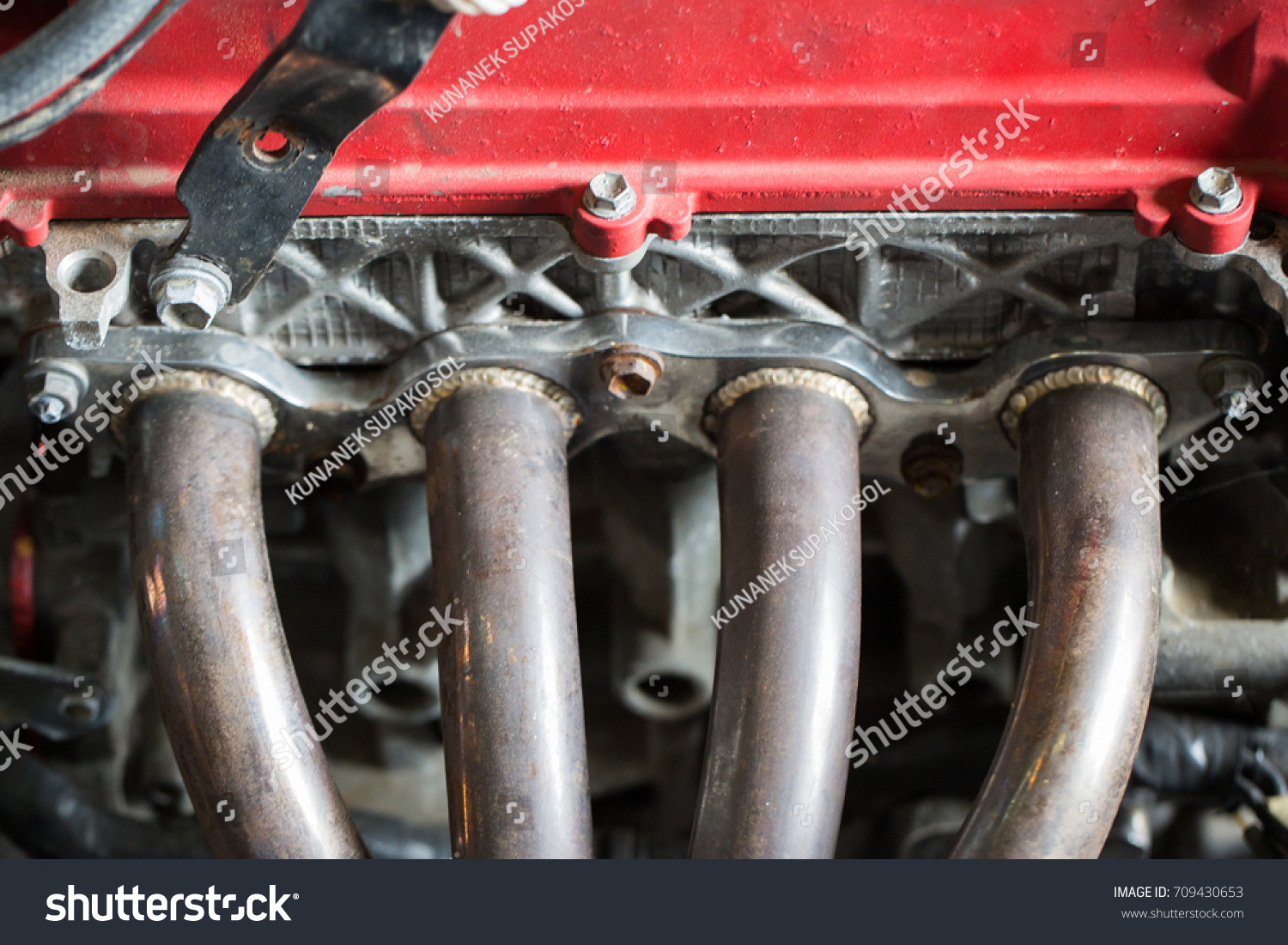
An exhaust manifold leak can manifest through several noticeable symptoms, including distinct engine noises, decreased performance, noxious fumes in the cabin, visible soot, and a lit check engine light, often requiring immediate attention to prevent further damage and ensure safety.
The exhaust manifold is a critical component of your vehicle’s exhaust system, collecting exhaust gases from multiple engine cylinders into a single pipe. When this manifold develops a leak, it compromises the entire exhaust process, leading to a range of issues from minor annoyances to significant safety hazards and expensive repairs.
Identifying an exhaust manifold leak early can save you from more extensive repairs down the line. This guide will detail the five most common symptoms and provide insights into the average repair costs associated with addressing this vital engine component failure.
What Are the Common Sounds Indicating an Exhaust Manifold Leak?
One of the most immediate and common indicators of an exhaust manifold leak is a distinct change in your engine’s sound profile. Drivers often report a ticking or hissing noise that emanates from the engine bay, particularly noticeable during a cold start or when the engine is under load.
This ticking sound is often caused by hot exhaust gases escaping under pressure from a small crack in the manifold or a compromised gasket. As the engine warms up and metal expands, the sound may diminish or even disappear temporarily, only to return on the next cold cycle. For example, a well-maintained 2020 Toyota Camry should operate with minimal engine noise; any persistent ticking or hissing suggests a potential breach in its exhaust integrity.
The intensity and frequency of the sound typically correlate with engine speed; it will often become louder as you accelerate and increase RPMs, then quiet down when you decelerate. This auditory signal is distinct from other common engine noises and should prompt a thorough inspection of the exhaust manifold and its connecting components. For a broader understanding of other abnormal sounds, you can consult our article on Don’t Ignore These Sounds: Symptoms of a Failing Car Exhaust System.
How Do Exhaust Manifold Leaks Affect Engine Performance and Fuel Economy?
An exhaust manifold leak can significantly degrade your vehicle’s engine performance and overall fuel efficiency. The leak disrupts the precise exhaust gas flow, which negatively impacts the readings from the oxygen sensors located upstream of the catalytic converter.
These oxygen sensors are crucial for monitoring the oxygen content in the exhaust gases and sending feedback to the engine control unit (ECU). When an exhaust leak occurs, ambient air can be drawn into the exhaust stream, skewing the oxygen sensor data and leading the ECU to believe the engine is running lean. Consequently, the ECU may try to compensate by injecting more fuel, resulting in a richer air-fuel mixture than necessary, which directly wastes fuel.
This imbalance can lead to a noticeable decrease in horsepower and torque, particularly during acceleration. Vehicles might experience sluggish response times or a general lack of power, similar to symptoms seen with bad fuel injectors which also disrupt the precise fuel-air mixture required for optimal combustion. Fuel economy can drop by as much as 5-15% in severe cases, making your vehicle less efficient and more costly to operate.
Why Are Strong Exhaust Fumes Inside the Cabin a Critical Symptom?
One of the most dangerous symptoms of an exhaust manifold leak is the presence of strong exhaust fumes infiltrating the vehicle’s cabin. This is a critical safety concern because exhaust gases contain carbon monoxide (CO), a colorless, odorless, and highly toxic gas that can be fatal even in small concentrations.
When the exhaust manifold leaks, especially near the firewall, these gases can easily be drawn into the passenger compartment through the ventilation system or open windows. The risk is particularly high when the vehicle is stationary, such as at a stoplight or in heavy traffic, as there is less airflow to dissipate the fumes externally. Early symptoms of carbon monoxide poisoning include headaches, dizziness, nausea, and confusion, which can quickly escalate to loss of consciousness.
If you detect a persistent exhaust smell inside your car, it is imperative to have the vehicle inspected immediately. Driving with exhaust fumes in the cabin is extremely hazardous. This issue differs from temporary white smoke from the exhaust on startup, which typically indicates coolant issues, but both situations underscore the importance of maintaining a sealed engine and exhaust system.
What Do Visible Soot Stains or Black Residue Indicate?
A visual inspection of your engine bay can often reveal direct evidence of an exhaust manifold leak in the form of soot stains or black residue. Exhaust gases contain particulate matter, primarily carbon, which will deposit around the area of the leak.
If you notice dark, sooty smudges or streaks on the exhaust manifold itself, on adjacent cylinder head components, or on nearby brackets and hoses, it’s a strong indicator of escaping exhaust gases. This residue typically builds up over time, becoming more pronounced as the leak worsens.
These stains are particularly evident on lighter-colored engine components and can be a definitive diagnostic sign even before audible symptoms become prominent. Regularly checking under the hood for such visual cues, especially during routine maintenance checks, can help you identify a leak early before it causes more significant problems.
When Does a Check Engine Light Indicate an Exhaust Manifold Leak?
The illumination of the Check Engine Light (CEL) on your dashboard is a common, though less specific, symptom of an exhaust manifold leak. While the CEL can signal a vast array of engine-related issues, an exhaust leak can trigger it when the discrepancy in oxygen sensor readings becomes significant enough to register as an error by the ECU.
As discussed, an exhaust leak can cause upstream oxygen sensors to detect incorrect oxygen levels, typically indicating a lean condition. The ECU interprets this as a fault in the emissions system or fuel delivery, leading to the activation of the CEL. Common Diagnostic Trouble Codes (DTCs) that might be stored include P0171 (System Too Lean Bank 1) or P0174 (System Too Lean Bank 2), among others related to O2 sensor performance or catalytic converter efficiency (e.g., P0420).
It is important to note that a lit CEL always warrants a diagnostic scan using an OBD-II scanner to retrieve the specific trouble codes. While not exclusively indicative of an exhaust manifold leak, these codes, when combined with other symptoms like noise or smell, can help pinpoint the problem accurately and prevent potential damage to expensive components like the catalytic converter, which can overheat if the air-fuel mixture is consistently too lean.
Average Repair Costs for an Exhaust Manifold Leak
The cost to repair an exhaust manifold leak can vary widely depending on several factors, including the vehicle’s make and model, engine type (e.g., 4-cylinder vs. V8), location of the manifold, and whether the manifold itself needs replacement or just the gasket.
Labor costs typically constitute a significant portion of the total repair, as accessing and replacing an exhaust manifold can be a time-consuming process. Technicians often face challenges such as rusted or seized bolts, which can break and require additional labor for extraction, thereby increasing the overall repair time from a standard 3-4 hours to potentially 6-8 hours or more.
In many cases, if the manifold is cracked, it will need complete replacement. This part can range from under $100 for a simple gasket to over $500 for a new manifold on certain high-performance or heavy-duty vehicles. Total repair costs can typically range from $300 to $1500, with more complex jobs on luxury or larger vehicles sometimes exceeding $2000. It is always recommended to get a detailed quote from a certified mechanic after a thorough diagnosis.
| Vehicle Type / Engine Configuration | Average Gasket Replacement Cost (Parts & Labor) | Average Manifold Replacement Cost (Parts & Labor) |
|---|---|---|
| 4-Cylinder (Compact/Sedan) | $250 – $600 | $400 – $950 |
| V6 Engine (Mid-size SUV/Truck) | $400 – $800 | $600 – $1,200 |
| V8 Engine (Full-size SUV/Truck) | $500 – $1,000 | $800 – $2,000+ |
How serious is an exhaust manifold leak?
An exhaust manifold leak is a moderately serious issue that should not be ignored. It can lead to several problems, ranging from decreased engine performance and reduced fuel efficiency to significant safety hazards like carbon monoxide poisoning. If left unaddressed, the continuous escape of hot exhaust gases can damage adjacent engine components, including wiring, hoses, and even melt plastic parts due to extreme heat exposure. Prolonged leaks can also negatively impact the catalytic converter due to incorrect oxygen sensor readings, potentially leading to a much more expensive repair.
Can I drive with an exhaust manifold leak?
While you technically “can” drive with an exhaust manifold leak, it is strongly advised against, especially if exhaust fumes are entering the cabin. The primary concern is the risk of carbon monoxide exposure, which is an odorless, colorless, and deadly gas. Even if fumes are not noticeable inside, the leak can reduce engine efficiency, cause the check engine light to illuminate, and potentially lead to further damage to the catalytic converter or other engine components. It is best to have the vehicle inspected and repaired as soon as symptoms are detected to ensure both safety and vehicle longevity.
What causes an exhaust manifold to leak?
Exhaust manifolds primarily leak due to extreme temperature fluctuations and material fatigue. The constant heating and cooling cycles of the engine cause the manifold metal to expand and contract, leading to stress cracks over time. Additionally, corrosive exhaust gases can degrade the metal, especially if the vehicle operates in environments with high humidity or road salt. Loose or rusted bolts and degraded gaskets are also common culprits, failing to maintain a tight seal between the manifold and the cylinder head. Over-tightening during installation can also stress the manifold, leading to cracks.