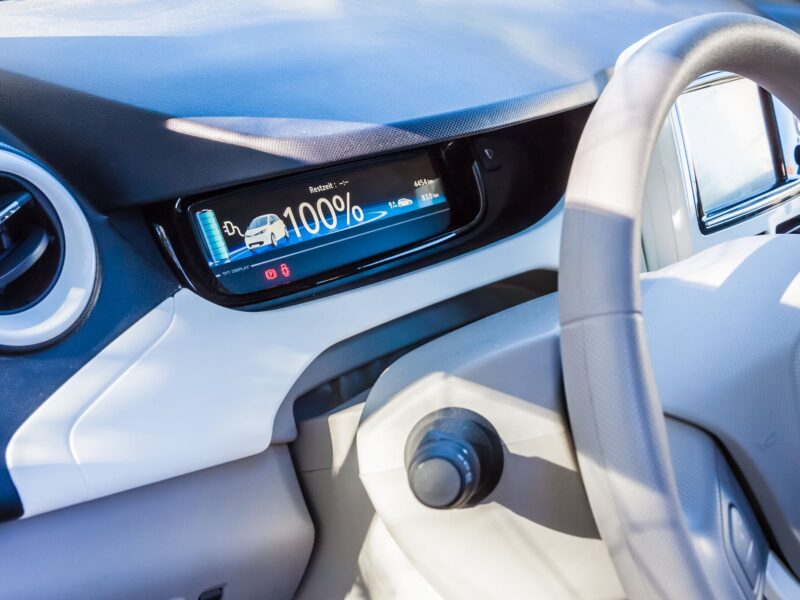
Electric car charging station maps are indispensable digital tools that provide real-time data on the location, availability, and specifications of charging infrastructure, which is crucial for efficient electric vehicle (EV) route planning. As the electric vehicle market expands with models from manufacturers like Tesla, Nissan, and Hyundai, the reliability of charging networks and the precision of route planning applications become paramount for drivers navigating trips ranging from local commutes to cross-country journeys. Effective utilization of these resources not only mitigates “range anxiety” but also optimizes the longevity of advanced lithium-ion batteries, which typically come with warranties ranging from 8 years or up to 100,000 miles. Detailed insights into optimal charging practices are essential to maintain battery health, as highlighted in The Complete 2026 Guide to Electric Car Battery Health and Longevity.
The integration of robust charging station maps and route planners is essential for any EV driver aiming to enhance their electric driving experience. These resources not only provide comprehensive data but also help users visualize their travel routes while accounting for charging needs. With the growing number of electric vehicle models and the corresponding charging infrastructure, understanding how to effectively leverage these tools will become significantly more important for all EV users.
What are the Primary Types of EV Charging Stations Available?
EV charging infrastructure is categorized into three distinct levels based on power output and charging speed, each serving different driver needs and dwell times.
- Level 1 Charging: This foundational level utilizes a standard 120-volt AC household outlet, delivering approximately 1.4 kW to 1.8 kW of power. It adds about 3-7 miles of range per hour, making it suitable for overnight charging at home when time is not a constraint. Full charging of a standard battery electric vehicle (BEV) can take between 22-40 hours, highlighting the inefficiency for daily use and longer trips.
- Level 2 Charging: Operating on a 208/240-volt AC circuit in North America, Level 2 chargers provide a power output ranging from 3.3 kW to 19.2 kW. Most residential units operate at 7.2-11.5 kW. These chargers can add 10-75 miles of range per hour, enabling a full charge for most EVs within 4-10 hours, thus being the most favorable option for home, workplace, and public charging locations. The Is an Electric Car Right for You? A Guide to Help You Decide article underscores that despite EV costs ranging from $20,000 to over $100,000, efficient Level 2 charging significantly enhances their practicality.
- DC Fast Charging (DCFC) / Level 3 Charging: This is the fastest public charging option, employing direct current (DC) to bypass the vehicle’s onboard charger. DCFC stations typically deliver power from 50 kW to over 350 kW. For instance, Electrify America offers speeds up to 350 kW, while Tesla Superchargers can output up to 500 kW, though they currently deliver up to 325 kW for specific vehicles like the Cybertruck and 250 kW for most other Tesla models. With the ability to add up to 200 miles of range in as little as 15-30 minutes, DCFC is ideal for long-distance travel. Known connectors include CCS (Combined Charging System) Type 1 for non-Tesla EVs in North America, CHAdeMO (primarily for older Nissan Leaf models), and NACS (North American Charging Standard), Tesla’s proprietary connector, which is also being adopted by other automakers starting in 2025.
Which Prominent Platforms Offer Comprehensive EV Charging Station Maps?
Several advanced digital platforms are available to help EV drivers locate and navigate to charging stations. These applications integrate crucial data for effective route management, consolidating numerous features that enhance the user experience.
- PlugShare: Recognized as the world’s largest EV driver community, PlugShare provides extensive real-time information on over 600,000 public charging locations globally. Users contribute station reviews and photos, offering valuable insights into charger functionality, availability, and specific access tips. It supports filtering by connector type (including NACS, CCS, and CHAdeMO), and has a trip planner tool that allows users to plan their routes efficiently.
- A Better Routeplanner (ABRP): ABRP is highly regarded for its detailed route optimization capabilities, factoring in the EV model, current charge level, desired arrival charge, and preferred charging stop timings. This tool calculates charging stops and trip duration, pulling live battery data from various EV models (e.g., Tesla, Volkswagen, Hyundai, Ford) for more precise predictions and a smoother travel experience.
- ChargePoint: As the largest EV charging network in the United States by station count, ChargePoint’s app allows users to locate stations, verify pricing, and manage payment transactions. With over 30,000 stations and 47,000 individual ports—most of which are Level 2 chargers—ChargePoint represents a formidable option for daily charging needs.
- Electrify America: This network’s app enables drivers to find charging stations, view real-time availability and connector types (CCS, CHAdeMO, Level 2, NACS), and manage payments seamlessly. Electrify America is crucial for long-distance non-Tesla EV travel, featuring around 750 stations and 3,300 fast-charging ports.
- EVgo: Operating one of America’s largest public EV fast-charging networks, EVgo boasts over 1,200 public fast charging stations across 47 states. Their app provides station location, pricing, and payment features, alongside a rewards program for members that incentivizes frequent use.
- Tesla App/In-Car Navigation: Tesla’s integrated system allows drivers to find Supercharger stations, monitor charging progress, view costs, and receive notifications. As of November 2025, Tesla operates approximately 7,900 Supercharger stations with over 75,000 connectors worldwide. Tesla vehicles can also precondition their battery when approaching a Supercharger to optimize charging speed, ensuring efficient energy use.
- Google Maps & Apple Maps: Both navigation platforms now offer EV-specific features, allowing users to select compatible plug types and search for nearby chargers. While helpful for finding chargers in immediate circumstances, specialized EV apps like ABRP are generally superior for complex route planning that incorporates real-time charger availability and detailed vehicle parameters.
How Does an EV Driver Effectively Plan a Long-Distance Route?
Effective EV route planning transcends traditional navigation by integrating numerous EV-specific factors to ensure a seamless journey. Each aspect plays a pivotal role in reducing travel time while enhancing the overall driving experience.
- Battery Range Management: Unlike gasoline vehicles, an EV’s range significantly depends on driving conditions, terrain, weather, and vehicle load. Advanced route planners predict battery consumption and suggest optimal charging stops considering these variables, leading to more enjoyable long-distance travel.
- Charging Station Compatibility and Availability: Not all charging stations are compatible with every EV. Therefore, planning tools must account for connector types (CCS, CHAdeMO, NACS) and can filter by charging speed (Level 2 vs. DC Fast Charging) and real-time availability to avoid occupied or out-of-service stations, ensuring efficient route execution.
- Real-Time Data Integration: Dynamic route planning algorithms leverage real-time data on traffic conditions, charging station availability, and wait times to adjust routes proactively. This minimizes idle time while ensuring access to a functional charger. This approach is crucial to maintaining the long-term health of the battery, a critical component detailed in The Complete 2026 Guide to Electric Car Battery Health and Longevity.
- Charging Costs: Public charging costs vary widely. Level 2 charging typically ranges from $0.20 to $0.40 USD per kWh, while DC fast charging can cost between $0.35 to $0.60 per kWh. Some automakers, including Hyundai, Nissan, and Tesla, may offer complimentary charging at select stations. Efficient route planning can help select cost-effective charging options. Furthermore, exploring insights in Going Green: How Electric Cars Help the Environment and Your Wallet delves into the economic benefits of EVs.
- Optimal Charging Stops: Route optimization involves more than just finding the shortest path; it focuses on balancing travel time with efficient charging stops. This includes employing algorithms that adapt to remaining electricity requirements based on the intended destination.
What are the Key Considerations for EV Connector Types?
Understanding the different charging connectors is fundamental for any EV owner, as compatibility directly impacts where and how efficiently a vehicle can charge.
- SAE J1772 (Type 1): The standard AC charging connector for most non-Tesla EVs in North America, it is utilized for both Level 1 and Level 2 charging, supporting loading of up to 19.2 kW.
- Combined Charging System (CCS): Integrating the J1772 standard with two additional pins facilitates DC fast charging. CCS Type 1 is prevalent in North America, while CCS Type 2 is used in Europe, supporting charging power levels from 3.7 kW up to 500 kW. Most non-Tesla EVs in North America utilize CCS1 for DC fast charging.
- CHAdeMO: This DC fast charging standard is primarily associated with some Japanese automakers, such as older Nissan LEAF models. It generally supports up to 62.5 kW, with some second-generation CHAdeMO capable of up to 400 kW. Its prevalence in the U.S. is decreasing compared to CCS and NACS.
- North American Charging Standard (NACS): Developed by Tesla, NACS serves as the proprietary connector for Tesla vehicles, accommodating both AC (Level 2) and DC (Supercharging) charging and supporting up to 250 kW. Moreover, as Tesla opened its NACS design to other manufacturers in 2022, various automakers plan to integrate NACS ports into their EVs starting in 2025.
What are the Comparative Features of Leading EV Charging & Route Planning Apps?
The table below provides a comparative overview of key EV charging and route planning applications, detailing their unique features, coverage, and specific functionalities.
| Feature | PlugShare | A Better Routeplanner (ABRP) | Electrify America App | Tesla App / In-Car Nav |
|---|---|---|---|---|
| Primary Function | Community-driven charging map and reviews | Advanced EV trip planning & optimization | Network-specific charger location & payment management | Tesla Supercharger navigation and management |
| Real-time Availability | Yes, crowd-sourced & network data | Yes, integrates live data from networks | Yes, for Electrify America stations | Yes, for Superchargers & some third-party |
| Connector Filtering (CCS, NACS, CHAdeMO) | Yes, supports filtering | Yes, allows filtering based on vehicle | Yes, filtering available | Automatic for Tesla (NACS), shows adapters for CCS |
| Route Planning Integration | Basic trip planner, exports to navigation systems | Comprehensive, vehicle-specific, predictive algorithms | Primarily for finding stations, limited route planning | Automatic Supercharger stops, battery preconditioning capabilities |
| User Reviews/Photos | Yes, extensive community contributions | Limited, focuses primarily on technical optimization | No, focuses mainly on network status | Limited for Superchargers, focuses on charger status |
| Pricing Information | Often available through user reports or direct integration | Can display estimated costs in premium versions | Yes, quotes cost for Electrify America stations | Yes, real-time pricing display |
| Coverage Area (Primary Focus) | Global (strong in North America & Europe) | Global (detailed for most regions) | Primarily United States | Global coverage focusing on the Tesla Supercharger network |
Frequently Asked Questions (FAQ)
Can all electric vehicles use any charging station?
No, EV charging stations utilize different connector types (NACS, CCS, CHAdeMO), and vehicles must have a compatible port or an adapter for charging.
How much does it typically cost to charge an EV at a public station?
Public Level 2 charging averages $0.20-$0.40 per kWh, while DC fast charging typically ranges from $0.35-$0.60 per kWh. Prices vary based on network and location.
What is “range anxiety” and how do charging maps address it?
Range anxiety is the fear of an EV running out of battery before reaching a charging station; advanced charging maps and route planners mitigate this by providing real-time availability, predicting battery consumption, and suggesting optimal charging stops along the route.
Are Tesla Superchargers exclusively for Tesla vehicles?
While historically exclusive, Tesla has begun opening its Supercharger network to non-Tesla EVs in some regions, with several automakers planning to integrate NACS ports into their vehicles starting in 2025.
What is the difference between Level 2 and DC Fast Charging?
Level 2 uses 208/240-volt AC and adds 10-75 miles of range per hour, while DC Fast Charging uses direct current with power rates of 50-350+ kW, capable of adding up to 200 miles of range in just 15-30 minutes.