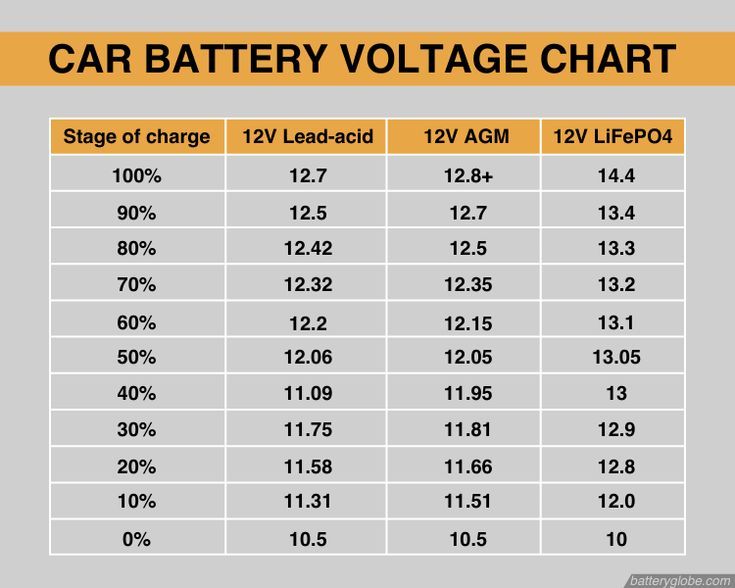
Diagnosing persistent low car battery voltage can be a daunting task; it requires a systematic and methodical approach. This challenge calls for a comprehensive understanding of electrical systems and an exploration of potential component failures. By grasping these intricacies, you empower yourself to troubleshoot effectively, ensuring your vehicle remains in optimal working condition.
What is the Normal Operating Voltage for a 12V Car Battery System?
A vibrant, fully charged 12V car battery holds a resting voltage in the range of 12.6 to 12.8 volts, measured after the engine has been off for at least one hour. This voltage represents the battery’s capacity to store chemical energy. While the engine is running, the alternator should generate a charging voltage between 13.7 and 14.7 volts. This not only powers the vehicle’s systems but also recharges the battery itself. If you consistently observe voltages below 12.0 volts when the engine is off, or below 13.0 volts while it’s running, this serves as a critical warning that requires immediate attention.
What are the Primary Symptoms of Persistent Low Car Battery Voltage?
The symptoms of persistent low car battery voltage can manifest in several noticeable ways. The first sign often appears as difficulty starting the engine, accompanied by a slow cranking sound. Additional indicators include dim or flickering headlights and dashboard lights, as well as sluggish operation of power accessories like windows. You might also encounter unexpected resets in your radio or infotainment system. If the battery warning light or Check Engine Light illuminates on your dashboard, it is a clear sign that your voltage is outside acceptable thresholds. Much like a “spongy” brake pedal warns of serious hydraulic issues (explored further in our article on dangerous symptoms of low brake fluid), these electrical anomalies point to possible failures in the charging system or battery degradation.
How Do You Perform Advanced Diagnostic Tests for Low Battery Voltage?
Conducting advanced diagnostics for low battery voltage requires specialized tests that extend beyond basic multimeter readings. These tests focus on assessing the battery’s health, scrutinizing the charging system, and identifying potential parasitic drains. By utilizing specific tools and adhering to meticulous voltage thresholds, you can achieve reliable evaluations of your vehicle’s electrical system.
What Specific Tests Diagnose a Failing Battery?
One pivotal test for a 12V car battery is the load test. This test surpasses the conventional resting voltage check; it applies a controlled electrical load that simulates starting conditions. For standard 12V lead-acid batteries, this entails using a load equivalent to half of the Cold Cranking Amperage (CCA) rating for 15 seconds. Ideally, the battery voltage should remain above 9.6 volts during this test period. If the voltage drops below this threshold or fails to recover above 75% of its charge state (approximately 12.45 volts) after the load is removed, it’s likely time for a battery replacement. Utilize a digital voltmeter with accuracy of at least 0.5 percent for accurate measurements of open-circuit voltage in sealed batteries.
What Diagnostic Methods Identify Alternator Failures?
The alternator plays a critical role in charging the battery and supplying power to the vehicle’s electrical systems while the engine runs. A well-functioning alternator typically outputs voltage between 13.5 and 14.8 volts, ideally achieving 13.8 to 14.5 volts when idling without accessories. If voltage falls below 13.7 volts during operation, the alternator may not charge the battery efficiently. Conversely, output exceeding 15 volts presents a risk of overcharging, which can harm the battery and other electrical components. Advanced diagnostics may include measuring the voltage drop between the alternator output stud and the positive battery post; any drop exceeding 0.5 volts at 1,800 to 2,000 RPM with all electrical systems engaged warrants further investigation.
How Are Parasitic Drains Detected and Isolated?
A parasitic drain arises when electrical components continue to draw current from the battery after the vehicle has been turned off, causing a slow discharge. In modern vehicles, a typical parasitic draw ranges from 50 mA to 85 mA, while in older models, it should ideally remain below 50 mA. Draws exceeding 100 mA indicate an electrical issue that needs immediate attention. To assess this, connect a multimeter set to DC amperage mode in series between the negative battery terminal and the disconnected negative battery cable. It’s essential to conduct this test after allowing approximately 20 minutes for the vehicle’s systems to enter “sleep mode,” as some modules may initially draw up to 3 amps. Employing tools like the Lisle Parasitic Drain Tester 64970 can simplify this process, facilitating long-term monitoring while safeguarding the multimeter.
What are Common Underlying Causes of Persistent Low Battery Voltage?
Several critical issues within your vehicle’s electrical system can lead to persistent low battery voltage, each requiring thorough investigation.
Can Faulty Alternators or Voltage Regulators Cause Low Voltage?
Indeed, a malfunctioning alternator or voltage regulator is a significant contributor to persistent low battery voltage. Symptoms such as a humming sound may indicate worn internal bearings within the alternator, while a slipping or misaligned drive belt can impair its power generation ability. Inconsistent power supply from a failing alternator can cause flickering lights and stalling engines due to insufficient power reaching the fuel injectors or ignition systems. Voltage regulator malfunctions can trigger either a scenario of undercharging (voltage below 13.7 volts) or overcharging (voltage above 14.7 volts), both of which can drastically shorten battery life.
How Do Parasitic Drains Affect Battery Voltage Over Time?
Parasitic drains gradually deplete the battery when the vehicle is inactive, resulting in persistent low voltage. For example, a “normal” parasitic draw of 85 mA on a 50 Ah battery can deplete it completely in about three weeks. Components such as memory seats, radio presets, or GPS systems contribute to this constant draw. Specifically, a parasitic drain of 35 mA could cause a 60 amp-hour battery to be non-starting in roughly 71 days, as most vehicles won’t ignite with a charge dropping below 40%. This extended discharge, particularly as voltage approaches 12.4 volts, accelerates sulfation, thereby diminishing battery capacity and performance.
What Role Do Faulty Wiring and Corroded Connections Play?
Corroded battery terminals, loose cable connections, and damaged wiring introduce unnecessary resistance into the electrical system. This resistance hinders current flow, leading to voltage drops that prevent the battery from receiving an adequate charge from the alternator. Consequently, the starter may struggle to draw sufficient power for engine cranking. A voltage drop exceeding 0.5 volts on the positive starter cable or between the negative battery terminal and the starter housing indicates excessive circuit resistance. Even undersized replacement battery cables, concealed beneath thick insulation, can impede current flow, resulting in insufficient power delivery. Just as a failing transmission solenoid can lead to abrupt gear shifts (discussed further in our article on transmission solenoid failures), faulty wiring can also create specific electrical issues that contribute to persistent low battery voltage.
What Advanced Tools and Techniques Aid in Troubleshooting Car Batteries?
When diagnosing persistent low car battery voltage, employing advanced tools and diagnostic methods can significantly enhance accuracy, distinguishing professional assessments from routine evaluations.
| Diagnostic Tool | Primary Function | Typical Cost Range | Key Measurement Parameter |
|---|---|---|---|
| Digital Multimeter (DMM) | Measures voltage, current (in mA/A), and resistance, essential for checking open-circuit voltage, charging voltage, and parasitic draw tests. | $20 – $200 | Volts (V), Amperes (A), Ohms (?) |
| Battery Load Tester | Assesses the battery’s ability to maintain voltage under high current, simulating engine starting conditions. | $25 – $550+ | Voltage (V) under load (e.g., a minimum of 9.6V for 15 seconds at half CCA) |
| Parasitic Drain Tester (e.g., Lisle 64970) | Facilitates safe multimeter connections for ongoing monitoring of parasitic draw without risk of fuse blowouts. | $38 – $70 | Milliampere (mA) draw over time (e.g., acceptable range of 50-85 mA for newer cars) |
| Clamp-on Ammeter (Low Current Inductive) | Measures current flow without circuit disconnection, suitable for assessing parasitic drains or alternator output. | $50 – $300+ | Milliampere (mA), Ampere (A) |
| Oscilloscope | Analyzes complex waveforms to detect ripple voltage from failing alternator diodes or electrical glitches. | $200 – $1,000+ | Voltage (V) waveform analysis |
When is a Battery Load Tester Essential for Diagnosis?
A battery load tester is crucial when the battery’s open-circuit voltage appears satisfactory (above 12.4 volts), yet the vehicle shows signs of difficulty in starting. This tool applies a controlled load at half of the battery’s CCA rating for 15 seconds. If the voltage dips below 9.6 volts during this assessment, it confirms the battery’s inability to provide the necessary current for engine startup, regardless of its charge status.
How Can an Oscilloscope Assist in Identifying Electrical Issues?
An oscilloscope serves as a powerful tool for visualizing electrical waveforms, proving invaluable for diagnosing intermittent electrical glitches or subtle inconsistencies within the charging system that traditional multimeters may miss. This device can identify excessive AC ripple voltage—a potential sign of a failing alternator diode—leading to undercharging or overcharging scenarios. Furthermore, oscilloscopes can monitor voltage fluctuations while the vehicle operates, facilitating the detection of intermittent shorts or voltage drops that contribute to ongoing low battery voltage issues.
What are the Costs Associated with Professional Battery Replacement in 2026?
Should diagnostics reveal the need for battery replacement, the average cost for professional car battery replacement, including both the battery and labor, typically ranges from $268 to $368 for standard 12V vehicles in 2026. On average, the replacement cost for a 12V lead-acid car battery—covering parts and labor—generally lies between $120 and $300. Bear in mind that major electric vehicle (EV) battery packs represent a significantly more considerable expense.
Frequently Asked Questions (FAQ)
What is an acceptable voltage drop for a starter circuit?
For the positive side of the starter circuit, the voltage drop from the battery’s positive post to the starter’s positive stud should not exceed 0.5 volts, ideally maintaining a range between 0.2 to 0.3 volts while cranking the engine. On the negative side (ground), aim for a voltage drop of 0.2 volts or less between the negative battery terminal and the engine block or starter housing.
What constitutes an excessive parasitic draw?
An excessive parasitic draw is typically defined as anything over 85 mA for newer vehicles and above 50 mA for older models. Draws exceeding 100 mA signal a clear electrical problem. The standard acceptable range for parasitic draw rests between 10 mA and 30 mA, with luxury vehicles sometimes approaching 50 mA.
Can a weak battery cause unrelated electrical glitches?
Yes, a weak battery can induce various electrical glitches beyond just starting difficulties. Symptoms may include flickering headlights, intermittent dashboard warning lights (like ABS, check engine, and airbag), radio resets, sluggish power windows, and even unexpected shifts in automatic transmissions due to voltage instability affecting sensitive control modules.
What is the minimum voltage a car battery needs to start the car?
While a fully charged battery should read between 12.6 and 12.8 volts, certain vehicles can successfully start with as little as 10.5 volts, contingent on battery type and starter characteristics. However, readings sinking below 12.4 volts indicate a discharged state that warrants immediate attention.
How long can a fully charged battery withstand a typical parasitic drain before becoming too low to start the car?
A typical parasitic draw of 85 mA may cause a single 50 Ah battery to become fully discharged from a full charge in approximately three weeks. If the parasitic draw measures 35 mA, a 60 amp-hour battery could reach a non-starting state in about 71 days, as most vehicles won’t start once battery capacity dips below 40%.