When your brake pedal feels excessively hard to press, it’s more than just an inconvenience; it’s a glaring warning signal. This condition often indicates a malfunction in the brake booster—a vital component that transforms the minimal force applied by your foot into the powerful braking force you need. For vehicles manufactured after 1968, the brake booster is indispensable for ensuring safe, efficient stopping. A failing brake booster compromises this amplification, resulting in longer stopping distances and a significantly heightened risk of accidents.
What Exactly Does a Brake Booster Do to Your Braking System?
The brake booster, also known as a power brake booster or vacuum booster, is nestled between the brake pedal and the master cylinder. Its primary task is to amplify the mechanical force exerted by your foot before sending it to the master cylinder. Most gasoline vehicles rely on a vacuum-assisted mechanism where the engine’s intake manifold creates the necessary vacuum. When you press the brake pedal, a valve opens within the booster, allowing atmospheric pressure to fill one side of an internal diaphragm. This pressure difference moves the diaphragm, pushing a rod connected to the master cylinder and significantly enhancing the force transmitted to the hydraulic brake system. While hydraulic brakes would still operate without this assistance, they would demand substantially more effort—around 800 to 900 pounds per square inch (psi) with a vacuum booster compared to approximately half that when functioning properly.
Why Does My Brake Pedal Feel Hard to Press?
If your brake pedal is notably harder to press than usual, it’s a surefire sign that the brake booster is not effectively amplifying your input. This situation often arises when there’s a loss of vacuum pressure due to diaphragm damage or a leak within the vacuum hose. When the booster’s amplification—capable of multiplying your input by up to four times—fails, you will feel a distinct “stiff” or “wooden” pedal, which directly translates to increased physical effort required from you.
Can a Failing Brake Booster Cause Increased Stopping Distances?
Absolutely. A malfunctioning brake booster leads to increased stopping distances, adding serious safety concerns. Without the booster’s necessary amplification of force, the pressure sent to the master cylinder diminishes, resulting in inadequate engagement of brake calipers or drum brakes. To put it into perspective, while a functional vacuum booster typically achieves braking pressures of 800 to 1,400 psi, a failing booster may only manage 700 to 1,200 psi. This means that you’ll need to apply significantly more effort and distance to come to a stop. This issue is akin to having air in your brake lines, where the presence of compressible air hampers hydraulic pressure, leading to diminished braking power and longer stopping distances—as described in our guide “5 Clear Symptoms of Air in Your Brake Lines and How to Fix Them”.
What Hissing Noises Indicate a Brake Booster Problem?
Should you hear a hissing or whistling noise near the brake pedal or under the hood while pressing or releasing the brake pedal, it signals a vacuum leak in the brake booster. This sound indicates that air is mistakenly entering or escaping through a compromised diaphragm, a cracked vacuum hose, or a faulty check valve. In a properly functioning system, the vacuum remains intact on both sides of the diaphragm until you depress the pedal, at which point excess atmospheric pressure is introduced. However, a leak disrupts this balance, allowing uncontrolled air into the system, which can also lead to engine stumbling or rough idling due to an imbalanced air-fuel mixture. If you hear this noise, it’s crucial to address it immediately to prevent deeper braking performance issues.
Can a Failing Brake Booster Affect Engine Performance or Trigger Warning Lights?
Indeed, a failing brake booster can significantly influence engine performance and light up warning indicators on your dashboard. A substantial leak in the booster’s vacuum can disrupt the engine’s overall vacuum levels, causing unmetered air to enter the intake manifold. This disruption often results in rough idling, fluctuating engine RPMs, and reduced acceleration. Modern vehicles may include a brake booster vacuum sensor; if it detects a leak, it can activate the Check Engine Light. In systems equipped with electro-hydraulic brake boosters, internal malfunctions can also trigger Anti-lock Braking System (ABS) or traction control lights, necessitating urgent attention for diagnosis, much like a Brake Fluid Warning Light.
What are the Distinctive Symptoms of Hydro-Boost vs. Vacuum Booster Failures?
While vacuum and hydro-boost systems share the goal of amplifying braking force, their failings display distinct symptoms due to their operational differences. Vacuum boosters, common in gasoline vehicles, depend on engine vacuum and are prone to vacuum leaks. In contrast, hydro-boost systems utilize hydraulic pressure from the power steering pump, presenting unique signs like fluid leaks, heavy steering at low speeds, and a whining noise from the power steering pump. Notably, hydro-boost units include an accumulator for pressure emergencies, which, if compromised, can eliminate that reserve support.
How Can I Diagnose a Brake Booster Issue with Concrete Tests?
To diagnose a brake booster issue effectively, you can conduct specific tests:
- Engine-Off Pedal Test: With the engine off, pump the brake pedal 4 to 5 times to deplete any residual vacuum. The pedal should feel consistently stiff. When you start the engine while maintaining pressure, a properly functioning booster should cause the pedal to drop about an inch as vacuum assistance is restored. If it remains hard, the booster is likely defective.
- Vacuum Supply Test (for Vacuum Boosters): Start the engine and attach a vacuum gauge to the vacuum supply hose leading to the booster. A normal reading should range from 18 to 21 inches of mercury (Hg) at idle. Consistent readings below 18″ Hg may point to a vacuum issue or restrictive line. If it drops below 16″ Hg, consider an electric vacuum assist pump.
- Check Valve Integrity Test: Disconnect the vacuum hose from the booster’s check valve and blow into the valve. If air passes through, it’s defective and needs replacement, as a faulty check valve will compromise vacuum retention.
- Leak Detection (Soap Spray Method): Mix dish soap and water in a spray bottle. With the engine running, mist the solution around the brake booster, focusing on seams and hoses. Bubbles forming indicate a leakage.
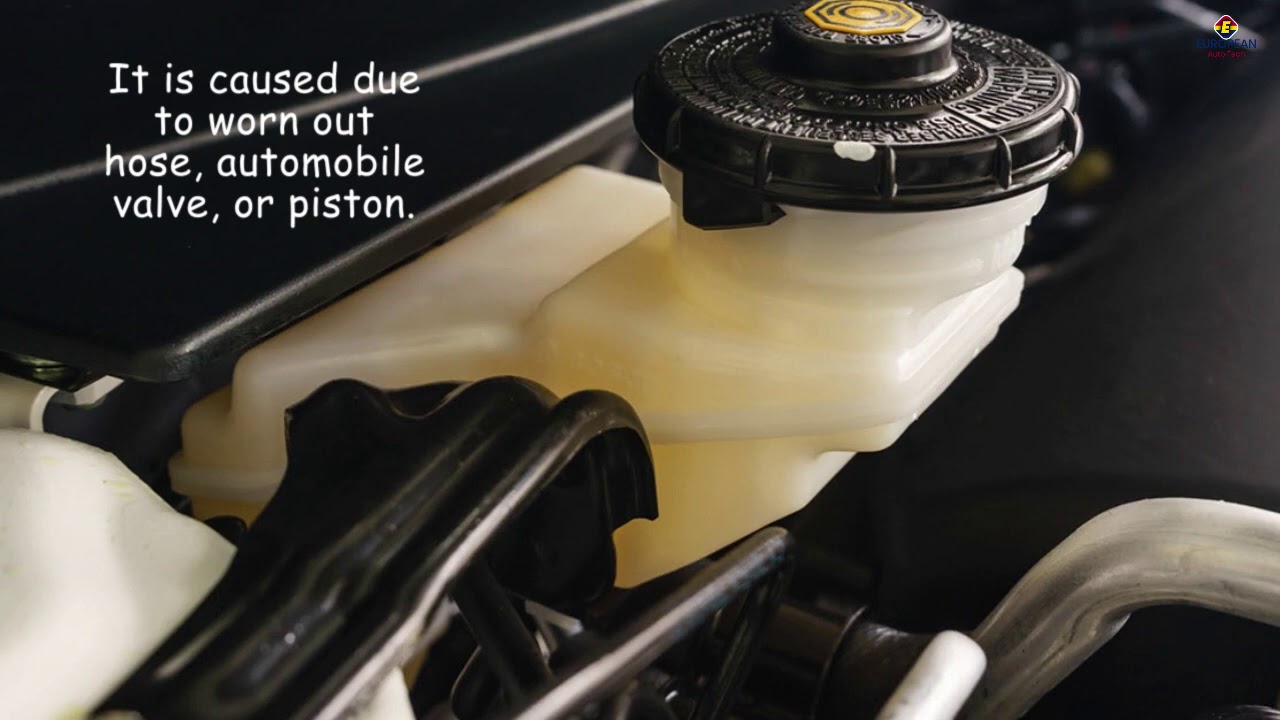
Remember, issues affecting hydraulic brake systems can mimic booster problems. Low or contaminated brake fluid can also cause a hard pedal, and conditions like sludge buildup or air in the brake lines may necessitate a brake fluid exchange biennially. These symptoms should be distinguished from other issues such as Common Brake Rotor Problems, which generally present as pulsations or noises rather than a hard pedal feel.
Comparison of Brake Booster Systems
| Feature | Vacuum Brake Booster | Hydro-Boost Brake Booster | Electro-Hydraulic Brake Booster |
|---|---|---|---|
| Operating Principle | Utilizes engine vacuum to create a pressure differential across a diaphragm, amplifying pedal force. Requires 18-21 inches Hg vacuum for optimal operation. | Utilizes hydraulic pressure from the power steering pump to move a piston, amplifying pedal force. Features an accumulator for pressure reserve. | Sensors measure pedal pressure, sending signals to an Electronic Control Unit (ECU) which commands a hydraulic pump to generate pressure. No direct mechanical link between pedal and brakes (“brake-by-wire”). |
| Typical Applications | Most gasoline-powered passenger cars and light trucks. Common since the 1960s. | Diesel engines, turbocharged/supercharged vehicles, and heavy-duty trucks (3/4-ton and larger) where engine vacuum is insufficient. First introduced by General Motors in the 1990s. | Hybrid and electric vehicles, integrates with regenerative braking, ABS, and stability control. |
| Common Failure Symptoms | Hard brake pedal, increased stopping distance, hissing noise when braking, rough engine idle, engine stalling, Check Engine Light illumination. | Hard brake pedal, increased stopping distance, power steering fluid leaks, heavy steering at low speeds, whining power steering pump, “grabby” brakes. | Hard brake pedal, increased stopping distance, ABS or traction control warning lights illuminated, brake fluid leaks, “grabby” brakes. |
| Braking Pressure Range (Approx.) | 800 to 1,400 psi. | 2,000 to 2,700 psi, up to double vacuum boosters. | System-dependent, but designed for precise and powerful braking with electronic control. |
| Average Replacement Cost Range (Parts & Labor) | Approximately $300 to $1,300, with parts often $150-$300 and labor $100-$200. For specific models like a Chevrolet Malibu, costs range from $945 to $1,115. | Generally within the standard brake booster replacement range, but specific hydro-boost units can be costlier. Labor can take 2.5-3 hours, with rates up to $225/hour at dealerships. | Replacement costs may be higher due to integrated electronic components and specialized diagnostic requirements. |
Frequently Asked Questions (FAQ)
Q: Can I drive with a failing brake booster?
A: No, driving with a failing brake booster poses severe safety risks due to escalated pedal effort and extended stopping distances. It’s advisable to have your vehicle towed to a qualified mechanic for immediate repairs.
Q: How long does a brake booster typically last?
A: A vacuum brake booster can last anywhere from 150,000 miles to the vehicle’s lifetime; however, conditions like dry rot in arid climates may necessitate earlier diaphragm replacement.
Q: Is a hard brake pedal always indicative of a brake booster failure?
A: While a hard pedal is a primary symptom of brake booster malfunction, other factors, such as low brake fluid levels or air in the brake lines, can also create similar symptoms. A professional diagnostics is essential to identify the root cause.
Q: What is the typical labor time for a brake booster replacement?
A: The labor time for a brake booster replacement typically ranges from 2 to 3 hours, although intricate installations requiring cowl or trim removal might take longer. Total labor costs can vary between $277 and $407.