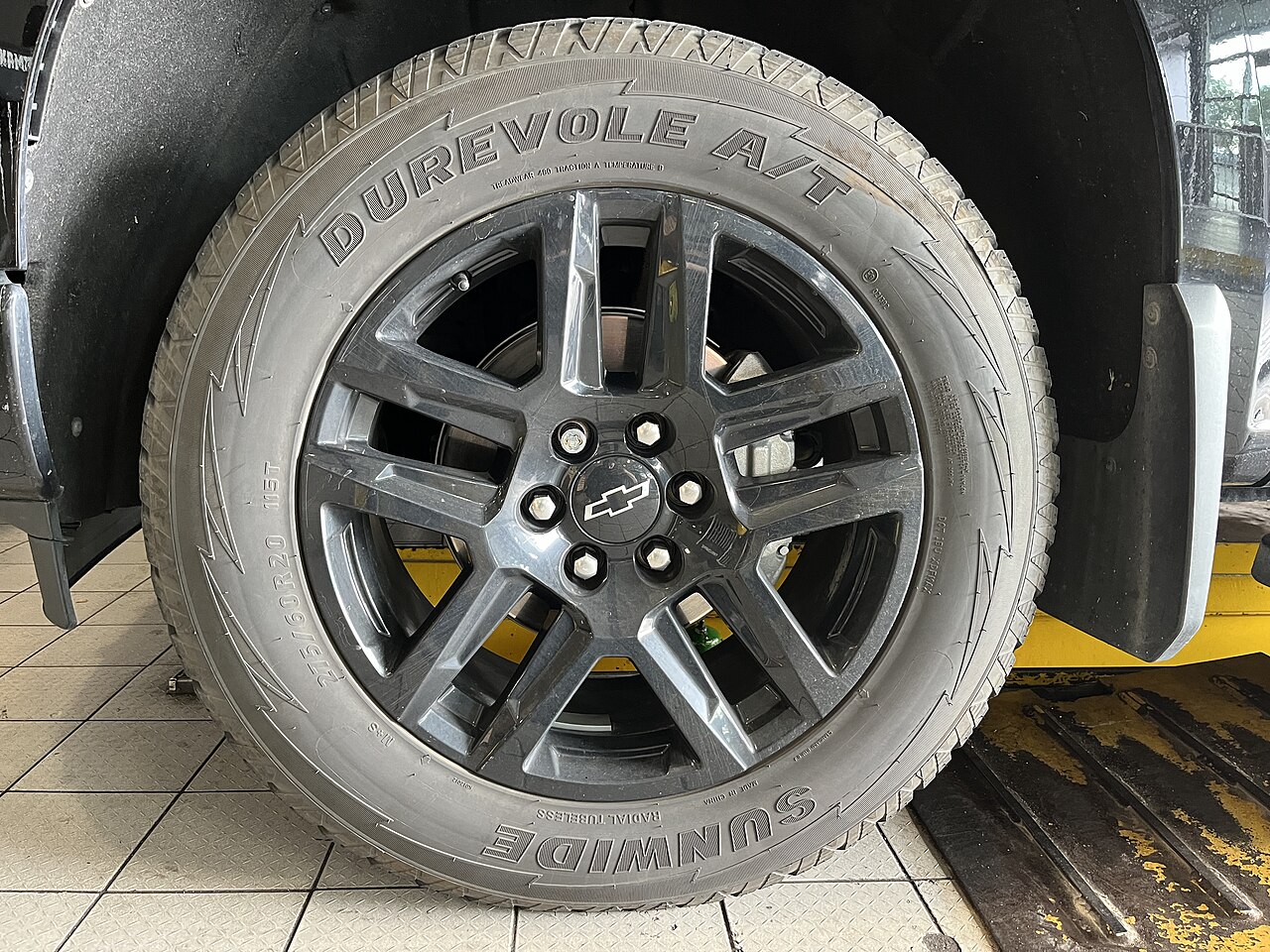
A tire’s age is the last four digits of the DOT code on its sidewall: two digits for the week and two for the year it was made. Michelin recommends a yearly professional inspection after five years and replacement at ten years from manufacture, even with good tread. Some automakers say six years, so check your owner’s manual.
How do you find a tire’s age from the DOT code?
Find the "DOT" marking on the tire. The last four digits of that code are the date of manufacture. Michelin and Consumer Reports give the same week-then-year order in their examples. Continental, in a page about motorcycle and scooter tires, spells it out: the first two digits are the week and the last two are the year.
| Last four digits | Week | Year | Source of the example |
|---|---|---|---|
| 3520 | 35th week | 2020 | Michelin |
| 4521 | 45th week | 2021 | Continental (motorcycle and scooter tires) |
| 0424 | 4th week | 2024 | Consumer Reports |
Continental adds, for motorcycle and scooter tires, that weeks run from 01 to 53 and that the date stamp follows the "DOT" marking "usually but not exclusively," so read the whole string rather than assuming its position. We did not find a source we could read that explains older codes from before 2000, so if your tire’s code does not end in four digits, ask a tire shop.
How old is too old for a tire?
There is no single legal answer in the sources we read. Three published positions:
| Source | Guidance | Scope |
|---|---|---|
| Michelin | Inspect yearly by a tire professional after 5 years; replace 10 years after manufacture, regardless of tread depth or appearance | Car tires, including spares |
| Consumer Reports | Replace at 6 years if the automaker says so; otherwise at 10 years | Car tires |
| Continental | Replace tires over 10 years old | Page is about motorcycle and scooter tires |
The common ceiling is ten years from the date of manufacture, not from the day you bought or fitted the tire. Consumer Reports says some automakers recommend six years, and Michelin’s page tells owners of original-equipment tires to follow the vehicle manufacturer’s recommendation.
Should you replace tires by age even if the tread looks fine?
The manufacturers do not claim that a tire fails at a given age. Michelin writes that "there is no single rule that determines how long a tire will last" and that age is "an important factor when considered alongside wear, condition, and performance indicators." Continental, in its motorcycle and scooter tire guidance, says that "accurately predicting the service life of any specific tire in chronological time is not possible."
Neither page, nor the Consumer Reports article, cites test data for where the age limit sits. The ten-year figure is the tire makers’ recommendation, and the six-year figure is what some carmakers recommend. We could not read the U.S. safety regulator’s tire-aging research (the site returned an access error), so we do not cite it. What the sources do support is a simple rule: tread depth tells you about wear, and the date code tells you about age, so check both. Michelin gives 2/32 inch (1.6 mm) as the minimum tread depth.
How old can a new tire be when you buy it?
Consumer Reports gives the shortest answer: "Don’t buy tires more than a couple of years old." By Michelin’s count, which starts at manufacture, a tire that sat in a warehouse has already used part of its ten years. Continental’s page says an unused, properly stored tire up to five years old can be sold as new, but that page covers motorcycle and scooter tires, so treat that figure as that maker’s rule for that product.
Before you pay, read the DOT code on the exact tire you will receive, and ask for a different one if the date is older than you want.
Do spare tires expire too?
Michelin says yes. Its page states that spare tires age on the same timeline as regular ones, used or not, and that its ten-year recommendation includes them. A spare that has never touched the road is still counted from its manufacture date. Check the DOT code on the spare when you check the others.
What should you do with this today?
- Decode each tire. Read the last four digits of the DOT code on all four tires and the spare, and write down the week and year.
- Check your owner’s manual. If your vehicle maker sets a replacement age, Michelin tells owners of original-equipment tires to follow it, and Consumer Reports uses ten years only when there is no such recommendation.
- Count from manufacture. A tire made in week 20 of 2018 reaches ten years in 2028, whatever year you installed it.
- Book an inspection at five years. Michelin recommends a professional inspection at least once a year from then on.
- Look at wear at the same time. Age and tread depth are separate checks. See our guide to tires for electric vehicles for wear on EVs.
- Do not rely on looks. Michelin recommends against relying on appearance or mileage alone.
For cold-weather driving, see winter tire safety tips.
Frequently asked questions
Where is the date on a tire?
In the DOT code on the tire. The last four digits are the week and year of manufacture, for example 3520 for the 35th week of 2020.
How long do tires last before they need replacing?
Michelin recommends replacement ten years after manufacture even if the tread looks fine, with a yearly professional inspection after five years. Some automakers say six years. Michelin also gives 2/32 inch as the minimum tread depth, so wear can end a tire’s life sooner.
Do unused tires expire?
Age counts from the manufacture date, used or not. Michelin applies its ten-year recommendation to spares that were never used. Consumer Reports advises against buying tires more than a couple of years old.
Is a six-year-old tire unsafe?
The sources we read do not say that. Consumer Reports notes that some automakers recommend replacing tires at six years, and recommends ten years otherwise. That is guidance from a magazine and tire makers, without published test data behind it, so check your owner’s manual and have a professional inspect tires of that age.
Does tread depth matter more than age?
They are different checks. Michelin says age is one factor to consider alongside wear and condition, and it recommends against judging a tire by looks or mileage alone.