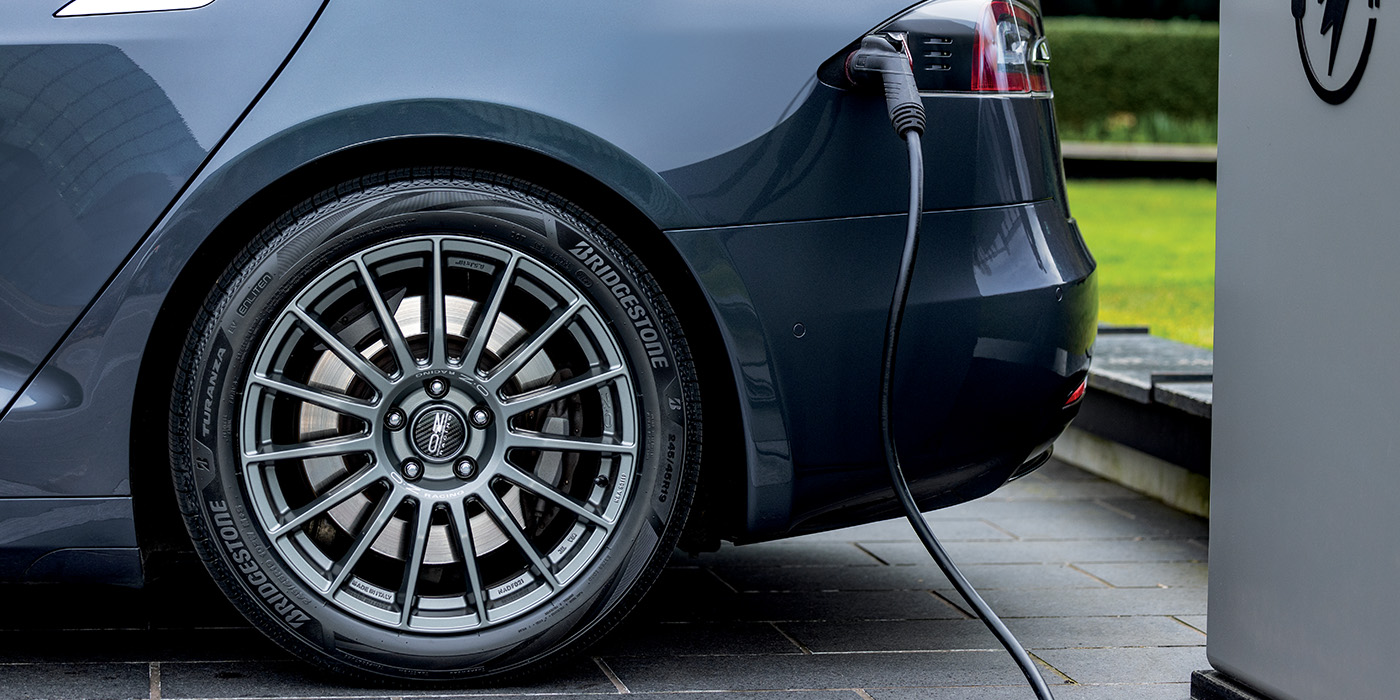
Tires on electric cars are not a different species, but they face different loads. EVs are heavier and deliver torque instantly, and a Consumer Reports tire tester said in a radio interview that tires on them can wear about 20% faster. Rolling resistance and tire pressure also decide how much range you get, so check those before you buy.
Why do tires on electric cars wear faster?
Three forces stack up on an EV tire, according to Ryan Pszczolkowski, tire testing program manager at Consumer Reports, speaking on Science Friday in 2023:
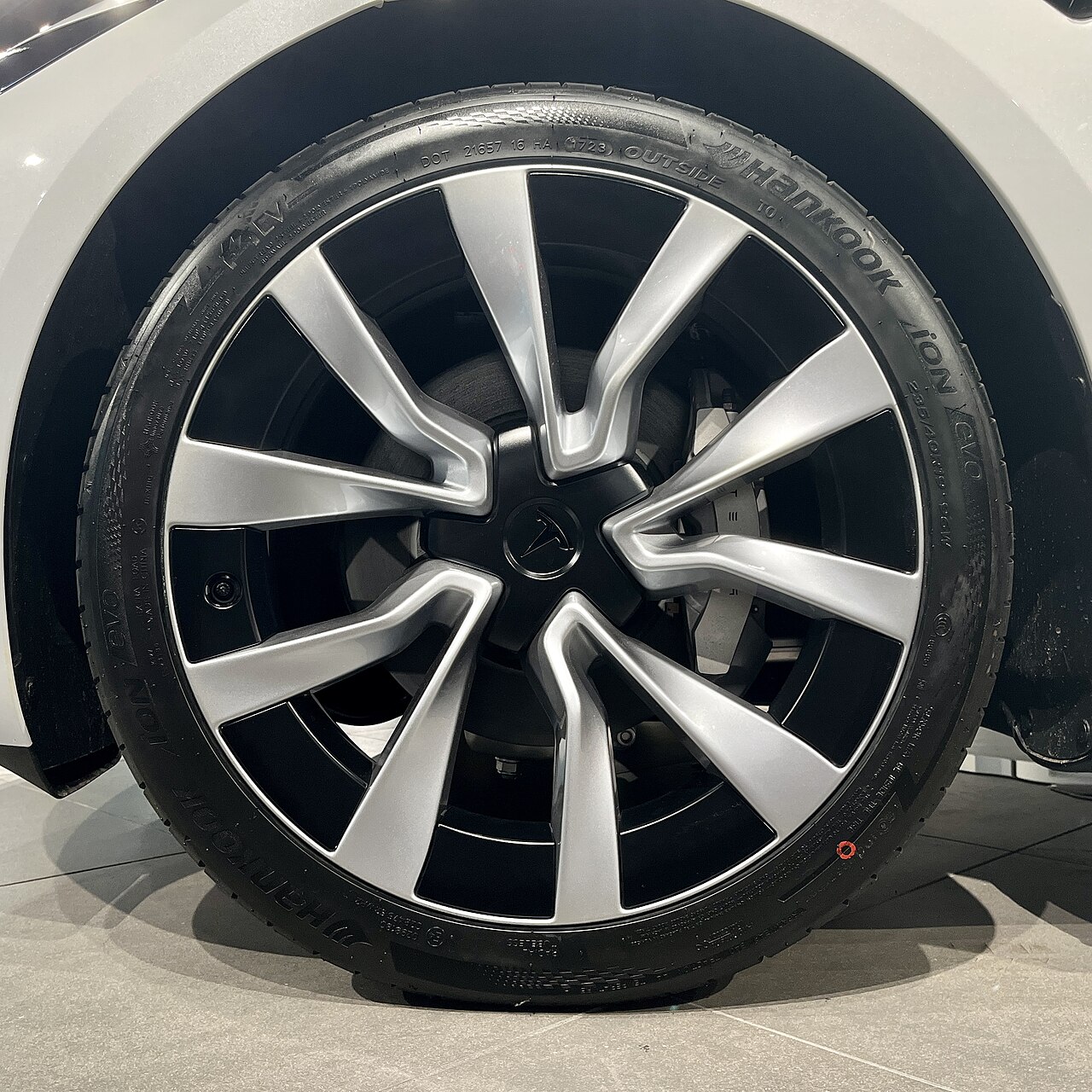
- Weight. He puts EVs at "10%, 20%, even up to 30% heavier" than comparable gasoline cars and calls weight the number one factor in wear.
- Instant torque. An electric motor delivers full pull almost immediately, so hard launches scrub rubber off the tread.
- Regenerative braking. Slowing the car with the motor loads the tires much like accelerating does, only in reverse. He describes it as "scrubbing rubber again".
None of this changes the tire’s job. It means the tire carries more load for the same size of car, and your driving style shows up in the tread faster.
How much faster do EV tires actually wear?
The headline figure is roughly 20% faster than on a regular car, and it comes from that same interview. The same source adds a track example: tires that might last 25,000 miles on a conventional car were worn out in about 12,000 miles on some EVs.
Read that with care. It is a radio interview, not a published study. The 12,000-mile example comes from a test fleet of about 22 or 23 EVs that Consumer Reports drives hard on a track. The interview gives no method or tire models, and the 12,000-mile example comes from a test fleet of about 22 or 23 EVs driven hard on a track. Treat 20% as a reason to check your tread more often, not as a forecast for your car.
Do EV-specific tires really give you more range?
They can, because of rolling resistance: the energy a tire wastes as it flexes while rolling. Less waste means less battery used per mile. The size of the effect depends on the tire and on how it is kept.
One published example is an SAE International article by engineers from Geely, tire maker Shandong LingLong and ExxonMobil Chemical. They compared four 215/50R17 tires that differed only in the inner liner, the thin layer that holds the air in. They simulated six months of pressure loss on a car with a 360 km base range:
| Tire | Air loss rate (inflation pressure loss) | Simulated range loss over 6 months | Estimated range |
|---|---|---|---|
| A (leakiest) | 3.16 | 16 km | 344 km |
| D (tightest) | 1.73 | 7 km | 353 km |
Their efficiency estimate was 11.9 kWh/100 km with tire A and 11.6 kWh/100 km with tire D. The authors say a variable tire rolling resistance "could account for up to 4% battery-charge difference."
Three limits apply. The range losses are simulated, not measured on the road. The authors include ExxonMobil Chemical, which sells the polymer used in the best-performing liner. And the test varies air retention, not tread design, so it does not show that a tire labeled "EV" is better than a regular one.
How do you read the rolling resistance class on a tire label?
In the EU, tires carry a label with a fuel efficiency class from A to E. Regulation (EU) 2020/740 sets the class from the rolling resistance coefficient (RRC), measured in newtons per kilonewton (N/kN) with a laboratory method defined by UNECE Regulation 117. Lower is better. For passenger-car (C1) tires:
| Class | RRC limit (N/kN) |
|---|---|
| A | 6.5 or lower |
| B | 6.6 to 7.7 |
| C | 7.8 to 9.0 |
| D | 9.1 to 10.5 |
| E | 10.6 or higher |
The label gives you one scale to compare tire models. It comes from a laboratory test, not from your driveway, which is why the next section matters. If you buy outside the EU, ask the retailer for the RRC or the efficiency class of the model; this label is the EU’s rule.
Does tire pressure matter more on an EV?
The Geely, LingLong and ExxonMobil authors argue it does matter for range. In their simulation, rolling resistance rises as pressure falls: after six months it was up 1.64 on tire A against 0.72 on tire D. In their survey, more than 48% of the production tires examined had poor air retention (above 3% loss rate), and only 6% had the best (below 1.7%). That survey is the authors’ own, and its details are not given in the article.
They also note that tire pressure monitoring systems are designed to warn at severe underinflation, above 20% in their description, so a tire can be low long before a warning appears. The practical reading: check pressure with a gauge on a regular schedule instead of waiting for the warning light, and use the pressure your car’s manufacturer specifies.
What should you check when buying tires for an electric car?
Use this order. Points 2 to 4 come from the sources above; points 1 and 5 are ordinary practice.
- Load and size. Match the size and load rating your car’s manufacturer specifies. EVs are heavy, so do not downgrade the load rating.
- Rolling resistance class. If the tire has an EU label, compare the A to E class for the same size. Rolling resistance is the label item that bears on range, though the study above tests air retention, not tread design.
- Wear versus grip. The Consumer Reports tester warns that making a tire last longer can mean "pulling away from its wet grip or snow traction." Look at the wet grip and snow ratings, not only the mileage claim.
- Noise. An EV cabin is quiet, so road noise stands out. Some EV tires have acoustic foam inside to reduce noise. The tester says this is "not a performance or an efficiency thing," so decide on comfort alone.
- Your own driving. Accelerating and braking more gently is the only wear advice the interview gives. It costs nothing.
If you want shortlists, see our top tires for electric vehicles and the all-season options for the Tesla Model 3. Tires are one part of range; charging habits matter for battery life too.
Tire age matters separately from wear: see our guide to tire age and the DOT date code to check how old your tires are.
Frequently asked questions
Do electric cars wear out tires faster?
Often yes. A Consumer Reports tire tester puts it at roughly 20% faster, mostly because EVs weigh more and deliver torque instantly. That is an interview figure without published method, so watch your own tread.
Are EV tires worth it?
For range, rolling resistance is the label item to compare. For wear, none of the sources we read tests whether EV-labeled tires outlast regular ones. Compare the rolling resistance class and ask for wet grip and snow ratings, not just the word "EV."
Can tire pressure change my EV’s range?
Yes, according to a Geely, LingLong and ExxonMobil study that simulated a range loss of 7 to 16 km over six months depending on how fast the tire loses air. The numbers are simulated, so use them as direction only.
How often should I check tire pressure on an electric car?
Regularly, with a gauge and against the pressure your manufacturer specifies. The sources we read give no safe interval, but they note a tire can be low long before the monitoring warning lights up.
What does the A to E rating on a tire label mean?
In the EU it is the fuel efficiency class, based on rolling resistance. A is the lowest resistance and E the highest. For passenger-car tires, A means 6.5 N/kN or less.