A car heater blows cold when hot coolant is not reaching the heater core or when air is not reaching the cabin. Start with the coolant level on a cold engine, then check the thermostat, an air lock, the blower fuse and the heater control valve. A fan that only works on high points to the resistor.
How does a car heater work?
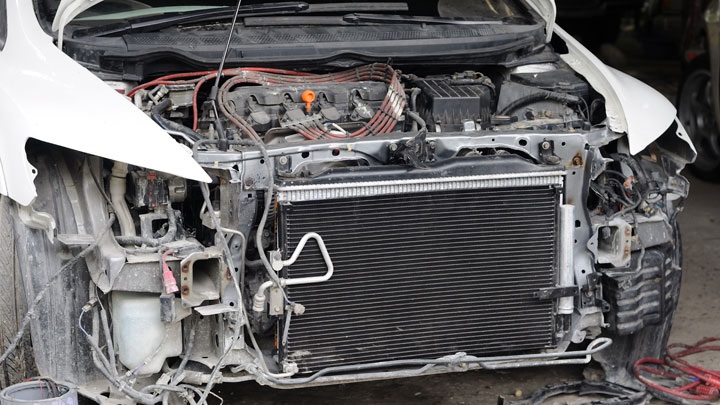
Most car heaters use the engine’s heat. The engine warms the coolant, the coolant is pushed through the heater core (a small radiator behind the dashboard) and a fan blows air across it into the cabin.
The AA says the air feels cold for the first few minutes because the engine needs time to heat the coolant, so cold air right after a cold start is normal.
Haynes describes the same system and says the heater matrix has very thin tubes, which is why it can block. Electric cars differ: the AA says most use an electric heating element or a heat pump powered by the traction battery, and can pre-heat the cabin while still plugged in.
This page covers combustion cars; for EVs see EV maintenance.
Which symptom points to which cause?
| What you notice | Likely cause | What to check first | Source |
|---|---|---|---|
| Temperature gauge stays low, air never warms | Thermostat stuck open, low coolant, air lock or faulty sensor | Coolant level (engine cold), then the thermostat | Haynes, AA |
| Engine reaches normal temperature but air is cold | Air lock, heater control valve, blocked heater matrix, thermostat jammed open | Coolant level and bleeding | Haynes |
| Little or no air from the vents on any setting | Blower fuse, blower motor or resistor, wrong control setting | Controls set to the vents, then the blower fuse | Haynes, AA |
| Fan works only on the highest speed | Failed resistor (the AA calls it the heater rheostat) | Resistor or regulator, tested with a multimeter | Haynes, AA |
| Heater dead, blown fuse or damaged wiring | Short circuit or damaged wire | Fuse and wiring; the AA says this can be a simple fix | AA |
What if the engine is not warming up?
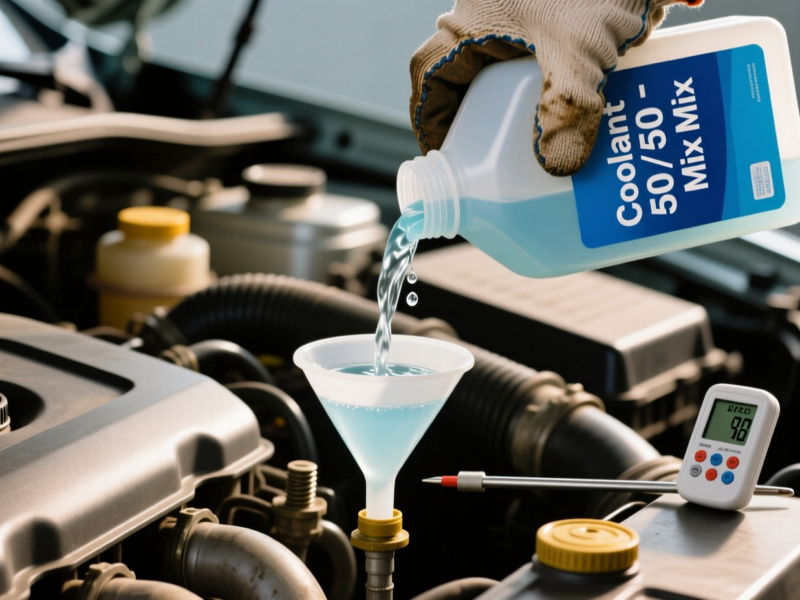
- Coolant level: check the expansion tank with the engine cold. The 2025 Hyundai Tucson manual warns that checking coolant on a hot engine can blow coolant out and cause serious burns. See how to flush and replace coolant.
- Temperature sensor or gauge: the gauge reads a coolant temperature sensor, and a failed sensor can mislead you. Haynes says these are often flagged by OBD fault codes.
- Thermostat: a thermostat stuck open makes the car overcool. Haynes says you can remove it and test it in hot water; it should open just before boiling, around 95 degrees Celsius. See failing thermostat signs.
- An air lock after a leak or a coolant change stops circulation. Haynes says to set the heater to maximum heat, fill the expansion tank with the cap off, idle for a few minutes, keep the level at MAX and squeeze the radiator hoses to help air out, keeping clear of moving parts because the fan can start suddenly.
What if the engine is warm but the heater blows cold?
The AA says the most common reasons are low coolant or a thermostat fault. First make sure the system is set to hot and let the engine run for a few minutes. If that changes nothing, Haynes lists the heater control valve (or a flap on older cars) not directing coolant or air, a thermostat jammed open and a blocked heater matrix.
For a blocked matrix, Haynes says to flush it with a hose or compressed air through the bulkhead connections; if it will not clear, the matrix needs replacing. The AA adds that a heater core replacement is labor-heavy and, in the UK, can cost upwards of £1,000 in parts and labor, so rule out the cheap causes first.
What if little or no air comes out of the vents?
Make sure the controls are set to the vents, then check the blower motor fuse. Haynes says to replace a blown fuse; the AA notes that some cars have a fuse for the blower motor, depending on the design.
If the fuse is fine, Haynes says to remove the motor and the regulator or resistor and test them with a multimeter. Your owner’s manual shows the fuse location and rating.
How often should the coolant be replaced?
The sources disagree. The AA says that, if your manual does not specify, a flush every 5 years or 100,000 miles, whichever comes first, is widely recommended.
Haynes’ general maintenance schedule renews coolant at 30,000 miles or 30 months (see the maintenance schedule). Neither is a rule for your car: use the interval in your owner’s manual.
Low coolant can also mean a leak. The AA recommends a professional check if the level keeps dropping, because a leak can damage the cooling system.
For overheating see engine overheating, and for AC problems see car AC not blowing cold.
Frequently asked questions
Why does my car heater only work on high?
Haynes points to the resistor and regulator for fan-speed problems, and the AA says a heater that only works on its highest setting probably needs a new resistor (which it calls the rheostat).
Why is my car heater blowing cold air?
The AA says low coolant or a thermostat fault are the most common reasons. Haynes adds an air lock, the heater control valve and a blocked heater matrix.
Can a bad thermostat affect the heater?
Yes. A thermostat jammed open can keep the coolant from getting hot enough to warm the cabin, according to Haynes and the AA.
Is it safe to open the coolant cap to check?
Only with the engine cold. The 2025 Hyundai Tucson manual and the AA both warn against checking coolant on a hot engine because of burns.
Does a car heater have a fuse?
Often the blower motor does, depending on the car, according to the AA. Check the fuse before testing the motor.
Sources
- Haynes (UK), “Why is my car heater not blowing hot air?” (November 2025).
- The AA (UK), “Why is my car heater not working?” (page last updated 30 March 2026).
- Hyundai, 2025 Tucson owner’s manual, “Owner maintenance schedule”.
Haynes and the AA are UK sources; we repeat only the AA heater-core figure, labeled as UK. We give no U.S. repair price because we have no source for one.