Recognizing the critical signs of a bad alternator is fundamental for maintaining your vehicle’s operational integrity and preventing unexpected breakdowns. The alternator is a vital component that powers your vehicle’s electrical system while the engine is running and recharges the car battery, making its proper function essential for reliable transportation.
What Role Does the Alternator Play in Your Vehicle’s Electrical System?
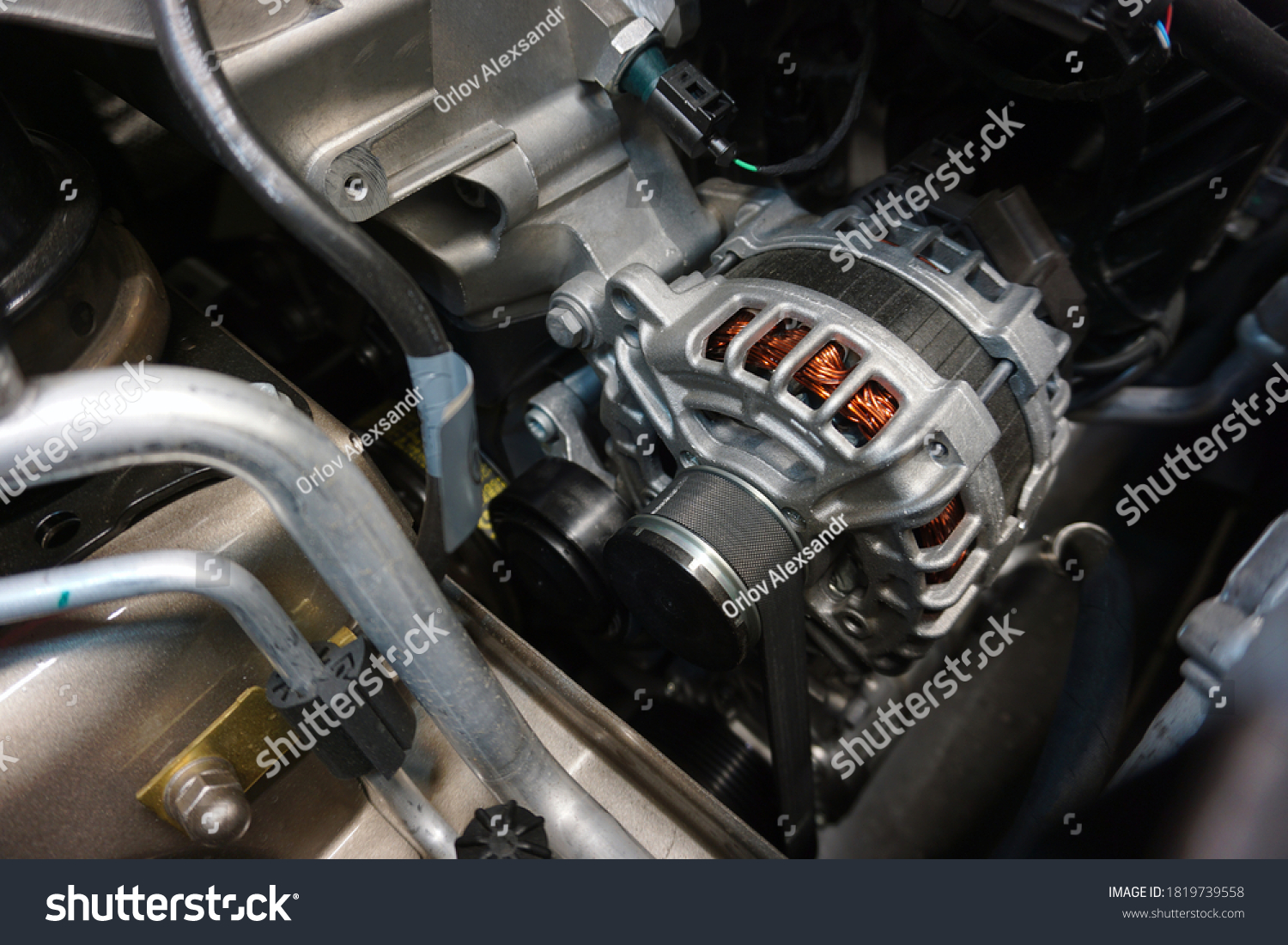
The alternator is a cornerstone of your vehicle’s intricate 12V electrical system, operating in direct conjunction with the car battery to ensure a consistent and reliable power supply. Its primary function is to convert mechanical energy from the engine’s rotating crankshaft into electrical energy, which is then distributed throughout the vehicle to power essential components like headlights, the radio, power windows, and the ignition system. Without a functioning alternator, these systems would quickly deplete the battery’s charge.
A key distinction to remember is that while the car battery provides the initial surge of power needed to start the engine, the alternator takes over once the engine is running, becoming the primary electrical generator. The alternator continuously recharges the battery, compensating for the energy consumed during startup and supporting the ongoing electrical demands of the vehicle. This synergistic relationship is crucial for preventing a dead battery and ensuring all electrical components receive adequate voltage.
When the alternator begins to fail, its ability to generate sufficient voltage and current diminishes. This leads to a scenario where the vehicle increasingly relies on the stored energy in the battery, which is designed for short bursts of high power rather than continuous supply. Consequently, the battery’s charge will deplete rapidly, often resulting in a stalled vehicle or an inability to start the engine. Understanding this fundamental role is the first step in diagnosing potential issues.
5 Critical Signs Your Car Alternator is Failing
Identifying the early warning signs of a failing alternator can save you from inconvenient breakdowns and costly repairs. These symptoms often manifest subtly at first, gradually worsening as the component deteriorates. Being vigilant for these indicators is crucial for proactive maintenance.
Dimming or Flickering Headlights and Interior Lights
One of the most common and earliest indicators of an alternator issue is inconsistencies in your vehicle’s lighting system. You might notice your headlights appearing dimmer than usual, particularly at idle or low RPMs, and brightening slightly as you accelerate. This flickering or dimming effect extends to interior cabin lights, dashboard lights, and even the infotainment system.
This phenomenon occurs because a failing alternator struggles to maintain a consistent voltage output, especially when the engine is not running at higher revolutions. As the alternator’s capacity to generate power decreases, electrical components receive less than the optimal 12V to 14.8V range they require, leading to a noticeable drop in their performance. The lights are often the first to betray this voltage instability due to their direct connection to the vehicle’s electrical grid.
Dead Battery or Frequent Battery Drains
While a dead battery can often be attributed to its own age or a parasitic drain, if you find your car battery repeatedly dying or requiring jump-starts, even after seemingly recharging, a faulty alternator is a primary suspect. The alternator is responsible for replenishing the battery’s charge as you drive, and if it fails to do so effectively, the battery’s power will gradually diminish until it can no longer crank the engine.
This symptom is particularly misleading because it often points towards a battery problem when the root cause lies with the charging system. The battery simply isn’t receiving the consistent charge it needs to maintain its voltage, forcing it to carry the entire electrical load until it’s completely depleted. If your battery is relatively new (less than 3 years old) and keeps dying, always investigate the alternator.
Warning Light on Your Dashboard (ALT or GEN)
Many modern vehicles are equipped with a dedicated “ALT” (alternator) or “GEN” (generator) warning light on the dashboard. This indicator illuminates when the vehicle’s onboard computer detects an issue with the charging system, specifically if the voltage output from the alternator falls outside the optimal range (typically below 13V or above 15V).
While this light is the most direct signal of an alternator problem, it’s not always the first symptom to appear. Sometimes, other electrical issues or dimming lights will precede the activation of this warning light. If you see this light, it’s a definitive call to action to have your alternator inspected immediately, as it indicates a critical fault in the charging system.
Strange Noises (Whining, Grinding, or Growling)
An alternator is a mechanical component with internal bearings and a pulley system. As these parts wear out, they can produce distinct noises that signal an impending failure. A common sound is a whining or growling noise, often heard when the engine is running, which can indicate worn-out bearings within the alternator itself.
You might also hear a grinding sound, which could point to the alternator pulley being misaligned or the belt tensioner failing. These mechanical noises are usually audible from under the hood and tend to become louder and more persistent as the alternator’s internal components deteriorate further. Any unusual sound from the engine bay should prompt an inspection.
Burning Rubber or Hot Wire Smell
A distinctive burning smell, often resembling burning rubber or hot wires, emanating from under the hood is a serious sign of a stressed or failing alternator. This odor can be caused by several factors related to the alternator. If the alternator is seizing or its pulley is not spinning freely, the serpentine belt that drives it can slip, causing friction and a burning rubber smell.
Alternatively, if the alternator is overcharging or its internal wiring is short-circuiting, the electrical components can overheat, leading to the smell of burning plastic or hot electrical insulation. In severe cases, this can indicate significant internal damage to the alternator or even a fire hazard. If you detect such a smell, it’s advisable to pull over safely and have the vehicle inspected to prevent further damage or danger.
How to Troubleshoot a Failing Alternator Using a Multimeter (Step-by-Step Guide)
Diagnosing an alternator issue can often be done effectively with a simple multimeter, a common tool for checking electrical circuits. This method allows you to measure the voltage output of your alternator and assess its charging capability relative to the car battery. The following steps provide a reliable way to determine if your alternator is charging correctly.
Step 1: Check Your Battery’s Resting Voltage (Engine Off)
Before testing the alternator, you need to ensure your battery itself has a healthy charge. With the engine completely off and all accessories (lights, radio, etc.) turned off, set your multimeter to DC Volts (usually denoted as ‘V=’ or ‘VDC’) and select a range like 20V. Connect the red probe to the positive (+) battery terminal and the black probe to the negative (-) terminal. A fully charged, healthy 12V car battery should read between 12.6 and 12.8 volts. If the reading is significantly lower (e.g., 12.0V or less), the battery is discharged, which could be due to a faulty alternator or other issues.
Step 2: Test the Alternator’s Charging Voltage (Engine Running)
Now, start your vehicle’s engine. Keep the multimeter connected to the battery terminals in the same manner as before. The voltage reading should now increase as the alternator begins to charge the battery. A properly functioning alternator should produce a charging voltage between 13.8 volts and 14.8 volts (with an optimal range often cited as 14.2V to 14.7V). This indicates that the alternator is actively sending power to the battery and the vehicle’s electrical system.
Step 3: Introduce Electrical Load and Observe Voltage Drop
To further stress-test the alternator, turn on various electrical accessories in your car, such as the headlights (high beams), air conditioning on full blast, radio, and rear defroster. While these accessories are running, observe the multimeter reading. The voltage should remain above 13.0 volts. If the voltage drops significantly below this threshold (e.g., to 12.5V or lower) and continues to decrease with more electrical load, it strongly suggests that your alternator is struggling to keep up with the demand and is likely failing.
If your multimeter readings consistently show voltages below the recommended charging range (e.g., always below 13.5V with the engine running and under load), or if the voltage remains at the resting battery voltage (around 12.6V), it is a clear indication that your alternator is not charging properly and requires professional attention. Conversely, if the voltage consistently exceeds 15V, this could indicate an overcharging issue, which is also detrimental to your battery and other electrical components.
| Component | Primary Function | Key Symptoms of Failure | Typical Voltage Range (Healthy) |
|---|---|---|---|
| Alternator | Generates electrical power while engine is running; recharges the battery. | Dimming lights, frequent dead battery, “ALT/GEN” warning light, whining noises, burning smell. | 13.8V – 14.8V (engine running) |
| Car Battery | Provides initial power for engine startup; stores electrical energy. | Slow engine crank, clicking sound on startup, electrical issues (flickering lights if near death), requires frequent jump-starts without recovery. | 12.6V – 12.8V (engine off, fully charged) |
Don’t Confuse Alternator Issues with Other Vehicle Problems
While the symptoms of a bad alternator can be quite distinct, some warning signs can mimic problems with other critical vehicle components. It’s essential to differentiate between these issues to avoid misdiagnosis and unnecessary repairs. For instance, a dead battery can be the result of a failing car battery itself, rather than solely an alternator fault. A battery that is past its prime (typically 3-5 years) may simply lose its ability to hold a charge, regardless of how well the alternator is functioning.
Similarly, electrical issues such as flickering lights or intermittent power delivery can sometimes be traced back to loose or corroded battery terminals, a faulty ground wire, or even a problem with the vehicle’s computer system. Always inspect these simpler potential causes before assuming a major component like the alternator is at fault. A visual check of all connections for cleanliness and tightness can often rule out minor electrical glitches.
Another common misattribution occurs when dealing with overheating issues. If your car radiator is failing, it can lead to the engine overheating, which in severe cases might cause electrical components to malfunction due to excessive heat. If your temperature gauge is consistently in the red zone, it’s critical to investigate potential causes, including radiator dysfunction, before jumping to conclusions about the alternator. While a failing alternator can sometimes generate excessive heat, a primary cooling system issue should be ruled out first.
FAQs About Failing Car Alternators
What is the average lifespan of a car alternator?
The average lifespan of a car alternator typically ranges between 5 to 8 years, or approximately 100,000 to 150,000 miles. However, this can vary significantly based on driving conditions, vehicle make and model, and the quality of the component. Factors such as exposure to extreme heat, excessive electrical load (e.g., aftermarket sound systems), and frequent short trips can reduce its operational life. Regular maintenance, including checking the serpentine belt’s tension and condition, can help prolong its longevity.
Can I drive with a bad alternator for a short time?
Driving with a bad alternator is strongly discouraged and carries significant risks. While your vehicle might operate for a short period on battery power alone, the duration will depend entirely on the battery’s charge and the electrical demands of your car. Modern vehicles rely heavily on electrical systems, and a failing alternator means the battery is not being recharged. This will inevitably lead to the battery dying, causing your vehicle to shut down unexpectedly, potentially in an unsafe location or at high speed. It’s best to have the vehicle towed or repaired immediately upon diagnosing an alternator issue.
How much does it cost to replace a car alternator?
The cost to replace a car alternator can vary widely depending on the vehicle’s make and model, the type of alternator (new, remanufactured), and labor rates. On average, you can expect to pay anywhere from $300 to $800, with some high-end luxury vehicles or complex installations potentially exceeding $1,000. This cost typically includes both parts (ranging from $150 to $500+) and labor (usually 2-4 hours at $75-$150 per hour). It is always recommended to get multiple quotes from certified mechanics.
How is a bad alternator different from a bad battery?
While their symptoms can overlap, a bad alternator and a bad battery have distinct roles. A bad alternator primarily affects the vehicle’s ability to generate and supply electrical power while the engine is running and recharge the battery. Its failure leads to a progressive draining of the battery. A bad battery, on the other hand, struggles to hold a charge, even if the alternator is functioning perfectly. It will manifest as difficulty starting the engine (slow crank) or failing to hold a charge overnight. The key difference is the alternator is the generator, and the battery is the storage unit. A simple multimeter test can differentiate between the two.