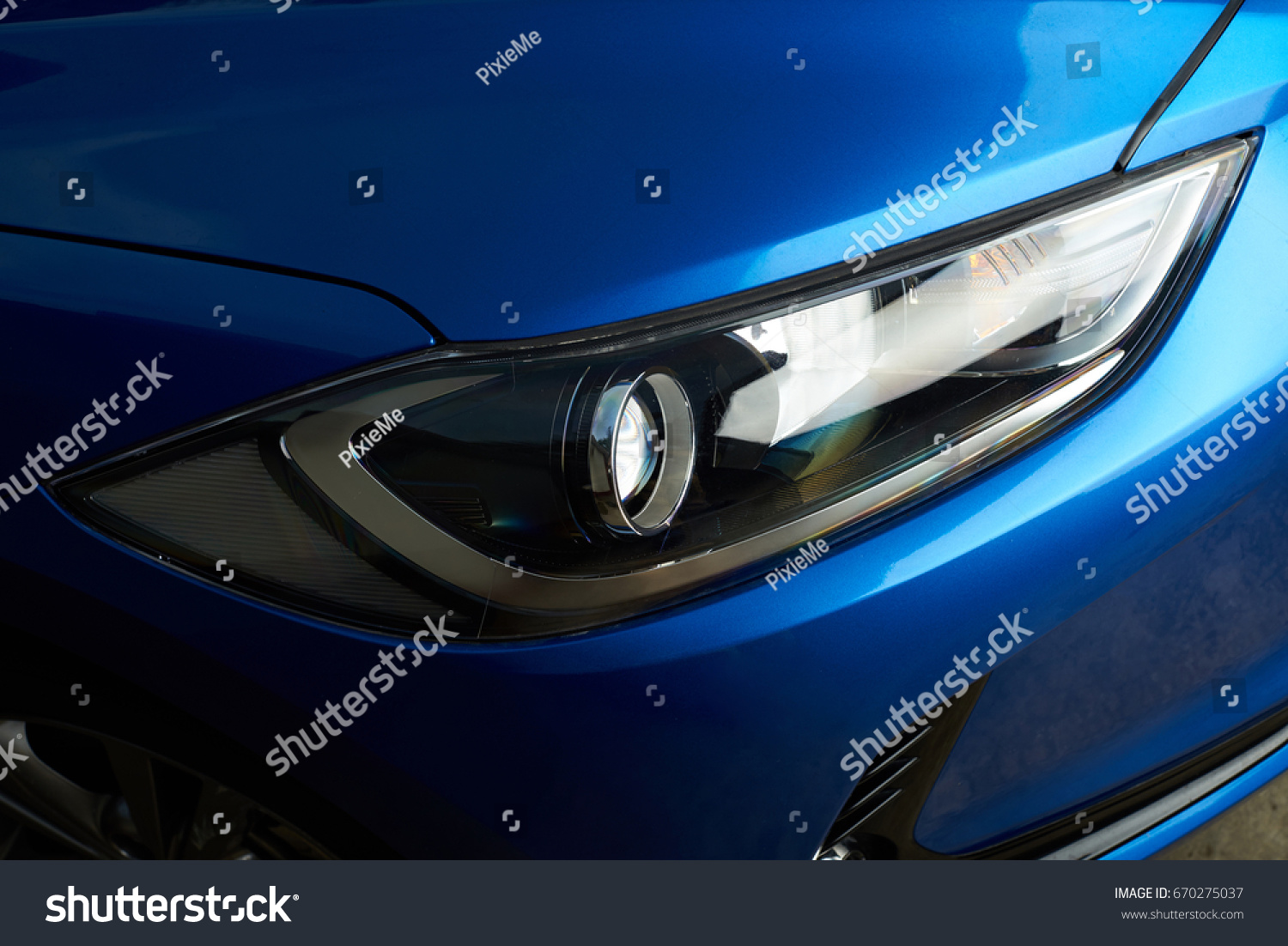
When evaluating car headlights for night driving safety, LED headlights generally offer superior performance, visibility, and longevity compared to traditional halogen bulbs, making them a preferable choice for most modern vehicles.
What Are the Fundamental Differences Between LED and Halogen Headlight Technology?
The core distinction between LED (Light Emitting Diode) and halogen headlight technologies lies in their light generation mechanisms and operational efficiency. Halogen bulbs rely on a classic incandescent design, where an electrical current passes through a tungsten filament encased in a small quartz capsule filled with halogen gas. This process heats the filament to incandescence, producing light, but also generating a substantial amount of heat as a byproduct.
In contrast, LED headlights produce light when an electrical current passes through a semiconductor material, exciting electrons and causing them to emit photons, which is the light we see. This phenomenon, known as electroluminescence, results in lower heat generation at the light source itself compared to traditional bulbs. This efficiency is critical, allowing manufacturers to design more compact lighting systems and achieve higher light output with less energy consumption.
This fundamental difference in operation leads to significant performance variations. While halogen bulbs typically operate at a higher temperature, often around 2,700–3,200 Kelvin, producing a warmer, yellowish light, LEDs can be engineered to emit light across a broader spectrum, commonly ranging from 5,000 to 6,500 Kelvin, resulting in a whiter, more daylight-like illumination. Understanding these mechanisms is key to appreciating their impact on road visibility and safety. For a deeper dive into the array of available headlight technologies, explore Understanding Car Headlight Types: LED vs. Halogen vs. HID.
How Do Luminous Flux and Color Temperature Impact Night Visibility?
Luminous flux, measured in lumens, quantifies the total amount of visible light emitted by a source, directly correlating to the brightness perceived by the driver. Halogen headlights typically produce a luminous flux ranging from 700 to 1,500 lumens per bulb, which provides adequate illumination for standard driving conditions. However, LED headlights significantly outperform this, often delivering between 2,000 and 4,000+ lumens per bulb, translating into a much brighter and more expansive field of view during night driving.
Color temperature, expressed in Kelvin (K), describes the hue of the light. Halogen bulbs generally operate around 3,200K, producing a warm, yellowish light that can be less fatiguing for some drivers over long periods but may not offer the crispness needed for optimal detail recognition. LED headlights, conversely, typically emit light in the 5,000K to 6,500K range, a cool white light that closely mimics natural daylight. This whiter light enhances contrast and makes it easier for drivers to discern obstacles, road signs, and lane markings, especially in dimly lit or unlit environments.
The combination of higher luminous flux and a daylight-mimicking color temperature in LED headlights significantly improves a driver’s ability to see further down the road and react more quickly to potential hazards. This enhanced clarity and brightness are paramount for reducing driver fatigue and increasing overall safety during nighttime operation, offering a clear advantage over the more limited output of halogen systems.
What Are the Lifespan and Energy Efficiency Advantages of LED Headlights?
The operational lifespan and energy efficiency of headlights are critical factors influencing both cost of ownership and environmental impact. Halogen bulbs have a relatively short average lifespan, typically ranging from 500 to 1,000 hours of operation. This necessitates more frequent replacements, adding to maintenance costs and inconvenience for vehicle owners.
In stark contrast, LED headlights boast an exceptional lifespan, often exceeding 20,000 to 50,000 hours. This remarkable longevity means that LED headlights can potentially last the entire life of the vehicle, drastically reducing the need for bulb replacements and associated labor costs. This extended durability is a direct benefit of their semiconductor-based design, which operates at a lower internal temperature compared to the intensely hot filament of a halogen bulb.
Furthermore, LED technology is significantly more energy-efficient. A typical halogen headlight bulb consumes approximately 55-60 watts of power per bulb, whereas an LED headlight equivalent often uses only 15-20 watts per bulb to produce a superior light output. This reduced power consumption places less strain on the vehicle’s electrical system, potentially improving fuel efficiency marginally and contributing to a lower carbon footprint. The combination of extended lifespan and superior energy efficiency makes LEDs a more sustainable and economically sound choice in the long run.
How Do These Headlight Technologies Perform in Adverse Weather Conditions?
Driving in adverse weather conditions like rain, fog, and snow presents significant visibility challenges, making headlight performance crucial for safety. Rain significantly compromises headlight visibility by introducing multiple optical interference points between the light source and the driver’s eyes. Water droplets on the road surface or suspended in the air scatter light, reducing its effective reach and creating glare.
Halogen headlights, with their warmer color temperature (around 3,200K), tend to produce a yellowish light that some drivers find penetrates fog and snow with slightly less reflective glare compared to the cooler, whiter light of many LEDs. This is because the longer wavelengths of warmer light scatter less effectively by the small water particles in fog. However, the overall lower luminous flux of halogen bulbs means that even with better penetration, the total amount of light reaching the driver’s eye is still limited, potentially hindering obstacle detection at a distance.
Conversely, while LED headlights provide a much brighter output and a whiter light (5,000K-6,500K), this can sometimes exacerbate glare when reflecting off dense fog, heavy rain, or thick snowfall, potentially creating “whiteout” conditions. Despite this, the sheer volume of light emitted by LEDs often allows for better overall illumination of the road surface, even if some light is scattered. Advanced LED systems are addressing this through adaptive lighting and specific fog light designs. For more details on how various weather phenomena impact headlight output, refer to How Rain, Fog, and Snow Affect Car Headlight Performance.
Are There Other Advanced Headlight Technologies to Consider for the Future?
Beyond the fundamental debate between LED and halogen, the automotive lighting industry is rapidly evolving, introducing groundbreaking technologies that promise to redefine vehicle safety and aesthetics. These advanced systems move beyond simple illumination to offer intelligent, adaptable, and highly precise lighting solutions for future vehicles.
Laser headlights, for instance, utilize laser diodes to generate a highly focused and extremely bright beam, offering illumination ranges far exceeding traditional LED or halogen systems—sometimes up to 600 meters. While currently reserved for high-end luxury vehicles due to cost, their potential for long-distance visibility is unmatched. Matrix LED systems, on the other hand, incorporate individually controllable LEDs to create dynamic light patterns, allowing the headlight to adapt its beam in real-time. This enables features like glare-free high beams, where sections of the beam can be dimmed to avoid blinding oncoming drivers while maintaining maximum illumination elsewhere.
OLED (Organic Light Emitting Diode) technology represents another exciting frontier, primarily used for rear lighting and interior applications due to its thin, flexible, and homogeneously lit panels. While not yet primary headlamp technology, OLEDs offer unparalleled design freedom and distinctive aesthetic signatures. These innovations, among others, indicate a future where headlights are not just light sources but integral, intelligent components of a vehicle’s safety and design ecosystem. To delve deeper into these cutting-edge developments, explore The Future of Car Headlights: Exploring Laser, Matrix, and OLED Technologies.
Comparative Table: LED vs. Halogen Headlights
| Feature | Halogen Headlights | LED Headlights |
|---|---|---|
| Luminous Flux (Lumens) | 700 – 1,500 lumens | 2,000 – 4,000+ lumens |
| Color Temperature (Kelvin) | ~3,200K (Warm Yellow) | 5,000K – 6,500K (Cool White/Daylight) |
| Lifespan (Hours) | 500 – 1,000 hours | 20,000 – 50,000+ hours |
| Energy Consumption (Watts/bulb) | 55 – 60 watts | 15 – 20 watts |
| Initial Cost | Low | Moderate to High |
| Night Visibility | Adequate, but limited range | Superior, enhanced clarity and range |
| Heat Generation | High (at bulb) | Low (at light source, requires cooling system) |
Frequently Asked Questions About LED vs. Halogen Headlights
Are LED headlights universally brighter than halogen?
Yes, LED headlights are almost universally brighter than halogen bulbs in terms of luminous flux. While a standard halogen bulb typically produces between 700 to 1,500 lumens, an LED headlight can easily achieve 2,000 to 4,000 lumens or more per bulb. This significant increase in light output translates to a clearer, more expansive view of the road ahead, improving reaction time and overall night driving safety. The light produced by LEDs is also often directed more precisely onto the road thanks to advanced reflector and projector designs, maximizing usable light and minimizing scatter.
What are the primary safety benefits of switching to LED headlights?
The primary safety benefits of switching to LED headlights are multifaceted. First, their superior brightness and broader illumination pattern allow drivers to see further down the road and peripheral areas, enhancing early detection of obstacles, pedestrians, or wildlife. Second, the cooler, whiter light (5,000K-6,500K) of LEDs more closely mimics natural daylight, which can reduce driver eye strain and fatigue during prolonged night driving. Third, the instant-on capability of LEDs means full brightness is achieved immediately, which is particularly beneficial for high beams or signaling. Lastly, their longer lifespan reduces the likelihood of a bulb failing unexpectedly, which could compromise visibility during critical driving moments.
Do LED headlights require any special installation or wiring?
For vehicles originally equipped with halogen headlights, converting to LED can sometimes require special installation or wiring. “Plug-and-play” LED conversion kits are available for many models, but their performance can vary and may not always be optimal without proper housing and optics designed for LEDs. Some kits may require an LED driver or CANBUS decoder to prevent “bulb out” warnings or flickering due to the lower power draw of LEDs. For optimal performance and to avoid potential glare issues for other drivers, a full headlight housing designed specifically for LED technology is often recommended rather than simply swapping bulbs. Professional installation is advisable to ensure proper alignment and electrical compatibility.
Is there a significant cost difference between LED and halogen headlights?
Yes, there is a notable cost difference between LED and halogen headlights, particularly in terms of initial purchase price. Halogen bulbs are very inexpensive, typically costing between $10-$30 per pair. LED conversion kits can range from $50-$200 or more, depending on quality and features, while full OEM (Original Equipment Manufacturer) LED headlight assemblies on new vehicles add a significant premium, often hundreds to thousands of dollars. However, when considering the total cost of ownership, LED headlights offer substantial long-term savings due to their significantly longer lifespan (20,000-50,000+ hours vs. 500-1,000 hours for halogen) and lower energy consumption, which reduces the frequency and cost of replacements over the vehicle’s lifetime.