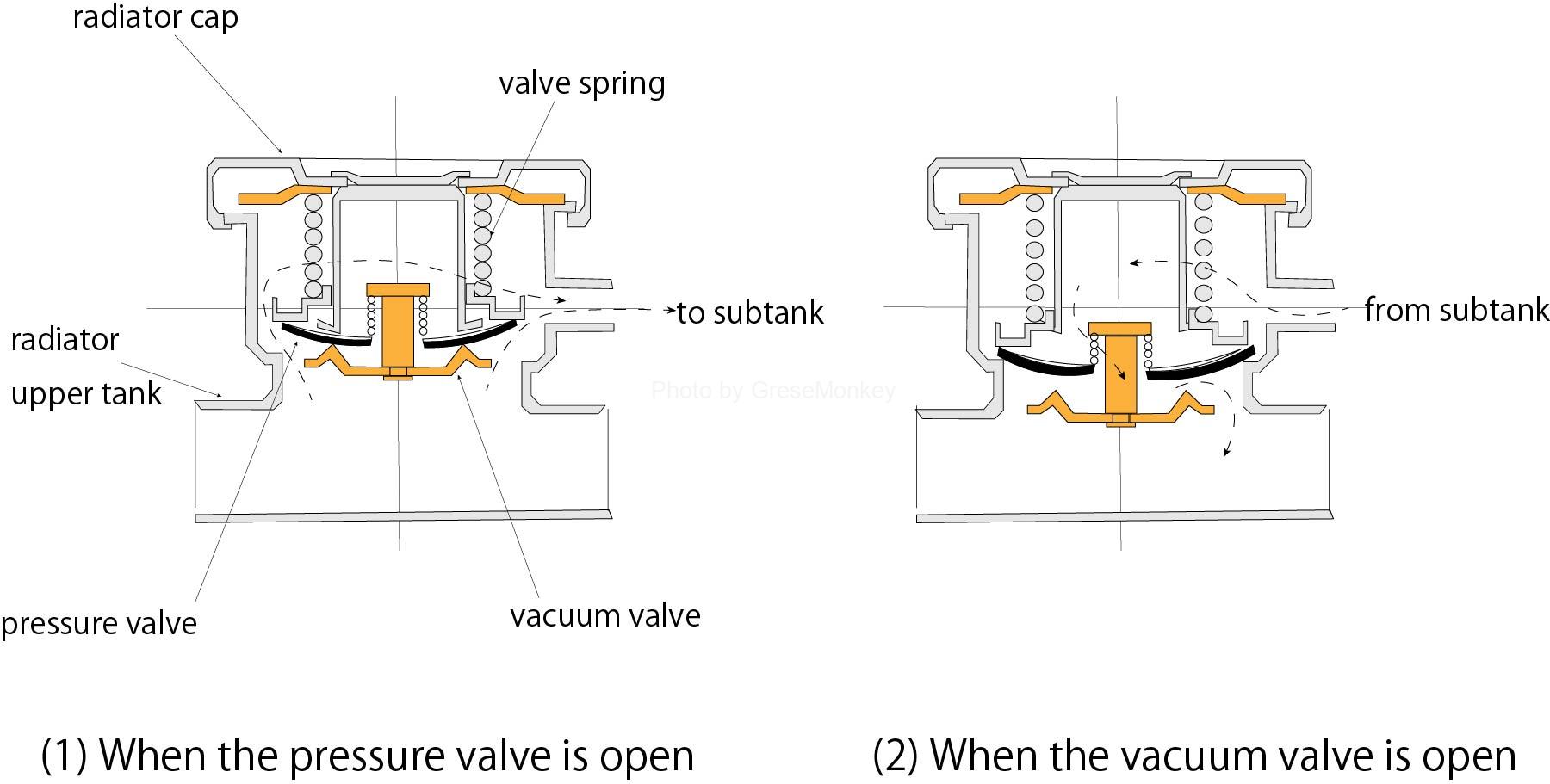
Often overlooked yet crucial, the radiator cap is a small but mighty component in your vehicle’s cooling system. It plays a vital role in regulating coolant pressure, raising its boiling point and thereby protecting your engine’s health. With its specialized design, the radiator cap ensures that your cooling system operates at peak efficiency, guarding against catastrophic overheating and potential engine damage.
Understanding the importance of the radiator cap’s pressure regulation is key to maintaining optimal vehicle performance. Its primary function is to maintain a specific pressure within the sealed cooling system. As your engine heats up, coolant expands, increasing the pressure. Most modern vehicles feature radiator caps equipped with pressure-relief valves that activate when pressure exceeds 12 to 15 pounds per square inch (psi), effectively releasing excess pressure to prevent system failure.
This regulated pressure is vital for preventing boil-over and ensuring efficient heat transfer. Without adequate pressure, coolant would boil at a significantly lower temperature, leading to rapid vaporization and a consequential loss of essential fluid.
How Does the Radiator Cap Elevate the Coolant’s Boiling Point?
The radiator cap elevates the coolant’s boiling point by allowing the cooling system to function under pressure. At sea level, pure water boils at 212°F (100°C); however, every 1 psi increase in pressure raises the boiling point of the coolant by roughly 3 degrees Fahrenheit. For example, a standard 15 psi radiator cap can increase the boiling point of water by an impressive 45 degrees, bringing it to approximately 257°F (125°C). When using a typical 50/50 mixture of water and ethylene glycol coolant with a 15 psi cap, the boiling point can reach a remarkable 268°F (131°C).
This elevated boiling point keeps the coolant in a liquid state, even under extreme operating temperatures, enabling it to continuously absorb and transfer heat effectively to the radiator for dissipation.
The Function of the Vacuum Valve in a Radiator Cap
In addition to pressure regulation, radiator caps also incorporate a vacuum valve. After your engine cools down, the coolant contracts, creating a vacuum within the system. The vacuum valve opens to allow air or coolant from the overflow/expansion tank to be drawn back into the radiator. This process prevents hoses from collapsing and maintains the system’s integrity.
This dual-valve design—a pressure relief valve for expansion and a vacuum valve for contraction—is essential for sustaining a consistently filled and properly pressurized cooling system.
What are the Symptoms of a Failing Radiator Cap?
A compromised radiator cap can lead to significant cooling system troubles and engine damage. Key signs of a failing cap include frequent engine overheating, even when the thermostat is functioning correctly. You may also notice visible coolant leaks around the cap or the overflow reservoir, often appearing as dried, crusty residue.
Other common symptoms include collapsed radiator hoses due to improper vacuum release or burst hoses from excessive pressure buildup. Additionally, you might observe low coolant levels without any obvious external leaks, as coolant can escape as vapor due to inadequate pressurization.
How Do Cooling System Boiling Points Compare to Brake Fluid Boiling Points?
Both cooling and braking systems rely on fluids with specific boiling points, yet their operating environments and critical temperatures vary considerably. The boiling point of engine coolant is actively managed by pressure, generally reaching 257°F to 268°F with a 15 psi cap. In contrast, the boiling points of brake fluid, both dry and wet, are designed to endure the intense heat generated during braking.
For example, DOT 3 brake fluid has a minimum dry boiling point of 401°F (205°C) and a minimum wet boiling point of 284°F (140°C). DOT 4 brake fluid specifies even higher minimums, featuring a dry boiling point of 446°F (230°C) and a wet boiling point of 311°F (155°C). High-performance DOT 5.1 fluid elevates these measurements further, with a minimum dry boiling point of 500°F (260°C) and a minimum wet boiling point of 356°F (180°C).
A critical distinction arises when hydraulic pressure is lost due to brake fluid vapor lock. This condition leads to a dangerously soft or “spongy” brake pedal, seriously compromising stopping ability. Likewise, if the hydraulic fluid in the braking system transitions from a stable liquid to a compressible gas (vapor lock), it results in significant pressure loss. This scenario parallels how boiling coolant causes a loss of heat transfer within the cooling system.
Table: Comparison of Radiator Cap Pressure and Brake Fluid Boiling Points
| Component/Fluid Type | Pressure Rating / Dry Boiling Point (Minimum) | Wet Boiling Point (Minimum, if applicable) | Typical Application |
|---|---|---|---|
| Standard Radiator Cap (e.g., 15 PSI) | Raises water boiling point by ~45°F to ~257°F (125°C) | N/A (Coolant is a mixture, not assessed for “wet” boiling point like brake fluid) | Most passenger vehicles |
| High-Performance Radiator Cap (e.g., 18 PSI) | Raises water boiling point by ~54°F to ~266°F (130°C) | N/A | Performance vehicles, heavy-duty applications |
| DOT 3 Brake Fluid | 401°F (205°C) | 284°F (140°C) | Older vehicles, standard applications |
| DOT 4 Brake Fluid | 446°F (230°C) | 311°F (155°C) | Modern vehicles with ABS, performance applications |
| DOT 5.1 Brake Fluid | 500°F (260°C) | 356°F (180°C) | High-performance, severe duty, racing |
What Are Specific Causes of Low Coolant Levels (Beyond Normal Use)?
While a properly functioning radiator cap helps prevent coolant loss due to boiling, low coolant levels can stem from several issues beyond normal evaporation. External leaks from worn or damaged hoses, radiator punctures, or defective water pump gaskets often leave visible puddles or residue.
Internal leaks may be more insidious, occurring when coolant seeps into the engine oil or combustion chamber due to a blown head gasket, cracked cylinder head, or engine block, or a failing intake manifold gasket. These internal leaks might present as white exhaust smoke carrying a sweet smell, a milky appearance in the engine oil, or unexplained overheating. Additionally, issues with the coolant reservoir itself, such as cracks or damage, can also result in fluid loss. A defective radiator cap that fails to create a proper seal may further lead to coolant evaporating as steam, even without visible leaks.
In contrast, low brake fluid levels generally indicate a leak within the hydraulic system, worn brake pads extending calipers, or issues with the master cylinder. In cases of significant brake fluid loss, diagnosing sticking brake calipers or related components becomes crucial for maintaining safety.
Frequently Asked Questions (FAQ)
- What PSI rating should my radiator cap have?
- Your radiator cap should match the original equipment manufacturer (OEM) specified pressure rating, typically between 13-16 psi, for most modern cars to avoid straining other components of the cooling system.
- Can a faulty radiator cap cause my engine to overheat even with enough coolant?
- Yes, if a faulty radiator cap fails to maintain the correct pressure, the coolant’s boiling point will drop, causing it to boil and result in engine overheating despite adequate fluid levels.
- How often should I replace my radiator cap?
- Radiator caps do not have a set replacement interval; however, it’s wise to inspect them periodically for cracks, hardened seals, or signs of coolant leakage and replace them whenever any issues arise.
- Is a higher-pressure radiator cap always better for performance?
- While higher-pressure caps (e.g., 22-24 psi for performance radiators) can further increase the boiling point, using a cap rated higher than your system is designed for can stress hoses, gaskets, and other components, potentially leading to leaks or failures.