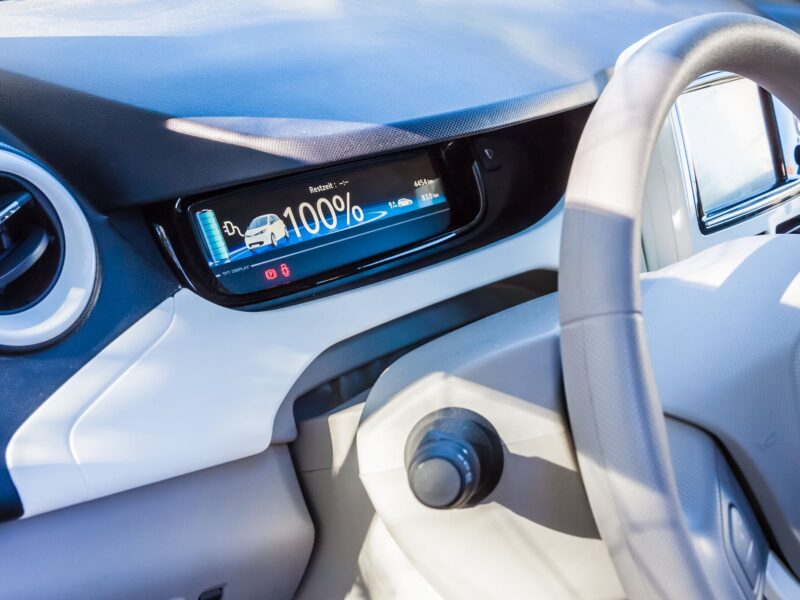
As of 2026, the average annual degradation rate of electric vehicle (EV) batteries is projected at 2.3%, a statistic influenced by evolving charging habits and environmental conditions. This metric is vital for understanding the longevity and expected performance of EVs, as it directly impacts their range and resale value.
What Are the Primary Factors Affecting EV Battery Longevity in 2026?
The lifespan of an EV battery is meticulously governed by a confluence of technical and environmental variables. These factors dictate the rate at which a battery loses capacity over time, directly influencing the vehicle’s residual value and driving range.
How Does Charging Power Impact EV Battery Degradation?
Charging power serves as the most significant determinant of battery health. Vehicles subjected to hyper-fast DC charging (over 100 kW) exhibit an accelerated degradation rate of up to 3.0% annually. This rate is nearly double the 1.5% annual degradation observed in vehicles primarily utilizing AC charging or lower-powered DC charging.
What Role Does Climate Play in EV Battery Degradation?
While less dominant than charging methodology, ambient temperature significantly influences battery longevity. EVs operating in hot climates experience an accelerated degradation rate, approximately 0.4% higher per year compared to those in milder regions. This difference arises from increased chemical reactivity within battery cells at elevated temperatures, necessitating effective battery thermal management systems.
How Does State of Charge (SoC) Affect Battery Health?
Prolonged periods where the battery’s State of Charge (SoC) remains at extreme levels—either above 80% or close to 0%—significantly accelerate degradation. For example, maintaining a SoC exceeding 80% for extended durations can lead to accelerated capacity loss in chemistries like Nickel Manganese Aluminum (NMA). Extreme charging conditions put unwanted electrochemical stress on internal battery components, highlighting the importance of balanced charge management.
Does Frequency of Use Influence Battery Degradation?
Vehicles with higher daily usage rates show a marginal increase in degradation, approximately 0.8% per year. However, this is often offset by greater fleet productivity and faster return on investment, emphasizing the operational benefits of frequent use. Energy management and optimized charging practices can mitigate the adverse impacts of daily utilization.
Why Are Thermal Management Systems Critical for Battery Longevity?
Advanced thermal management systems, particularly those employing liquid cooling, are indispensable for mitigating temperature-induced degradation. These systems actively regulate battery temperature, thereby extending the operational life of the battery pack. Inadequate thermal control can lead to accelerated deterioration, akin to how a brake system leak compromises vehicle safety.
How Do Battery Chemistry and Design Innovations Contribute to Longevity?
Ongoing advancements in battery cell chemistries, such as Lithium Iron Phosphate (LFP) and Nickel Manganese Aluminum (NMA), along with architectural improvements like Cell-to-Pack (CTP) technology, enhance performance, safety, and overall battery lifespan. Future innovations, including solid-state batteries, promise significant gains in energy density and longevity. These optimizations aim to overcome current limitations, similar to the ongoing refinements in vehicle propulsion systems.
What Is the Projected Battery Retention and Market Outlook for EVs in 2026?
By 2026, it is projected that EV batteries will retain an average of 81.6% of their original capacity after eight years of service. The global market for EV batteries is substantial, valued at $113.77 billion in 2026. It is encouraging that the battery replacement rate for models manufactured from 2022 is notably low, at just 0.3%.
| Factor | Charging Method/Condition | Annual Degradation Rate | Notes |
|---|---|---|---|
| Charging Power | Fast DC Charging (>100 kW) | Up to 3.0% | Double the typical degradation rate. |
| Charging Power | Low-Power AC or DC Charging | Approx. 1.5% | Standard for most home and public charging. |
| Climate | Hot Climates | ~0.4% Higher Annual Degradation | Compared to temperate climates. |
| Usage Frequency | High Daily Use | Approx. 0.8% Higher Annual Degradation | Often compensated by operational efficiency. |
| State of Charge (SoC) | Extended Periods >80% or <~5% | Accelerated Degradation | Dependent on condition; not a fixed rate. |
What Are the Expected Costs for Replacing EV Batteries in 2026?
The estimated cost to replace an EV battery in 2026 will range between $5,000 and $20,000. This figure is influenced by battery size, chemistry, and vehicle brand. Although this represents a substantial expense, it reflects a decreasing cost trend due to manufacturing economies of scale and technological advancements.
Frequently Asked Questions
- What is the average lifespan of an EV battery in 2026?
- EV batteries in 2026 are expected to last well beyond the typical lifespan of the vehicle, with a projected capacity retention of 81.6% after eight years of service.
- Does regenerative braking affect the health of the EV battery?
- Regenerative braking is generally beneficial, as it recovers energy, reducing the need for high-power braking and potentially extending battery life by minimizing thermal stress on conventional braking components.
- What is the impact of deep discharge cycles (near 0%) on NMA chemistry?
- Deep discharge cycles can accelerate degradation in NMA (Nickel Manganese Aluminum) chemistries, which could lead to irreversible capacity loss if subjected frequently to very low charge states.