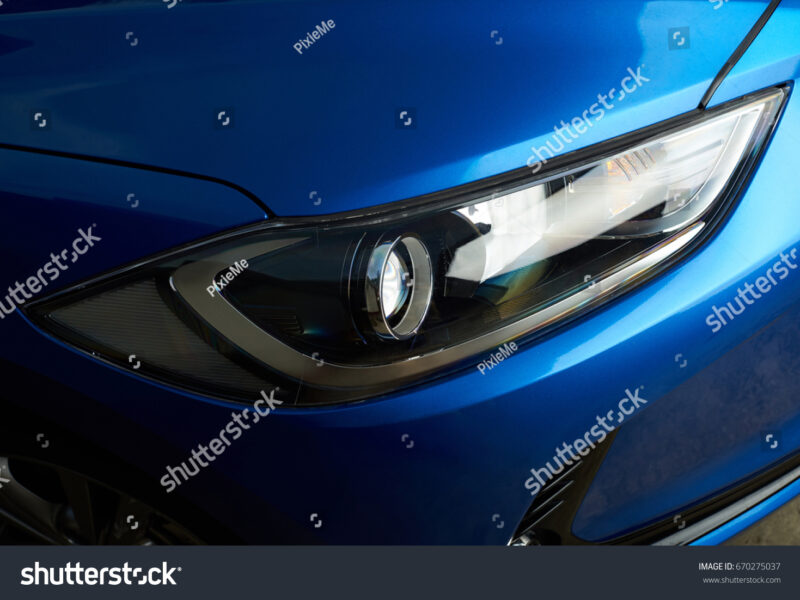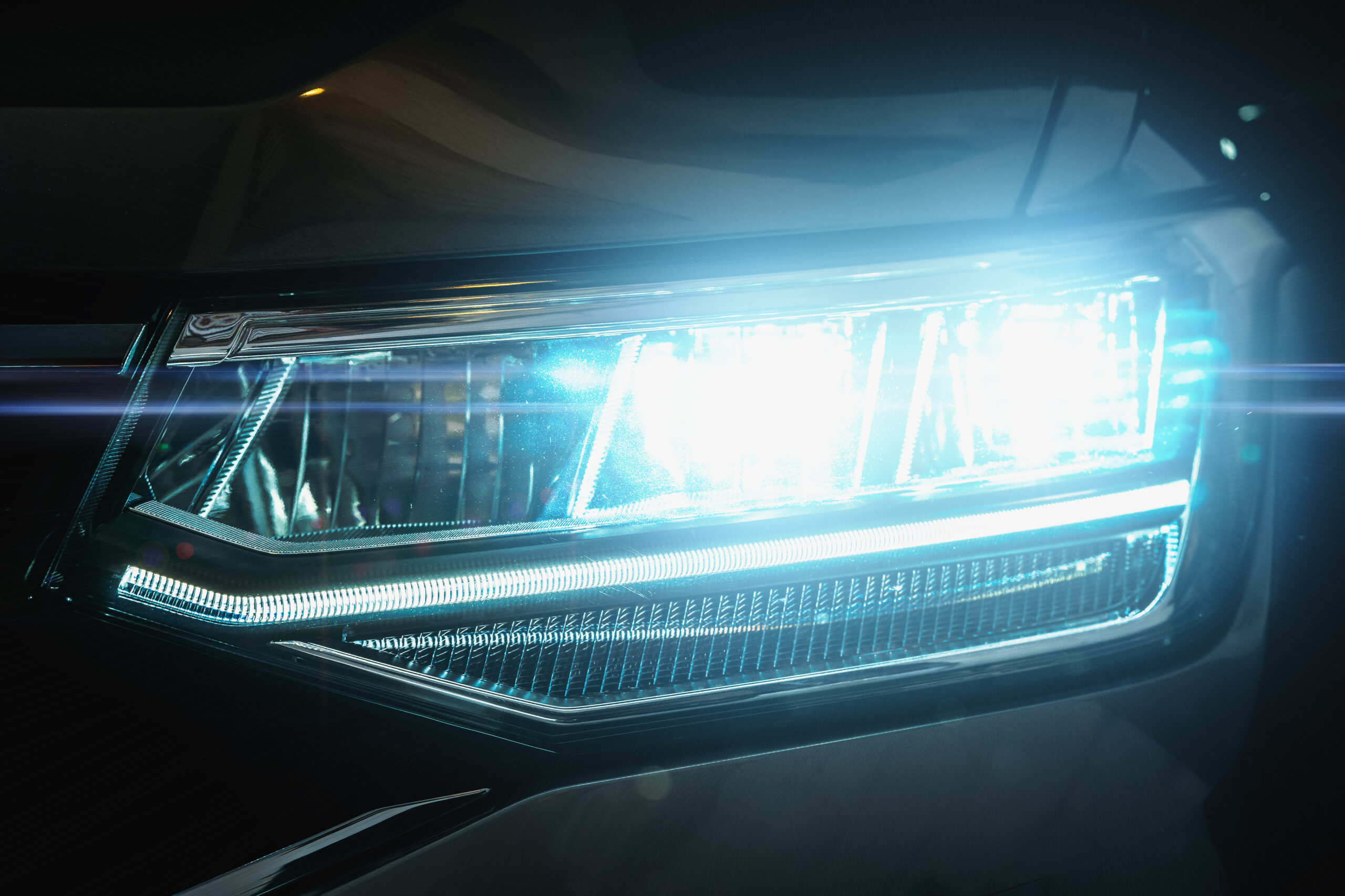
Adaptive headlights and automatic high beams represent a revolutionary advancement in automotive lighting technology, significantly enhancing driver visibility. These innovative systems dynamically adjust the light beam pattern and intensity in real-time based on road conditions, vehicle speed, and surrounding traffic. By optimizing illumination while minimizing glare for other road users, they profoundly improve safety during nighttime driving.
As vehicular technology continues to evolve, adaptive headlights, also known as Adaptive Front-lighting Systems (AFS), and automatic high beams offer essential features that contribute to safer road experiences. Adaptive headlights provide directional and distance enhancements in lighting, while automatic high beams enhance comfort by decreasing the need for manual light adjustments.
What Are Adaptive Headlights and How Do Their Steering Mechanisms Work?
Adaptive headlights tailor the projected light pattern based on variables such as vehicle speed and steering angle. Advanced models even integrate GPS or camera inputs. This adaptability is facilitated through sophisticated electro-mechanical systems within the headlight assembly. Notably, Xenon (HID) or LED technologies employ stepper motors for optimal optical movement, allowing horizontal tilts of up to 15 degrees inward on curves and up to 8 degrees outward in select models. Such features are indispensable for improving visibility on turns where standard lights may only illuminate the outer road edges.
Moreover, advanced AFS technologies can adjust the beam height (vertical inclination) to accommodate changes in vehicle pitch during acceleration or deceleration. For instance, below speeds of 50 km/h, these systems widen the lateral light beam to enhance visibility at intersections or while turning—a feature recognized as “cornering light.”
What Specific Types of Adaptive Headlights Are There and What Are Their Features?
Adaptive headlight systems generally fall into two primary categories based on their operational mechanics:
- Mechanical Movement AFS: This traditional system pivots the projector assembly to follow the vehicle’s trajectory. Typically built on Halogen, Xenon (HID), or increasingly LED technology, these systems achieve impressive response times of just milliseconds for real-time adjustments of the light beam direction.
- Matrix LED Headlights: Utilizing multiple individually controlled LED segments, Matrix headlights—such as Audi’s system—can feature 25 to 64 LEDs per unit. This cutting-edge technology crafts a high-resolution adaptive light beam capable of “masking” specific areas to prevent dazzling other drivers while maintaining high beams in other regions. The dynamic cutoff line adjusts continuously without mechanical movement, enhancing both safety and visibility.
- Digital Light Processing (DLP) / Laser Combinations: At the forefront of lighting innovation, this technology utilizes digitally controlled micro-mirrors (DMD) to project up to 1.3 million pixels. DLP headlights provide remarkably precise adaptations and can even project symbols or warnings directly onto the road—such as those employed in the Mercedes-Benz DIGITAL LIGHT system.
How Do Automatic High Beams Work and What Sensors Do They Use?
Automatic high beams, also referred to as high beam assist systems, automatically engage and disengage high beams based on traffic conditions and ambient lighting. Their priority is to offer optimal illumination while avoiding glare for oncoming drivers.
These high-beam assist systems primarily depend on one or multiple cameras installed near the rearview mirror on the windshield. These cameras can feature either mono or stereoscopic designs, allowing them to detect:
- Oncoming Vehicles: Cameras identify the headlights of approaching cars, facilitating seamless high-beam adjustments.
- Leading Vehicles: The system detects the taillights of vehicles traveling in the same direction to manage illumination accordingly.
- Urban Lighting: It can recognize street lights and various artificial light sources, adapting to urban driving conditions.
- Ambient Lighting Conditions: The system evaluates whether natural lighting (e.g., dawn, dusk, or moonlight) is sufficient to justify high-beam usage.
When the system detects no nearby vehicles or significant light sources, it activates the high beams. Conversely, upon sensing an approaching or leading vehicle, it promptly switches to low beams, typically within 0.5 to 1 second, to prevent glare. Advanced systems, such as matrix headlights, can also “mask” the areas surrounding identified vehicles, thereby optimizing night driving conditions.
What Lighting Technologies Are Integrated into Adaptive Headlights?
Adaptive headlights can incorporate several automotive lighting technologies: Halogen, Xenon (HID), LED, and Laser. Each exhibits unique characteristics, significantly influencing performance and adaptability.
- Halogen: While less common in contemporary adaptive systems due to limited luminous efficiency (around 1500 lumens) and lifespan (approximately 500-1000 hours), halogens were historically employed for cornering functions.
- Xenon (HID): Offering superior light intensity (up to 3200 lumens) and a color temperature closer to natural daylight compared to halogens, HID lights last around 2000 hours. Their blend of performance and affordability ensures their continued presence in many mechanical AFS setups.
- LED (Light Emitting Diode): Dominating modern adaptive systems—especially in matrix and DLP configurations—LEDs are highly energy-efficient, boasting lifespans of up to 50,000 hours. Their individual controllability is critical for creating high-resolution adaptive light beams.
- Laser: Representing the pinnacle of automotive lighting technology, laser-based systems achieve remarkable light ranges (up to 600 meters, significantly surpassing high-end LEDs) alongside enhanced energy efficiency. BMW’s Laserlight system exemplifies how laser headlights adapt their beams for optimal long-distance visibility, often paired with LED matrices for short-range applications.
How Do Different Adaptive Headlight Systems Compare?
| Feature | AFS (Xenon/LED Mechanical Movement) | Matrix LED | DLP / Laser Combinations |
|---|---|---|---|
| Adaptation Mechanism | Physical projector tilt (up to 15° horizontal) | Individual LED segment control (e.g., 25-64 LEDs/headlight) | Digital micro-mirror technology (up to 1.3 million pixels) + Laser module |
| Beam Resolution | Low (coarse pattern adjustment) | Medium to high (granular segment adjustment) | Very high (pixel-level adjustments), enables symbol projection |
| Glare Prevention | Switches to low beam or slight repositioning | Precise masking of vehicles (high beams active in other areas) | Ultra-precise masking with projected dark zones |
| Maximum Range | Approximately 200-300 meters | Approximately 300-500 meters | Up to 600 meters with laser component |
| Integration of Automatic High Beams | Yes, activation/deactivation | Yes, with active masking | Yes, with ultra-precise masking |
What Concrete Benefits Do Adaptive Headlights and Automatic High Beams Offer for Road Safety?
The implementation of adaptive headlights and automatic high beams significantly enhances road safety through improved driver visibility. These systems are essential components of advanced nighttime safety systems.
- Enhanced Visibility in Curves: AFS can expand the lateral field of view in curves by up to 90% at speeds of 50 km/h, enabling drivers to respond more swiftly to hidden obstacles.
- Reduction of Glare: Automatic high beams and matrix headlights can decrease glare for other drivers by up to 30% compared to traditional manual high beam controls, fostering a safer night driving environment.
- Improved Perception of Obstacles: By utilizing high beams without causing glare, adaptive headlights enhance the spotting of pedestrians, animals, or debris from greater distances—crucial under adverse weather conditions like rain or fog, as addressed in this article on driving in adverse weather.
- Relaxed Driving Experience: Eliminating the need for manual high-low beam adjustments reduces cognitive load, allowing drivers to focus more on the road.
- Optimized Beam Patterns: The capability to dynamically adjust cut-off lines and hotspots ensures directed light is effectively cast where needed, improving overall lighting efficiency.
Frequently Asked Questions (FAQ)
Are Adaptive Headlights Legal in All Countries?
Yes, adaptive headlights and automatic high beams are permissible in most countries, regulated under ECE Regulation R123 in Europe, and governed by the newly approved SAE J3069 regulation in the United States by NHTSA in 2022 for matrix headlight systems.
What Maintenance Do Adaptive Headlights Require?
They require the same general maintenance as conventional headlights (cleaning, fuse checks); calibration of their sensors and actuators should occur at specialized workshops equipped with specific diagnostic tools, typically every two years or after covering 30,000 km.
Do Adaptive Headlights Consume More Energy?
Typically, they do not. Modern systems utilizing LED or laser technology are inherently more energy-efficient than halogen or even Xenon (HID) systems, despite their additional functionalities.
Can Adaptive Headlights Function in Fog or Heavy Rain?
Yes, many adaptive systems incorporate specific modes for adverse weather, such as “fog light” or “rain light,” adjusting the beam pattern (e.g., reducing vertical dispersion) to lessen glare and enhance visibility in challenging conditions.
What Does the AFS Symbol on the Dashboard Mean?
The AFS (Adaptive Front-lighting System) symbol, generally depicted as a headlight with curved arrows, indicates that the adaptive headlight system is activated or may signify a system fault requiring attention if it illuminates.
This article is for informational purposes only and should not be considered a substitute for professional advice or the owner’s manual of your vehicle.
References:
Hella KGaA Hueck & Co. (2018). “Adaptive Frontlighting Systems (AFS)”. Technical Handbook.
Audi AG. (2019). “Audi Matrix LED Headlights”. Audi Technology Portal.
ZF Friedrichshafen AG. (2020). “ZF’s Solutions for Future Lighting”. Technical Publication.
Mercedes-Benz AG. (2021). “DIGITAL LIGHT: A Revolution in Headlamp Technology”. Mercedes-Benz Media.
Bosch Global. (2017). “High-beam assist”. Bosch Mobility Solutions.
Continental AG. (2019). “High Beam Assist: Clear Vision Ahead”. Continental Corporate.
Philips Automotive Lighting. (2020). “Automotive Lighting Technologies Comparison”.
BMW AG. (2014). “BMW Laserlight: Revolutionary Lighting Technology”. BMW Group PressClub Global.
ADAC. (2016). “AFS-Systeme im Test”.
NHTSA. (2018). “Effectiveness of Adaptive Driving Beam Headlighting Systems”. Report No. DOT HS 812 516.
United Nations Economic Commission for Europe (UNECE). (2007). “Regulation No. 123 – Uniform provisions concerning the approval of adaptive front-lighting systems (AFS) for motor vehicles”. ECE R123.
National Highway Traffic Safety Administration (NHTSA). (2022). “NHTSA Issues Final Rule for Adaptive Driving Beam Headlights”. Press Release.
Automotive Service Excellence (ASE). (2021). “Advanced Driver Assistance Systems (ADAS) Maintenance”.
Hella KGaA Hueck & Co. (2018). “Adaptive Frontlighting Systems (AFS)”. Technical Handbook.
Autodata. (2020). “Dashboard Warning Lights Guide”.