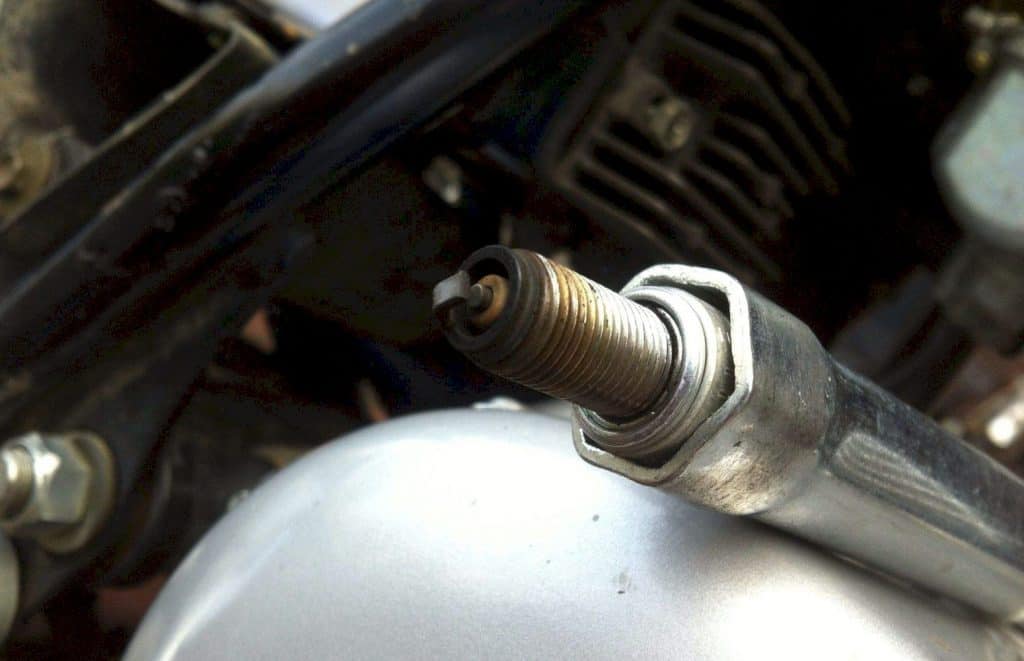
When your car starts consuming more fuel than usual or struggles to accelerate smoothly, it’s likely that your spark plugs are on their last legs. Signs like rough idling, engine misfires, and difficulty in starting indicate that the ignition process in your vehicle’s internal combustion engine is not functioning as it should. A compromised ignition can hinder the synchronized detonation of the air-fuel mixture, ultimately affecting your car’s overall performance.
What Are the Primary Symptoms of Bad Spark Plugs?
The most telling signs of failing spark plugs are linked directly to your engine’s operational efficiency. For instance, a rough idle occurs when the spark plugs fail to ignite the air-fuel mixture consistently. This inconsistency can result in uneven engine operation, severely affecting the smooth production of power.
Engine misfires are a common symptom of faulty spark plugs. This issue arises when one or more cylinders fail to combust properly, manifesting as a jerking sensation during acceleration. A haphazard spark delivery disrupts the engine’s power stroke, leading to noticeable dips in performance.
Why Does Poor Spark Plug Performance Increase Fuel Consumption?
When spark plugs fail to provide a strong, consistent spark, the air-fuel mixture within the combustion chambers does not ignite optimally. This phenomena leads to unburnt fuel exiting the exhaust, resulting in reduced fuel economy and higher emissions.
The timing of the ignition event in connection with the engine’s timing system is crucial. If this synchronization is impeded—due to weak or intermittent sparks—your engine must exert more effort to achieve the same output, thus consuming more fuel. This, in turn, adversely impacts emission control systems.
How Do Bad Spark Plugs Affect Acceleration and Starting?
Poor acceleration stems directly from inconsistent ignition. Worn or fouled spark plugs cannot provide the robust spark needed for rapid combustion of the air-fuel mixture, which hampers the pistons’ ability to drive the engine efficiently.
When starting your vehicle, you might experience difficulties due to fouled or worn spark plugs failing to generate the necessary spark, especially in colder conditions. A weak spark struggles to ignite the mixture, causing you to try multiple times before getting your car to start, contrasting sharply with the immediate response expected from healthy spark plugs.
What Are the Specific Numbers to Watch For?
Replacement intervals for spark plugs vary across manufacturers and types—copper, platinum, or iridium. As a general guideline, platinum or iridium spark plugs should be replaced every 60,000 to 100,000 miles, while copper spark plugs typically require replacement every 20,000 to 30,000 miles.
The spark plug gap is another critical factor, defined as the space between the center and ground electrodes. For many gasoline engines, this gap is specifications ranging from 0.030 to 0.040 inches (0.76 to 1.02 mm). Always reference your vehicle’s owner manual for the exact specifications, as incorrect gapping can lead to misfires or incomplete combustion.
Proper installation torque is essential for spark plugs. Overtightening can strip threads, while undertightening can result in leaks and poor heat transfer. Typical torque specifications for passenger cars range from 15 to 30 lb-ft (20 to 40 Nm), but it’s crucial to verify the correct values for your specific engine and plug application.
Can Spark Plug Issues Be Mistaken for Other Problems?
Indeed, symptoms such as rough idling and poor acceleration can sometimes be mistaken for issues related to fuel injectors, ignition coils, or even suspension problems like worn shock absorbers. However, a consistent pattern of ignition-related symptoms tends strongly toward spark plug issues. While worn shock absorbers impact ride quality and braking distance, they do not directly cause engine misfires.
How to Diagnose and Fix Failing Spark Plugs
How Can I Inspect My Spark Plugs for Issues?
Start by visually inspecting your spark plugs for signs of wear, such as rounded electrode tips, deposits (oily, black, or white), or cracks in the ceramic insulator. An excessively wide or narrow gap, straying outside manufacturer specifications, also signals a problem.
What is the Recommended Torque for Installing New Spark Plugs?
The recommended torque for installing new spark plugs varies by application, with common passenger vehicles requiring a torque range of 15 to 30 lb-ft (20 to 40 Nm). Always consult your vehicle’s service manual or the specifications from the spark plug manufacturer to avoid potential damage.
What Spark Plug Gap is Standard for Most Cars?
A typical spark plug gap for many gasoline engines falls between 0.030 and 0.040 inches (0.76 to 1.02 mm). This critical specification must be verified in your vehicle’s owner manual, as incorrect gapping directly influences engine performance.
Comparison of Spark Plug Types and Lifespans
| Spark Plug Type | Typical Lifespan (Miles) | Key Characteristic | Typical Gap Range (Inches) |
|---|---|---|---|
| Copper | 20,000 – 30,000 | Cost-effective, good conductivity | 0.030 – 0.040 |
| Platinum | 60,000 – 100,000 | Durable, better ignitability over time | 0.035 – 0.045 |
| Iridium | 80,000 – 120,000+ | Extremely durable, highest ignitability | 0.030 – 0.040 |
| Double Platinum | 80,000 – 120,000 | Enhanced lifespan for both electrodes | 0.035 – 0.045 |
Frequently Asked Questions
How many signs of bad spark plugs are there typically?
Typically, there are 5 to 7 distinct signs of bad spark plugs, including rough idling, misfires, increased fuel consumption, difficulty starting, poor acceleration, increased emissions, and reduced engine power.
What is the role of the engine timing system with spark plugs?
The engine’s timing system dictates when the spark plug ignites the air-fuel mixture, ensuring combustion occurs at the optimal moment in the piston’s cycle. This synchronization maximizes power and efficiency.
How does an engine’s air-fuel mixture relate to spark plugs?
Spark plugs ignite the precisely measured air-fuel mixture within the combustion chambers. The efficiency of this ignition directly influences fuel combustion, engine performance, and emissions.