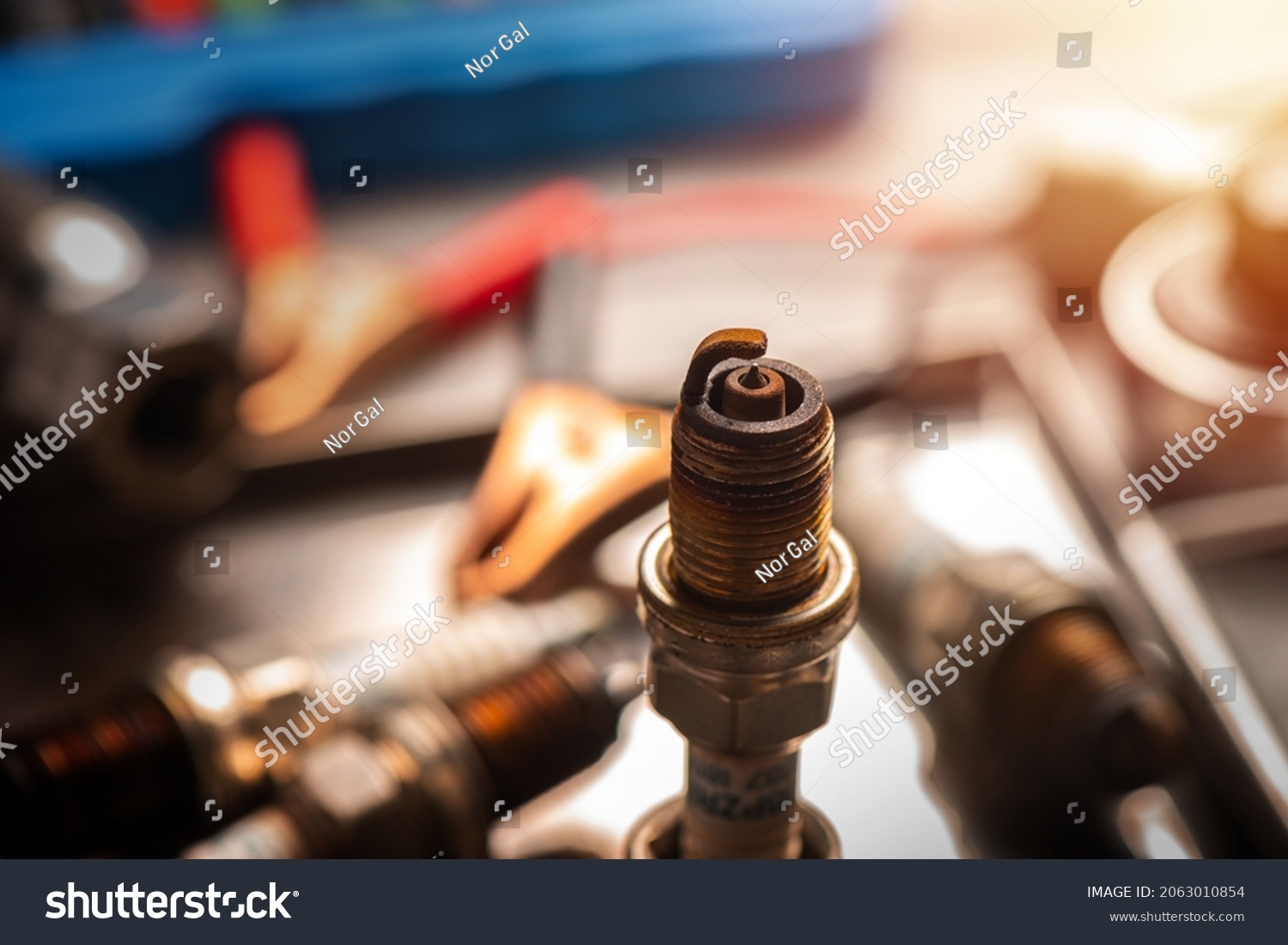
Recognizing the symptoms of bad spark plugs is paramount for preserving your vehicle’s fuel efficiency and overall performance. Worn or fouled spark plugs directly impede the combustion process within your engine, leading to a noticeable decline in fuel economy and potentially more severe mechanical complications if left unaddressed.
Reduced Fuel Economy: The Silent Killer of Your Wallet
One of the most immediate and impactful consequences of failing spark plugs is a significant reduction in your vehicle’s fuel economy. When spark plugs can no longer provide a strong, consistent spark, the air-fuel mixture in the combustion chamber does not ignite efficiently. This incomplete combustion means that a portion of the fuel is wasted, exiting the exhaust system without contributing to engine power.
The financial drain from this inefficiency can be substantial over time. A vehicle operating with healthy, well-maintained spark plugs can experience an improvement in fuel economy by as much as 30% compared to one running on severely compromised plugs. This direct correlation highlights how vital these small components are to your car’s operational cost-effectiveness.
Therefore, any noticeable increase in trips to the gas station or a decrease in miles per gallon should prompt an immediate investigation into the condition of your spark plugs. Addressing this issue proactively can prevent further escalation of symptoms and save you considerable money at the pump, ensuring your engine runs as intended.
The Tangible Loss: Why Do Bad Spark Plugs Increase Fuel Consumption?
The primary function of a spark plug is to ignite the precisely measured air-fuel mixture within each engine cylinder. This ignition creates the controlled explosion that drives the piston, generating power for the vehicle. When a spark plug degrades, its ability to produce a robust spark diminishes, resulting in what’s known as a “misfire” or an inefficient burn.
An inefficient burn means that the fuel entering the combustion chamber is not fully utilized. Instead of being completely converted into energy, some of it remains unburnt and is expelled through the exhaust system. To compensate for the reduced power output from these inefficient combustion cycles, your engine’s onboard computer (ECU) may instruct the fuel system to inject more fuel, attempting to restore performance. This compensatory action directly leads to increased fuel consumption.
Moreover, the engine must work harder to achieve the desired power and speed with compromised ignition. This increased effort translates into higher demands on the fuel system, exacerbating the problem of poor fuel economy. Understanding this fundamental mechanism underscores why addressing bad spark plugs is not just about performance, but also about economic and environmental responsibility.
Rough Idling and Vibrations Exceeding 15 Hz
A car engine experiencing a rough idle is a strong indicator of underlying issues, and faulty spark plugs are often the culprits. When one or more spark plugs fail to ignite the air-fuel mixture consistently, the engine’s power delivery becomes uneven, causing a noticeable shaking or vibration when the vehicle is stationary. This vibration can often exceed 15 Hz, indicating a significant disruption in the engine’s smooth operation.
This rough idling isn’t merely an annoyance; it signifies wasted fuel. Each time a cylinder misfires, the fuel injected into that cylinder is not fully combusted, leading to unburnt fuel being expelled. The engine then attempts to correct this imbalance by injecting more fuel into other cylinders or adjusting timing, further reducing overall fuel efficiency.
Monitoring your vehicle for any unusual vibrations or a “lumpy” engine sound at idle can provide an early warning. Addressing these symptoms promptly, potentially by replacing the affected spark plugs, can restore engine smoothness and prevent further deterioration of your fuel economy. For a deeper dive into these issues, refer to our article on Engine Misfire Symptoms: What They Mean and How to Troubleshoot Your Car.
Noticeable Engine Misfires and Hesitation During Acceleration
Beyond rough idling, misfires can become more pronounced during driving, especially under acceleration. You might experience a sudden jolt, a brief loss of power, or a “bucking” sensation as the engine struggles to maintain consistent combustion. This hesitation is a direct result of one or more engine cylinders failing to fire properly, disrupting the smooth delivery of power to the wheels.
Each misfire represents a wasted combustion cycle where fuel is introduced into the engine cylinder but not ignited effectively. This unburnt fuel not only contributes to poor emissions but also significantly impacts your vehicle’s fuel economy. The engine’s computer will try to compensate for the lost power by over-fueling other cylinders or increasing throttle input, which in turn consumes more gasoline.
Ignoring these intermittent misfires and hesitation will only lead to a greater decline in fuel efficiency and can potentially damage other engine components, such as the catalytic converter, due to excess unburnt fuel. For a comprehensive understanding of various related issues, consult our guide on 7 Critical Symptoms of Bad Spark Plugs You Shouldn’t Ignore.
Decreased Engine Power and Sluggish Performance
When spark plugs are failing, the overall power output of your engine diminishes, leading to a noticeable feeling of sluggishness. This loss of power is particularly evident when accelerating, climbing hills, or attempting to pass other vehicles. The engine simply cannot produce the necessary force because the combustion process in the combustion chamber is compromised, resulting in less energy extracted from the fuel.
To compensate for this perceived lack of power, drivers often press the accelerator pedal harder, demanding more from the engine. This increased throttle input directly translates to injecting more fuel into the engine, exacerbating the problem of poor fuel economy. The engine works harder to achieve the desired speed, consuming more fuel in the process without delivering proportional performance.
Therefore, if your vehicle feels less responsive than usual or struggles to maintain speed under load, it’s a strong indicator that your spark plugs might be degrading. Addressing this issue can restore your engine’s vitality and significantly improve its fuel efficiency by ensuring that each drop of fuel contributes effectively to propulsion.
Check Engine Light Illumination and Diagnostic Codes
The illumination of your vehicle’s Check Engine Light (CEL) is often the most overt sign that something is amiss, and bad spark plugs are a frequent cause. When spark plugs fail consistently, the engine’s onboard diagnostic (OBD-II) system detects misfires or other ignition system irregularities and triggers the CEL. This light serves as a critical warning that requires immediate attention.
Diagnostic Trouble Codes (DTCs) such as P0301, P0302, P0303, P0304 (indicating a misfire in cylinder 1, 2, 3, or 4 respectively), or a general P0300 (random/multiple cylinder misfire) are commonly associated with faulty spark plugs. These codes confirm that the ignition process is failing, leading directly to inefficient fuel combustion and increased consumption.
Scanning your vehicle for these specific codes is a crucial step in diagnosing the problem accurately. Rectifying the issue, often through spark plug replacement, will not only turn off the CEL but also restore your engine’s proper functioning and, importantly, its optimal fuel economy. Ignoring the CEL can lead to prolonged fuel wastage and potential damage to other expensive components, such as the catalytic converter.
Strong Fuel Odor from the Exhaust
A distinct and strong odor of gasoline emanating from your vehicle’s exhaust is a clear and concerning symptom of bad spark plugs, directly indicating significant fuel waste. This smell occurs because the spark plugs are failing to ignite the air-fuel mixture completely within the combustion chamber. As a result, raw, unburnt gasoline is expelled from the engine and out through the exhaust system.
This pungent odor is more than just unpleasant; it’s a tangible sign that precious fuel is being literally thrown away. Each time you smell gasoline, it means that the fuel you paid for is not contributing to your vehicle’s power or efficiency. Instead, it’s becoming an environmental pollutant and a direct drain on your wallet.
Detecting a strong fuel smell warrants immediate investigation, as it points to a serious problem with the combustion process. Addressing the underlying issue, typically by replacing the faulty spark plugs, will eliminate the odor, improve your fuel economy, and reduce harmful emissions, safeguarding both your vehicle and the environment.
Optimizing Fuel Economy: The Role of Timely Spark Plug Replacement
Regular maintenance, particularly the timely replacement of spark plugs, is fundamental to sustaining peak engine performance and maximizing fuel economy. As highlighted, worn spark plugs can lead to a significant drop in fuel efficiency, potentially increasing fuel consumption by up to 30%. By ensuring your spark plugs are in optimal condition, you directly contribute to a more efficient combustion process, where every drop of fuel is utilized effectively.
The benefits extend beyond just fuel savings; new spark plugs ensure consistent ignition, leading to smoother idling, more responsive acceleration, and a reduction in harmful emissions. For instance, a 2018 Honda Civic benefits significantly from adherence to its recommended spark plug replacement schedule, often every 60,000 to 100,000 miles, depending on the spark plug type.
When replacing spark plugs, it’s crucial to consider specific technical specifications such as the electrode gap and installation torque. For a 2018 Honda Civic, the recommended spark plug gap typically ranges between 0.040 and 0.044 inches, and the installation torque is generally around 13 lb-ft (18 Nm). Proper gapping ensures a strong, consistent spark, while correct torque prevents damage and ensures good electrical contact. For a detailed guide on the replacement process, refer to our DIY Guide: How to Safely Replace Your Car’s Spark Plugs for Better Performance.
| Spark Plug Condition | Typical Fuel Economy Impact | Engine Performance | Common Symptoms |
|---|---|---|---|
| New / Optimal | Baseline (e.g., 30 MPG) | Smooth, responsive, full power | None |
| Worn / Fouled | Up to 30% decrease (e.g., 21 MPG) | Rough idle (>15 Hz vibration), hesitation, reduced power | Check Engine Light, fuel odor, misfires |
How often should spark plugs be replaced to prevent fuel economy loss?
The replacement interval for spark plugs varies significantly based on the type of spark plug and the vehicle manufacturer’s recommendations. Conventional copper spark plugs might need replacement every 30,000 miles, while iridium or platinum spark plugs can last much longer, typically between 60,000 to 100,000 miles, and sometimes even up to 120,000 miles. For instance, a 2018 Honda Civic using iridium spark plugs would typically have a recommended replacement interval of around 100,000 miles. Adhering to these manufacturer guidelines is crucial for maintaining optimal fuel economy and preventing the gradual degradation of performance and efficiency that occurs with worn plugs.
Can specific spark plug types improve fuel efficiency?
While spark plugs don’t inherently “improve” fuel efficiency beyond restoring it to optimal levels, choosing the correct type can ensure sustained efficiency and longevity. Iridium and platinum spark plugs, for example, offer superior durability and a more consistent, hotter spark over their lifespan compared to traditional copper plugs. Their finer electrodes resist fouling and wear more effectively, leading to more complete combustion for a longer period. This extended efficiency means your vehicle maintains its optimal fuel economy for more miles, reducing the frequency of replacements and ensuring consistent performance without the fuel-wasting symptoms of worn plugs.
What are the common diagnostic codes associated with bad spark plugs and poor fuel economy?
When bad spark plugs lead to poor fuel economy, the vehicle’s onboard diagnostic (OBD-II) system will often store specific Diagnostic Trouble Codes (DTCs). The most common codes directly related to spark plug issues and inefficient combustion are P0300 (Random/Multiple Cylinder Misfire Detected) and P030X (where ‘X’ is a specific cylinder number, e.g., P0301 for cylinder 1, P0302 for cylinder 2, etc.). These codes indicate that the engine control unit (ECU) has detected an inconsistent or failed ignition event in one or more engine cylinders. Such misfires directly correlate with incomplete fuel combustion, leading to the observed decline in fuel economy and increased emissions.