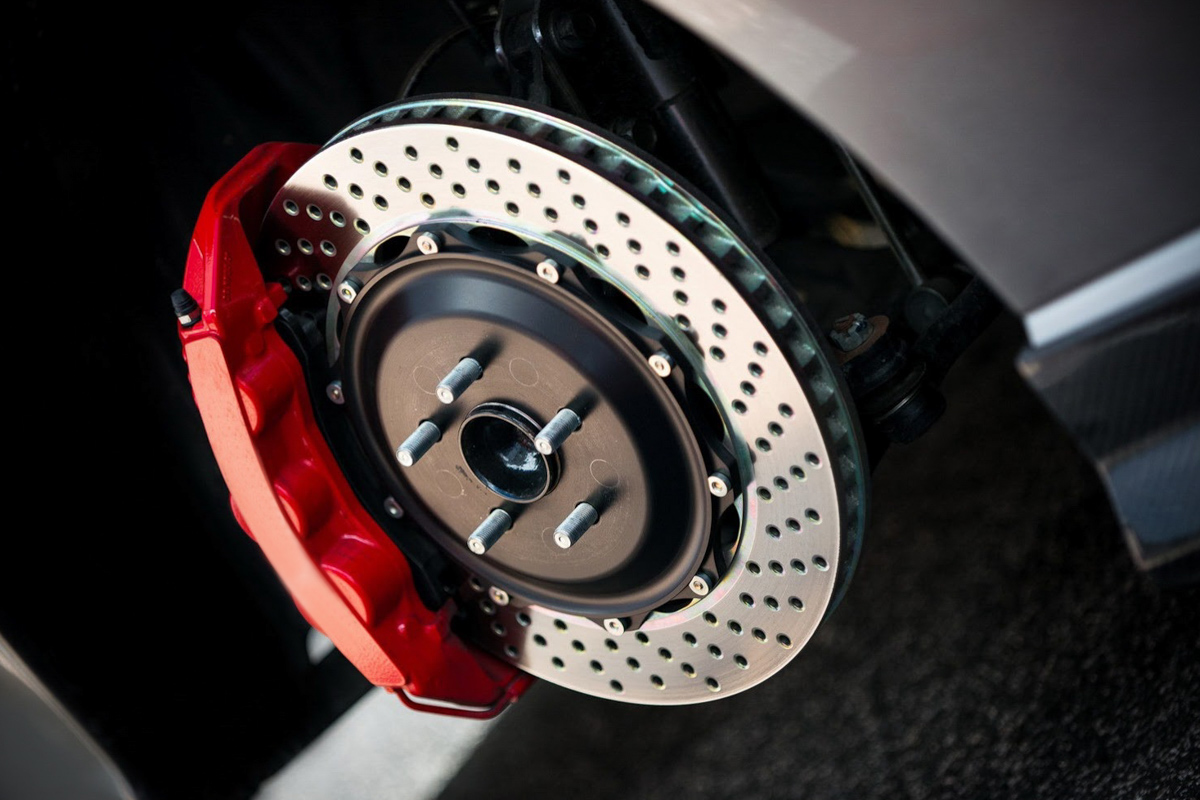
A vibrating brake pedal when braking is most commonly caused by warped brake rotors, but other issues can also contribute. This pulsation indicates an uneven surface that is making contact with the brake pads, leading to the sensation felt through the pedal and potentially the steering wheel. Addressing this promptly is crucial for safety and to prevent more extensive damage to your braking system.
What Causes Brake Rotor Warping?
Brake rotor warping, technically known as thermal distortion, is a primary culprit behind a vibrating brake pedal. This condition arises when rotors experience extreme and uneven heating and cooling cycles. During hard braking, rotors can reach very high temperatures.
If these rotors are then cooled rapidly and unevenly – for instance, by driving through a puddle or if brake dust and debris accumulate unevenly – the metal can expand and contract at different rates. This differential expansion and contraction leads to minute variations in the rotor’s thickness across its surface. These variations are what create the pulsating sensation felt in the brake pedal.
The severity of the warping directly correlates to the intensity of the vibration. Even slight thickness variations, often measured in mere millimeters, can be enough to cause a noticeable pulsation. Understanding the role of heat and uneven cooling is key to preventing this common brake problem.
While aggressive driving can contribute to overheating, factors like improper lug nut torque, which can cause uneven rotor seating, or even manufacturing defects can also lead to warping. Therefore, a comprehensive diagnosis is essential to pinpoint the exact cause.
How Does Rotor Warping Affect Braking Performance?
When brake rotors warp, their surface is no longer perfectly flat. As the brake pads clamp down on this uneven surface, they are forced to move in and out with each rotation of the rotor. This in-and-out motion is directly translated into the pulsing sensation felt in the brake pedal.
This inconsistent contact not only causes the vibration but also reduces the overall effectiveness of your braking. Instead of a smooth, consistent application of force, the braking force fluctuates as the uneven rotor spins. This can increase your stopping distance, a critical safety concern.
Furthermore, a warped rotor can accelerate wear on other braking components, such as the brake pads and calipers. The constant flexing and movement can put undue stress on these parts, potentially leading to premature failure and more costly repairs down the line.
Identifying Warped Brake Rotors: Symptoms and Diagnosis
The most common symptom of warped brake rotors is a distinct pulsation felt in the brake pedal when you apply the brakes. This vibration may also be felt in the steering wheel, especially at higher speeds. The pulsation typically becomes more pronounced the harder you brake.
Another indicator can be a slight grinding or groaning sound accompanying the vibration, though this is less common than the pedal pulsation. Visually inspecting the rotors might reveal uneven wear patterns or a dull, glazed appearance on the braking surface, though warping itself is often not visible to the naked eye.
To definitively diagnose warped rotors, a mechanic will typically measure the rotor’s thickness variation using a specialized tool called a micrometer. This tool can detect minute differences in thickness across the rotor’s surface. A rotor is generally considered warped if its thickness variation exceeds manufacturer specifications, often around 0.02 to 0.05 mm.
Other Potential Causes for a Vibrating Brake Pedal
While warped rotors are the most frequent cause, other issues can also lead to a vibrating brake pedal. One such cause is uneven wear or damage to the brake pads themselves. If the pad material is unevenly worn or has debris embedded in it, it can create a similar pulsating effect as it interacts with the rotor.
Another possibility is an issue with the brake caliper. A sticking caliper can cause uneven pressure to be applied to the rotor, leading to localized overheating and potential warping, or it can create a vibration on its own. The caliper’s piston or guide pins can become seized due to corrosion or lack of lubrication.
Finally, problems with the wheel bearings or suspension components could, in some rare cases, manifest as a vibration felt through the brake pedal. However, these issues would typically be accompanied by other symptoms, such as humming noises or looseness in the steering.
Can Worn Brake Pads Cause a Vibrating Pedal?
Worn brake pads, by themselves, do not typically cause a vibrating brake pedal. The primary symptom of worn brake pads is usually a high-pitched squealing or grinding noise when braking. This noise is often generated by a small metal tab, the wear indicator, which is designed to scrape against the rotor when the pad material has worn down to a certain thickness.
However, if brake pads are severely worn, they can contribute to other problems that do cause pedal vibration. For instance, if the pads are worn down to the metal backing plate, this metal-on-metal contact can damage the brake rotor, potentially leading to warping or grooving. This rotor damage would then cause the pedal vibration.
It’s also possible for unevenly worn pads, perhaps due to a sticking caliper, to create uneven pressure on the rotor. This uneven pressure can lead to localized heating and, consequently, rotor warping, which then manifests as a vibrating pedal. Thus, while worn pads aren’t a direct cause, they can be an indirect contributor to pedal vibration.
How to Fix a Vibrating Brake Pedal
The most common and effective fix for a vibrating brake pedal caused by warped rotors is to replace the brake rotors. In some cases, if the warping is very minor and the rotors are thick enough, a mechanic might be able to machine them (resurface them) to create a perfectly flat surface again. However, this is often a temporary solution, and replacement is generally recommended for optimal performance and longevity.
When replacing rotors, it’s also good practice to replace the brake pads at the same time. New pads on a new or resurfaced rotor will ensure optimal contact and braking performance. It’s also crucial to ensure that the lug nuts are torqued to the manufacturer’s specifications to prevent uneven rotor seating, which can lead to future warping.
If the vibration is caused by a sticking caliper or other brake system component, that specific component will need to be repaired or replaced. Regular brake inspections and maintenance can help identify and address these issues before they escalate and cause more significant problems like warped rotors.
Understanding Rotor Runout and Thickness Variation
Brake rotor runout refers to the degree to which a rotor deviates from being perfectly flat and perpendicular to its mounting surface. Thickness variation is the difference in thickness of the rotor measured at various points around its circumference. Both are critical factors in brake performance and the cause of pedal vibration.
Manufacturer specifications typically define acceptable limits for both rotor runout and thickness variation. For instance, typical runout tolerances might be around 0.05 mm, while thickness variation limits are often even tighter, sometimes as low as 0.01 to 0.02 mm. Exceeding these limits, even slightly, can lead to noticeable pulsation.
Measuring these parameters accurately requires specialized tools like a dial indicator for runout and a micrometer for thickness variation. Mechanics use these tools to assess the condition of the rotors and determine if they meet the required tolerances for safe and effective braking.
Table: Brake Rotor Specifications – Common Tolerances
| Specification | Typical Tolerance Range | Impact of Exceeding Tolerance | Recommended Action |
| :———————– | :———————- | :————————————————- | :————————————————- |
| Rotor Thickness Variation| 0.01 – 0.05 mm | Pulsating brake pedal, reduced braking efficiency | Rotor replacement or resurfacing (if feasible) |
| Rotor Runout | 0.02 – 0.05 mm | Steering wheel shimmy, uneven pad wear | Rotor replacement |
| Minimum Rotor Thickness | Varies by vehicle (e.g., 20-30 mm) | Risk of rotor cracking/failure, reduced heat dissipation | Rotor replacement |
| Lug Nut Torque | Vehicle-specific (e.g., 100-140 ft-lbs) | Uneven rotor seating, leading to warping | Torque to manufacturer’s specifications |
Frequently Asked Questions
Why does my brake pedal vibrate when I brake gently?
A vibrating brake pedal, even during gentle braking, is often still indicative of warped brake rotors. While the sensation might be less intense than during hard braking, the underlying issue of uneven rotor thickness or surface is present. The gentle application of pressure simply allows the variations to be felt more subtly. Other less common causes for vibration during gentle braking could include a slight sticking in one of the brake calipers, causing inconsistent pressure application, or even a very minor issue with wheel balance, though this usually presents as vibration at speed even without braking.
Can a bad wheel bearing cause brake pedal vibration?
While a bad wheel bearing typically causes a humming or grinding noise that increases with speed and can also lead to steering wheel shimmy, it’s not a direct cause of brake pedal vibration during braking. However, severe wheel bearing play could potentially affect the alignment of the hub and rotor assembly enough to indirectly contribute to uneven rotor wear or, in extreme cases, mimic some symptoms of a warped rotor. If you suspect a wheel bearing issue, it’s crucial to have it diagnosed and repaired immediately, as it’s a critical safety component.
How often should brake rotors be replaced?
Brake rotors do not have a fixed replacement interval like brake pads, as their lifespan depends heavily on driving habits, vehicle type, and material quality. However, rotors are typically replaced when they are resurfaced too many times, reach their minimum thickness specification (often stamped on the rotor hub), or become significantly warped or grooved. A general guideline is that rotors might need replacement every 50,000 to 70,000 miles, but this can vary greatly. Regular inspections during brake pad changes are essential to monitor their condition.
What is the difference between warped rotors and glazed rotors?
Warped rotors refer to a condition where the rotor’s surface has become uneven due to thermal distortion, resulting in thickness variations. This causes a pulsating sensation in the brake pedal. Glazed rotors, on the other hand, occur when the brake pads overheat and transfer a thin, hard layer of friction material onto the rotor surface. This glazing reduces the friction coefficient between the pad and rotor, leading to decreased braking performance and often a squealing noise, but it doesn’t typically cause the pedal pulsation associated with warping.
Should I replace rotors and pads at the same time?
Yes, it is highly recommended to replace brake rotors and brake pads at the same time. When you install new brake pads on old, worn, or warped rotors, the new pads will quickly conform to the irregularities of the rotor. This can lead to premature wear of the new pads and compromise braking performance. Conversely, installing new rotors with old pads means the old pads, which have conformed to the old rotor’s shape, may not make optimal contact with the new, perfectly flat rotor surface, potentially leading to reduced effectiveness and uneven wear. Replacing both ensures a fresh, smooth mating surface for maximum braking efficiency and longevity.
What are the risks of driving with vibrating brakes?
Driving with vibrating brakes poses several significant risks. Firstly, it compromises your vehicle’s stopping power, increasing the distance required to bring the vehicle to a halt. This is particularly dangerous in emergency situations. Secondly, the constant vibration can accelerate wear on other brake system components, such as the brake pads, calipers, and brake lines, potentially leading to more extensive and expensive repairs. In severe cases, continued driving with severely compromised brakes could lead to brake failure, a catastrophic safety hazard.