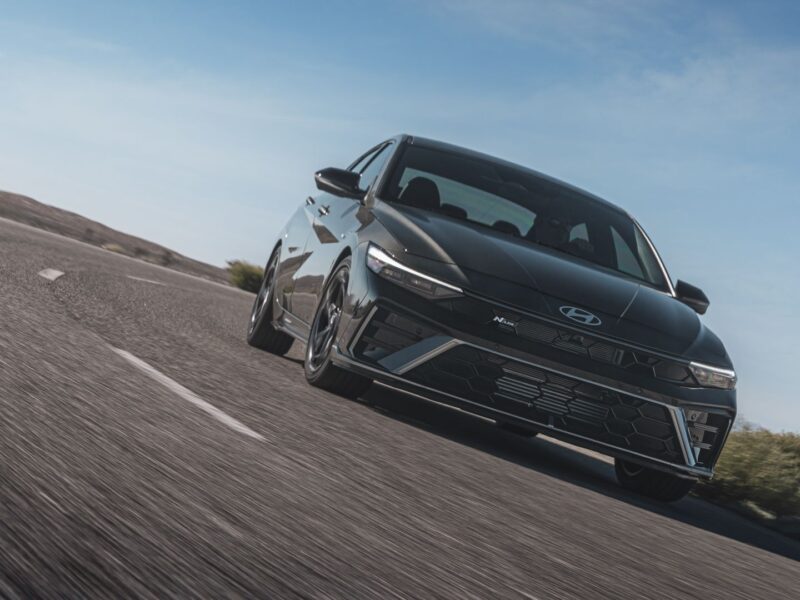
The 2020 Hyundai Venue not only marks Hyundai’s entrance into the subcompact SUV segment but also establishes itself as a well-rounded option for urban drivers seeking value without sacrificing essential features. With a focus on affordability, this model combines spacious interiors, technological advancements, and distinctive styling that sets it apart in a competitive market.

Vehicle/Engine Type
The 2020 Hyundai Venue is designed as a 4-door hatchback, equipped with a front-engine and front-wheel-drive (FWD) configuration optimal for urban driving. It accommodates up to five passengers comfortably, making it an ideal choice for city commutes and adventures alike.
Under the hood, the Venue houses a DOHC 16-valve inline-4 engine, optimized for efficiency without compromising performance. Its lightweight aluminum block and head contribute to both fuel economy and responsive handling, making it a suitable option for everyday driving tasks.
Dimensions
Dimensionally, the Venue measures 159.1 inches in length and 69.7 inches in width, with a substantial wheelbase of 99.2 inches that enhances stability. Standing at 61.6 inches tall, this SUV provides a commanding view of the road. It offers ample passenger space with a volume of 91.9 cubic feet and a versatile cargo capacity of 31.9 cubic feet, making it ideal for carrying everything from groceries to sports equipment.
Transmission and Power
This model is available with a Continuously Variable Transmission (CVT), known as “Intelligent Variable Transmission” (IVT) by Hyundai. It delivers a robust 121 horsepower at 6,300 rpm and a torque of 113 lb-ft at 4,500 rpm. The engine’s displacement measures 1.6 liters, ensuring a harmonious balance of efficiency and driveability.
Features
| Blind-Spot Collision Warning (BCW) assists drivers by detecting vehicles that may not be visible when changing lanes, enhancing overall safety. |
| Driver Attention Warning (DAW) monitors driver behavior, helping to identify signs of fatigue or distraction for improved on-road safety. |
| The Venue comes standard with a 60/40 split flat-folding rear seat, providing flexible utility for errands or transporting larger items. |
| Forward Collision-Avoidance Assist (FCA) leverages the front-facing camera to detect potential collisions and automatically applies the brakes if necessary to mitigate damages. |
| Rear Collision Cross-Traffic Warning (RCCW) helps identify approaching vehicles when reversing, providing additional safety for navigating tight spots. |

Price
The starting price for the 2020 Hyundai Venue is approximately $18,470, excluding any optional features or packages. This competitive pricing, combined with the extensive standard features, positions the Venue as a compelling option in the subcompact SUV market.
Performance
Performance-wise, the 2020 Hyundai Venue can accelerate from 0 to 60 mph in a respectable timeframe of approximately 8.5 seconds. The quarter-mile sprint is achieved in about 16.7 seconds at 83 mph, while the vehicle can reach a top speed of 115 mph. These numbers place the Venue at a competitive advantage among similarly priced models.
The vehicle handles well on the road, with a 0-100 mph acceleration time of around 28.4 seconds, making it suitable for both city driving and highway merging scenarios. In terms of braking, the Venue requires a stopping distance of 162 feet from 70 mph to 0, showcasing solid braking capabilities for an SUV in its class. The roadholding agility is demonstrated with a 0.82 g on a 300-foot diameter skidpad, emphasizing its stability through corners.

Chassis
The Venue is equipped with a strut front suspension and a torsion beam rear suspension, providing a balanced ride quality. The braking system features 11.0-inch vented disc brakes at the front and 10.3-inch discs at the rear, ensuring reliable stopping power.
The Venue rides on Nexen N’Priz AH8 tires with a size of 205/55R-17 91H M+S, which help enhance grip and handling characteristics on various road conditions.
EPA Fuel Economy
The fuel efficiency for the 2020 Hyundai Venue, as estimated by the EPA, allows it to achieve between 27-30 mpg in the city and 34-35 mpg on the highway, leading to a combined fuel economy rating of approximately 30-32 mpg. This favorable fuel consumption positions the Venue as an economical option for daily driving.
Current Market Information (as of 2026)
As the 2020 Hyundai Venue now transitions into the used vehicle market, its pricing is influenced by factors like mileage, condition, and trim level. Average prices for a used Venue range between approximately $13,462 and $14,637.15 based on several resources.
Edmunds reflects trade-in values spanning from $7,308 for units in poor condition to $15,614 for those in exceptional shape, highlighting its resale potential. With a reported depreciation rate of -12% according to the CarGurus Index, the Venue maintains reasonable value retention over time.
Currently, the average age of a listed Hyundai Venue for sale is about three years, with the oldest models approaching six years. The average mileage is around 27,973 miles, although some units have exceeded 145,879 miles, indicating that with proper maintenance, the Venue can offer considerable longevity.
In summary, the Hyundai Venue 2020 remains an appealing choice in the used vehicle market for those seeking a compact SUV that is economical, fuel-efficient, and well-equipped for urban driving, notably bolstered by its solid warranty coverage.
FAQs
What are the notable safety features of the 2020 Hyundai Venue?
The Venue includes several standard safety features, such as Forward Collision-Avoidance Assist, Blind-Spot Collision Warning, Lane Keeping Assist, and Driver Attention Warning, ensuring a high level of protection for occupants.
Is the 2020 Hyundai Venue a good car for city driving?
Yes, the Venue’s compact size, responsive handling, and impressive turning radius make it an excellent choice for navigating crowded urban environments.
How does the 2020 Hyundai Venue compare to competitors like the Kia Seltos and Mazda CX-30?
For a comprehensive analysis and comparison of specifications and prices, check out the following articles: 2020 Hyundai Venue vs 2021 Kia Seltos and 2020 Mazda CX-30 vs 2019 Honda CR-V.
What are the pros and cons of the Venue’s dual-clutch transmission?
For insights into the advantages and disadvantages of dual-clutch transmissions, please refer to the article Pros and Cons of Dual-Clutch Transmissions.