Experiencing unusual sensations or noises when braking can be alarming, and often, it points to issues with your vehicle’s brake rotors. Warped brake rotors, more accurately described as experiencing disc thickness variation (DTV) or excessive lateral runout, are a common problem that significantly impacts braking performance and vehicle safety. Addressing these issues promptly is crucial for maintaining effective stopping power and a smooth driving experience.
While the term “warped” suggests the rotor is physically bent, it’s typically an uneven surface caused by inconsistent friction material transfer or localized hot spots from extreme heat, rapid heating/cooling cycles, or improper installation. This article will detail the four primary warning signs of warped brake rotors and provide comprehensive methods for their diagnosis and repair.
What Causes Brake Rotors to Develop Uneven Surfaces?
Understanding the root causes of uneven brake rotor surfaces is key to prevention and effective resolution. Modern brake rotors, primarily made from cast iron, are designed to withstand high temperatures generated during braking. However, various factors can lead to localized thermal distortion, thickness variations, or uneven pad material deposits, which are the true culprits behind “warped” rotor symptoms.
One major cause is excessive heat generated by aggressive driving habits, such as frequent hard braking or riding the brakes, without adequate cooling time. This can lead to brake pad material smearing unevenly onto the rotor surface, creating high and low spots. Improper “bedding-in” procedures for new brake pads and rotors can also cause this uneven material transfer.
Other contributing factors include poorly maintained or sticking brake calipers, which can cause the pads to drag continuously against the rotor, generating localized hot spots. Additionally, incorrect torque applied to lug nuts during wheel installation can distort the rotor’s mounting, leading to lateral runout and subsequent uneven wear. Even rust and dirt deposits on the hub surface can contribute to uneven rotor seating and performance issues.
1. Pulsation or Vibration in the Brake Pedal or Steering Wheel
The most common and immediate indicator of a warped brake rotor is a noticeable pulsation or vibration felt through the brake pedal, or sometimes the steering wheel, during braking. This sensation intensifies with moderate to heavy braking and varies with vehicle speed, with higher speeds often resulting in a faster vibration frequency.
This pulsation occurs because the uneven surface of the brake rotor (due to disc thickness variation or DTV) causes the brake pads to move in and out rapidly as the rotor spins. This rapid oscillation is transmitted through the brake caliper and hydraulic system, causing the brake pedal to pulse. If the front rotors are affected, the pulsation is primarily felt in the steering wheel and brake pedal.
Conversely, if the rear rotors are experiencing issues, the vibration might be felt more as a pulsation beneath the driver’s seat or throughout the vehicle’s floorboard. This distinct localization can help diagnose which axle’s rotors require attention. Ignoring these vibrations can lead to further damage to other brake components and compromise overall vehicle control.
2. Grinding or Squealing Noises During Braking
While various issues can cause brake noise, specific grinding or squealing sounds often point to compromised brake rotors, especially when accompanied by pulsation. A rhythmic groaning or thumping noise can emanate from an uneven rotor surface as the brake pads press against it.
If brake pads wear down completely, metal-on-metal contact between the backing plate of the brake pad and the brake rotor will occur, generating harsh grinding or scraping noises. This is a critical safety issue and indicates severe wear, requiring immediate inspection and replacement of both pads and rotors.
Even without complete pad wear, uneven rotor surfaces or glazed brake pad material can produce high-pitched squealing or squeaking sounds. These noises are a clear signal that the brake system requires professional assessment to prevent further deterioration and ensure safe operation. Contamination from oil or metal shards on the rotor surface can also contribute to these abrasive sounds.
3. Increased Stopping Distances
A less obvious but equally dangerous sign of warped brake rotors is an increase in the vehicle’s stopping distance. When rotor surfaces are uneven, the brake pads cannot make consistent, full contact with the rotor. This reduces the effective friction area, diminishing the overall braking force applied to the wheels.
This reduced braking efficiency means that it takes longer and requires more physical distance for the vehicle to come to a complete stop, especially from higher speeds. Drivers might notice they need to apply more pressure to the brake pedal than usual to achieve the desired deceleration, or that the car feels less responsive during braking. This extended stopping distance severely compromises safety, particularly in emergency braking situations.
The inconsistency in friction caused by DTV or runout also makes braking unpredictable. Instead of a smooth, linear deceleration, the vehicle’s stopping performance can become erratic, further reducing driver confidence and control. This cumulative effect not only poses a significant safety risk but also places additional stress on other braking system components.
4. Visible Grooves, Cracks, or Discoloration on the Rotor Surface
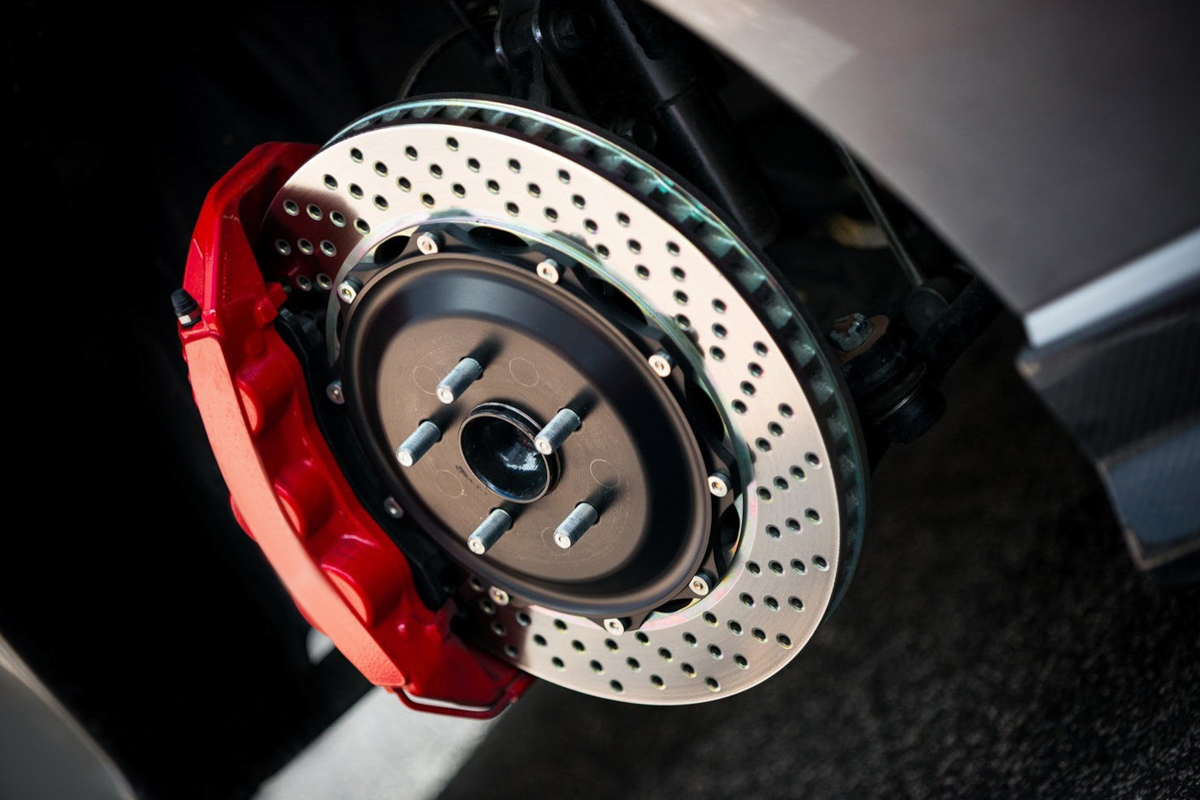
Visual inspection of the brake rotors can often reveal clear evidence of problems, even through the spokes of the wheels. Look for dark blueish or purplish spots, often referred to as “hot spots,” on the metal surface. These indicate areas that have been severely overheated, altering the metal’s structure and leading to uneven wear.
Deep circular grooves or heavy scoring marks are also telltale signs of worn or damaged rotors. While worn brake pads can contribute to this, such grooves often accompany uneven pad material deposits that cause disc thickness variation. A healthy brake rotor should have a smooth, shiny, and uniform surface.
Cracks, particularly stress cracks originating around drilled holes or at the edges of the rotor, are a critical warning sign. These can occur due to extreme thermal stress or if the rotor thickness falls below the manufacturer’s minimum specifications. Any visible cracks necessitate immediate rotor replacement, as they indicate a severe compromise in structural integrity and a high risk of catastrophic failure.
How to Accurately Diagnose Warped Brake Rotors
Accurate diagnosis of brake rotor issues goes beyond visual inspection and relies on precise measurements. Professional technicians utilize specialized tools to quantify the extent of disc thickness variation (DTV) and lateral runout (LRO), which are the technical terms for what drivers commonly perceive as “warping.”
To measure lateral runout, the rotor is mounted securely, and a dial indicator is used. This precision instrument is fixed to a stationary point on the suspension (e.g., steering knuckle) with its plunger contacting the rotor’s friction surface at a 90-degree angle, approximately 10-13 mm (0.4-0.5 inches) from the outer edge. The rotor is then slowly rotated a full 360 degrees, and the dial indicator’s needle movements are observed. The difference between the highest and lowest readings determines the lateral runout.
Most vehicle manufacturers specify a maximum allowable lateral runout, typically ranging from 0.0012 to 0.003 inches (0.03 to 0.076 mm). Even as little as 0.002 inches (0.05 mm) of runout can cause noticeable pulsation. For disc thickness variation, a precision micrometer is used to measure the rotor’s thickness at multiple points (at least 6-10) around its circumference, typically about a quarter-inch (6-8 mm) from the outer edge. The variation between the thinnest and thickest measurements should not exceed 0.0005 to 0.001 inches (0.0127 to 0.025 mm) for optimal performance, though some vehicles might allow up to 0.006 inches (0.15 mm) before requiring replacement. Comparing these measurements against manufacturer specifications, often stamped directly on the rotor or found in service manuals, is crucial.
How to Address Warped Brake Rotors (Repair & Replacement Options)
Once warped brake rotors are diagnosed, there are generally two primary courses of action: resurfacing or replacement. The decision depends heavily on the rotor’s current condition, its remaining thickness, and the severity of the “warping” (DTV or LRO).
Rotor Resurfacing (Machining): If the disc thickness variation or lateral runout is minor, and the rotor has sufficient material remaining, resurfacing on a brake lathe can restore a flat, smooth, and parallel braking surface. During this process, a small amount of metal is carefully shaved off both sides of the rotor. However, it is imperative that after resurfacing, the rotor’s thickness remains above the manufacturer’s specified minimum thickness (MIN TH), which is usually stamped on the rotor itself or listed in the vehicle’s service manual. If resurfacing would cause the rotor to fall below this safety threshold, it must be replaced. Most rotors can only be safely resurfaced once or twice.
Rotor Replacement: In many modern vehicles, brake rotors are designed to be lighter and often do not have enough material to be safely resurfaced without falling below the minimum thickness. If rotors exhibit severe cracks, deep grooves, significant rust, or if their thickness is already below or will be below the minimum after resurfacing, complete replacement is the safest and most recommended solution. Always replace brake rotors in pairs on the same axle (e.g., both front or both rear) to ensure balanced braking performance. Consider higher-quality aftermarket rotors made from specific cast iron alloys with elements like molybdenum or chromium, which enhance thermal stability and wear resistance, especially for vehicles subjected to aggressive braking.
Beyond repair or replacement, preventing recurrence involves addressing the underlying causes. This includes practicing smart driving habits like avoiding aggressive braking and allowing proper cool-down time. Proper brake pad bedding-in procedures after any brake service are also crucial to prevent uneven material transfer. Furthermore, always ensure lug nuts are torqued to manufacturer specifications using a torque wrench, and thoroughly clean hub mating surfaces to prevent lateral runout during installation.
Common Brake Rotor Problems & How to Diagnose Them
Grinding Noise When Braking? Why Your Rotors Might Be Warped
Identifying Common Brake Rotor Problems: Warping, Grooves, and Cracks
| Measurement Type | Diagnostic Tool | Typical OEM Max Tolerance | Impact of Exceeding Tolerance |
|---|---|---|---|
| Lateral Runout (LRO) | Dial Indicator | 0.0012″ – 0.003″ (0.03 – 0.076 mm) | Steering wheel shaking, brake pedal pulsation, causes DTV over time. |
| Disc Thickness Variation (DTV) | Precision Micrometer | 0.0005″ – 0.001″ (0.0127 – 0.025 mm) (Some vehicles up to 0.006″ / 0.15 mm) | Severe brake pedal pulsation, reduced braking efficiency, uneven pad wear. |
| Minimum Thickness (MIN TH) | Micrometer / Caliper | Stamped on rotor or specified in service manual (e.g., 20.4 mm for some rotors) | Reduced heat dissipation, thermal cracks, deformation, increased pedal travel, catastrophic failure risk. |
FAQs About Warped Brake Rotors
Can you really “fix” warped brake rotors, or do they always need to be replaced?
The term “warped” is often a misnomer; rotors typically don’t physically bend or distort like a potato chip under normal braking conditions. Instead, the issue is usually disc thickness variation (DTV) or excessive lateral runout. If these conditions are minor and the rotor still meets the manufacturer’s minimum thickness specification (MIN TH), they can often be “fixed” by resurfacing or machining on a brake lathe. This process shaves off a thin layer of metal to create a smooth, parallel braking surface. However, if the DTV or runout is severe, or if resurfacing would reduce the rotor below its minimum safe thickness, replacement is necessary.
What is the acceptable tolerance for brake rotor runout and thickness variation?
The acceptable tolerance for brake rotor lateral runout (LRO) is extremely tight, typically ranging from 0.0012 to 0.003 inches (0.03 to 0.076 mm), depending on the vehicle manufacturer. For disc thickness variation (DTV), the maximum allowable difference between the thickest and thinnest points on the rotor surface is generally between 0.0005 to 0.001 inches (0.0127 to 0.025 mm) for most applications. Exceeding these precise measurements will result in noticeable brake pedal pulsation and vibrations. Always refer to your vehicle’s specific service manual for exact manufacturer specifications.
How do technicians measure brake rotor runout and thickness variation?
Technicians use specialized tools for accurate diagnosis. Lateral runout is measured with a dial indicator mounted on a stationary part of the suspension, such as the steering knuckle, with its probe contacting the rotor surface. The rotor is then rotated to record the total sweep of the indicator. Disc thickness variation (DTV) is measured using a precision micrometer. Multiple measurements (at least 6-10) are taken around the rotor’s circumference at a consistent distance from the edge, and the greatest difference between any two points indicates the DTV. These measurements are compared against the manufacturer’s precise tolerances to determine if the rotors require service or replacement.