A steady tire pressure light means one or more of your tires is significantly under-inflated. The U.S. standard for tire pressure monitoring (FMVSS No. 138) requires the system to light the warning within 20 minutes once a tire is at least 25 percent below the carmaker’s recommended cold pressure, or below a minimum level set in the standard, whichever is higher. The wording the standard requires in every owner’s manual is: stop and check your tires as soon as possible, and inflate them to the proper pressure. A light that flashes and then stays on points to a fault in the system itself.
What does the tire pressure light mean?
There are two different warnings, and the standard keeps them separate:
- Steady light: low tire pressure. The low tire pressure telltale must stay on as long as a tire is at or below the trigger level and the ignition is on, or until it is reset as the manufacturer instructs. If your car’s telltale shows which tire is low, the standard says each tire in the symbol lights up for the tire that is under-inflated.
- Flashing light: the system has a malfunction. Cars with a combined low-pressure and malfunction light must flash it for 60 to 90 seconds after you switch the ignition on when a malfunction is detected, then keep it on as long as the malfunction exists. This repeats each time you start the car until the cause is fixed. Cars with a separate light show the word “TPMS” for a malfunction.
Mazda’s 2025 MX-5 owner’s manual says the same: its TPMS light flashes if there is a malfunction in the system, and you should contact an authorised dealer.
What should you do when the tire pressure light comes on?
- Stop and check your tires as soon as possible. That is the instruction the standard requires every owner’s manual to give.
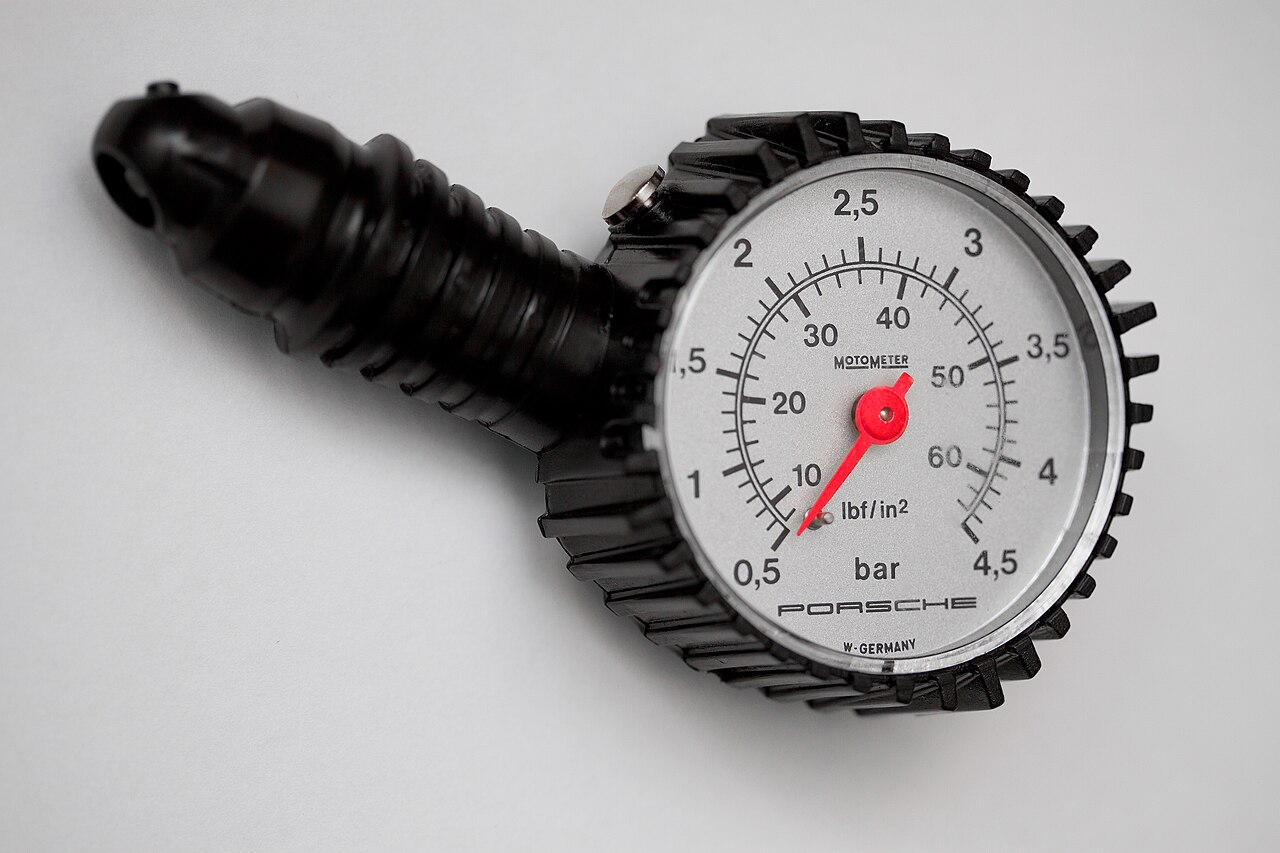
- Measure the pressure with a gauge when the tires are cold, and compare it with the pressure on the vehicle placard or tire inflation label. The standard’s required text says each tire, including the spare if there is one, should be checked monthly when cold and inflated to the pressure the manufacturer recommends. If your car has tires of a different size from the one on the placard, you need to find the right pressure for those tires.
- Inflate to the recommended pressure. Our guide to tire pressure on electric cars explains where to find the figure and how often to check.
- Wait for the light to go out, or reset it if your manual says so. The standard allows manuals to explain how long the light takes to go off once the pressure is corrected, so check yours.
- If it does not go out, or if it flashes, have the system checked.
The required text warns why this matters: driving on a significantly under-inflated tire makes it overheat and can lead to tire failure. Under-inflation also reduces fuel efficiency and tread life, and may affect the vehicle’s handling and stopping ability.
Can you drive with the tire pressure light on?
The standard’s wording says to stop and check as soon as possible. Mazda’s manual says not to drive at high speeds if the TPMS warning light is on or flashing, because brake performance and steering response will be reduced and a sudden braking at high speed could cause an accident; apply the brakes gradually to slow down. It also says not to ignore the light, because continuing to drive can lead to a tire bursting. Mazda’s wording is for its own cars, so check yours.
Why might the light be on when the tires look fine?
- The system only warns at a big drop. The trigger is 25 percent below the recommended cold pressure or a minimum level, so tires can be too low for good wear and economy without lighting the telltale. The standard’s text says the system is not a substitute for proper tire maintenance and that it is the driver’s responsibility to keep the correct pressure even if the light has not come on. As an example of the arithmetic only: for a recommended 35 psi, 25 percent below is 26.25 psi.
- The system may have a fault. When the malfunction light is on, the standard’s text says the system may not be able to detect or signal low pressure as intended.
- New tires or wheels. The text says malfunctions can happen for various reasons, including fitting replacement or alternate tires or wheels that stop the TPMS from working properly, and that you should always check the TPMS telltale after replacing a tire or wheel.
Frequently asked questions
Why is my tire pressure light flashing and then staying on?
On a car with a combined light, that sequence means the system has detected a malfunction. The standard says the light flashes for about a minute at start-up and then stays on while the fault exists.
How low does a tire have to be to trigger the light?
At least 25 percent below the manufacturer’s recommended cold pressure, or below a minimum level in the standard, whichever is higher. The light must come on within 20 minutes of reaching that level.
Do I still need to check my tires with a gauge?
Yes. The standard’s text says to check each tire monthly when cold, and that the system is not a substitute for that.
Can I ignore the light if the tires look fine?
Both sources say not to. A tire can look normal while significantly under-inflated, and Mazda’s manual says ignoring the light is dangerous.
Sources: 49 CFR 571.138, FMVSS No. 138 “Tire pressure monitoring systems” (eCFR, current text read 13 November 2026); Mazda, 2025 MX-5 owner’s manual, “Tire Pressure Monitoring System (TPMS) Warning Light (Flashing)” (read 13 November 2026). Mazda’s page covers one model: yours may differ.