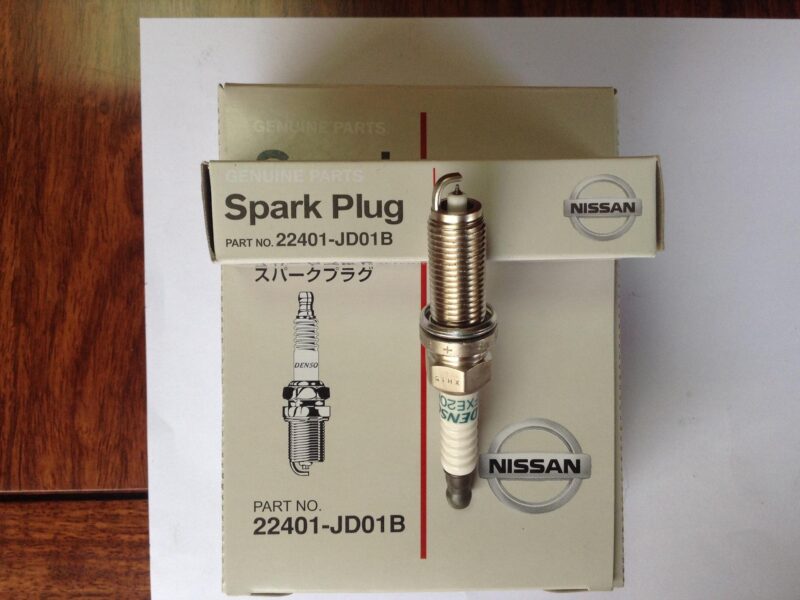
Understanding the appropriate spark plug replacement interval is crucial for maintaining your vehicle’s peak performance, optimal fuel efficiency, and overall engine health. While typical guidelines range from every 30,000 to 100,000 miles (approximately 48,000 to 160,000 kilometers), the precise timing for replacement is highly dependent on several critical factors, including the specific spark plug material, your vehicle’s manufacturer recommendations, and prevailing driving conditions. Neglecting this vital maintenance can lead to a cascade of performance issues, significantly impacting fuel economy and potentially causing severe damage to other intricate engine components. Proactive adherence to recommended schedules and keen observation for early warning signs are paramount for ensuring vehicle longevity and avoiding costly repairs.
What Determines Optimal Spark Plug Replacement Intervals?
The longevity of spark plugs is not a universal constant; it is intricately linked to their construction materials, specific vehicle engineering, and the environment in which the vehicle operates. Modern advancements in spark plug technology have led to significant variations in their design and expected lifespan. For instance, traditional copper spark plugs, while highly conductive, possess softer electrodes that erode more rapidly. Consequently, they typically require replacement every 20,000 to 30,000 miles (approximately 32,000 to 48,000 kilometers).
In contrast, spark plugs manufactured with precious metals such as platinum and iridium offer substantially extended service intervals due to their superior durability and resistance to wear. Single platinum spark plugs, featuring a platinum disc welded onto the center electrode, can endure for approximately 60,000 miles (around 96,000 kilometers). Double platinum variants, which include platinum on both the center and ground electrodes, are engineered for even greater resilience, often lasting between 60,000 and 80,000 miles (approximately 96,000 to 128,000 kilometers), particularly in distributor-less ignition systems (DIS) where plugs fire in both directions.
Iridium spark plugs represent the pinnacle of spark plug technology in terms of longevity and performance. With an ultra-fine iridium center electrode, typically 0.4–0.6 mm in diameter, they provide a highly concentrated spark discharge, leading to more complete combustion and remarkable durability. These can often achieve 75,000 to 100,000+ miles (120,000 to 160,000+ kilometers) in naturally aspirated engines, with some high-end Bosch or NGK Laser Iridium plugs pushing towards 120,000 miles. However, for turbocharged applications, which impose increased thermal and pressure stress, replacement might be recommended around 60,000 miles or six years.
How Do Vehicle Manufacturers’ Recommendations Influence Replacement Intervals?
Automotive manufacturers invest significant research and development into determining the optimal maintenance schedule for each specific engine design. These recommendations, detailed in the vehicle’s owner’s manual, are tailored to factors like engine configuration, fuel delivery system (e.g., port injection vs. direct injection), and the spark plug type factory-installed. For example, a 2018 Honda Civic equipped with iridium spark plugs may have a recommended interval of 100,000 miles, reflecting the advanced design of both the engine and its ignition components.
Conversely, an older model Ford F-150 that initially came with copper spark plugs might require replacement every 30,000 miles. These precise guidelines are crucial because deviating from the specified spark plug type or replacement schedule can compromise engine efficiency and potentially void warranties. Many contemporary vehicles, including various Chevrolet models, integrate maintenance tracking into their Driver Information Centers, making it straightforward for owners to adhere to scheduled service. Consulting the owner’s manual remains the most authoritative source for accurate spark plug maintenance intervals for your specific make and model.
Beyond the primary interval, manufacturers may also suggest different replacement frequencies for vehicles operating under “severe duty” conditions. These conditions, which include frequent short trips, extensive idling, heavy towing, or consistent stop-and-go city traffic, place additional stress on spark plugs and can accelerate electrode wear. In such scenarios, even premium iridium or platinum plugs might require earlier replacement, sometimes by 15-20% of the standard interval, to prevent premature degradation and maintain optimal engine function.
What Are the Critical Consequences of Ignoring Spark Plug Replacement?
Neglecting the recommended spark plug replacement interval can trigger a cascade of detrimental effects on your vehicle’s operational integrity and your financial outlay. One of the most immediate and impactful consequences is a significant reduction in fuel economy. Worn spark plugs struggle to produce a consistent, powerful spark, leading to incomplete combustion of the air-fuel mixture within the cylinders. This inefficiency means the engine must consume more fuel to generate the same amount of power, with studies indicating a potential drop in fuel economy by as much as 30% if spark plugs are severely degraded.
Furthermore, severely worn or fouled spark plugs are a primary cause of engine misfires, which manifest as rough idling, noticeable vibrations, or a sudden loss of engine power, particularly during acceleration. Each misfire represents unburnt fuel being expelled into the exhaust system, which can severely damage the catalytic converter – a crucial and expensive emissions control component. Replacing a catalytic converter can cost thousands of dollars, dwarfing the relatively modest expense of a timely spark plug replacement.
Beyond fuel inefficiency and catalytic converter damage, prolonged neglect of spark plug maintenance can lead to increased harmful exhaust emissions, poor acceleration, and even difficulty starting the vehicle, especially in colder temperatures. The added strain on the ignition system, including ignition coils, to compensate for failing plugs can also lead to premature failure of these components, incurring additional repair costs. Adhering to the manufacturer’s recommended service schedule is thus a critical preventive measure that safeguards your engine’s health, maintains its performance characteristics, and mitigates the risk of far more expensive mechanical failures.
How to Accurately Assess Spark Plug Condition?
Proactive monitoring of spark plug condition is paramount, extending beyond simply adhering to mileage-based replacement schedules. Regular visual inspections can reveal critical insights into their operational status and the overall health of your engine. When removing a spark plug for inspection, meticulously observe the firing end, which includes the center and ground electrodes, as well as the ceramic insulator tip. A healthy spark plug typically exhibits light tan or grayish-brown deposits on its electrodes and insulator, indicating optimal combustion and proper heat range.
Conversely, signs of wear or fouling demand immediate attention. Black, dry, sooty deposits often indicate a carbon-fouled plug, frequently caused by an overly rich fuel-air mixture, prolonged idling, or a dirty air filter. Oily deposits, appearing as black and wet, suggest oil leakage into the combustion chamber, possibly due to worn piston rings or valve guides. Furthermore, blisters on the insulator tip, melted electrodes, or white deposits can signal an overheated spark plug, potentially stemming from pre-ignition issues or a malfunctioning cooling system. Any physical damage, such as a cracked porcelain insulator, necessitates immediate replacement to prevent further engine damage.
For a more technical assessment, diagnostic tools can provide precise data beyond visual cues. A multimeter can be used to test the spark plug’s resistance, with a properly functioning plug typically exhibiting a reading between 4,000 to 8,000 ohms, though manufacturer specifications should always be consulted. Spark plug testers, including inline spark testers or dual-hole bench testers, can visually evaluate spark strength and consistency under simulated engine conditions. A robust, bright blue spark indicates a healthy ignition, while a weak, flickering, or absent spark signals an issue with the plug or the ignition system itself. Utilizing these tools allows for early identification of problems, preventing secondary damage to ignition coils or other engine components and potentially saving significant repair costs.
Understanding Spark Plug Types and Their Specific Lifespans
The material composition of a spark plug’s electrodes fundamentally dictates its performance characteristics and, crucially, its expected replacement interval. Different materials offer varying degrees of conductivity, heat resistance, and erosion resistance, directly influencing how long a spark plug can reliably perform its function of igniting the air-fuel mixture in the combustion chamber. Selecting the correct spark plug type for your vehicle, as specified by the manufacturer, is essential to ensure optimal engine operation and longevity.
Copper Core Spark Plugs: The Traditional Choice
Copper spark plugs, often featuring a nickel alloy outer electrode, are the oldest and most traditional type available. Their primary advantage lies in copper’s excellent electrical conductivity, which ensures a strong spark. However, copper is a relatively soft metal, making its electrodes susceptible to rapid erosion under the intense heat and pressure of combustion. This wear leads to an increased gap over time, requiring higher voltage from the ignition system to fire consistently. Due to this faster wear rate, copper spark plugs typically have the shortest lifespan, necessitating replacement every 20,000 to 30,000 miles (approximately 32,000 to 48,000 kilometers). They are commonly found in older vehicles and some high-performance applications where maximum spark energy is prioritized over longevity.
Platinum Spark Plugs: Enhanced Durability
Platinum spark plugs marked a significant improvement in durability over copper. They feature a platinum disc welded onto the center electrode, which is considerably harder and more resistant to erosion and corrosion than copper or nickel. This enhanced durability allows platinum plugs to maintain a more stable spark gap over a longer period, reducing the strain on the ignition coils. Single platinum spark plugs generally last between 50,000 to 60,000 miles (approximately 80,000 to 96,000 kilometers), while double platinum designs, which include platinum on both the center and ground electrodes, can extend this lifespan to 60,000 to 80,000 miles (around 96,000 to 128,000 kilometers). They are often specified for vehicles with distributor-less ignition systems (DIS) that fire the plugs in both directions, making double platinum ideal due to its dual electrode protection.
Iridium Spark Plugs: The Modern Standard for Longevity
Iridium spark plugs are currently considered the “gold standard” for automotive ignition systems, primarily due to iridium being one of the hardest and most corrosion-resistant metals on Earth. The extremely fine-wire center electrode (typically 0.4-0.6 mm) concentrates the electrical field, requiring less voltage to generate a spark and providing superior ignitability and more complete combustion. This design significantly minimizes electrode wear, leading to exceptional longevity. Standard iridium plugs commonly achieve a lifespan of 75,000 to 100,000 miles (120,000 to 160,000 kilometers), with some premium or “long-life” OEM iridium plugs, such as NGK Laser Iridium or Denso Long-Life Iridium, designed to last up to 120,000 miles. Iridium plugs are the predominant choice for most modern vehicles, especially those with advanced engine technologies like direct injection and turbocharging, where consistent, high-energy sparks are critical.
Ruthenium Spark Plugs: An Emerging Technology
A newer entrant into the spark plug market, ruthenium electrodes offer ignitability and wear resistance that rivals or even surpasses iridium at a potentially competitive cost. Ruthenium spark plugs are gaining adoption in high-performance and turbocharged applications, with manufacturers reporting service lives in the 80,000 to 120,000-mile range in controlled testing. Their design often incorporates unique multi-ground electrode arrangements to further improve ignition reliability under high cylinder pressure conditions. As technology progresses, ruthenium may become a more common original equipment (OE) choice for future engine designs.
Comparative Spark Plug Replacement Intervals by Material and Application
The table below provides a detailed overview of typical spark plug replacement intervals, categorized by their primary electrode material and considering common vehicle applications. This comparison highlights the significant differences in longevity and cost-effectiveness across various spark plug types.
| Spark Plug Type | Electrode Material | Typical Replacement Interval (Miles) | Typical Replacement Interval (Kilometers) | Key Characteristics |
|---|---|---|---|---|
| Copper Core | Copper/Nickel Alloy | 20,000 – 30,000 | 32,000 – 48,000 | Excellent conductivity, lowest cost, fastest wear. Common in older engines and some high-performance models. |
| Single Platinum | Platinum-tipped center electrode | 50,000 – 60,000 | 80,000 – 96,000 | Improved durability over copper, good balance of cost and lifespan. Often found in mid-2000s vehicles. |
| Double Platinum | Platinum on center and ground electrodes | 60,000 – 80,000 | 96,000 – 128,000 | Enhanced durability for DIS engines, better resistance to wear on both electrodes. |
| Iridium | Iridium-tipped fine-wire center electrode | 75,000 – 100,000+ | 120,000 – 160,000+ | Highest durability, superior ignitability, longest lifespan. Standard in most modern vehicles, including direct-injection and turbocharged engines. |
| Double Iridium (OE Long Life) | Iridium on center and ground electrodes | 80,000 – 120,000 | 130,000 – 190,000 | Maximum longevity, often exceeding 100,000 miles, specifically designed to meet or exceed OEM service intervals for modern engines. |
| Ruthenium | Ruthenium-tipped electrodes | 80,000 – 120,000 | 130,000 – 190,000 | Emerging technology, offers wear resistance comparable to or better than iridium, gaining traction in high-performance applications. |
Step-by-Step Technical Procedure for Spark Plug Replacement
While the overall DIY Guide: How to Safely Replace Your Car’s Spark Plugs provides a comprehensive overview, understanding the precise technical steps is essential for a successful replacement and to prevent potential engine damage. Before commencing, ensure the engine is cool to the touch to prevent stripping threads in aluminum cylinder heads and to avoid burns. Gather the necessary tools, which typically include a spark plug socket set, a ratchet, a torque wrench, a spark plug gap gauge, dielectric grease, anti-seize compound, and potentially a magnetic pickup tool.
Begin by locating the spark plugs, which are usually found on top of the engine, often beneath ignition coils or spark plug wires. On many vehicles, a plastic engine cover may need to be carefully removed. Disconnect one ignition coil or spark plug wire at a time to avoid mixing up their order, which can lead to severe engine misfires. Use compressed air to blow away any debris around the base of the spark plug to prevent contaminants from entering the combustion chamber when the plug is removed. Carefully remove the old spark plug using a spark plug socket and ratchet, applying steady pressure. Inspect the removed plug for any signs of wear, fouling, or damage, as detailed in the “How to Assess Spark Plug Condition” section.
Before installing the new spark plug, verify the electrode gap using a spark plug gap gauge, adjusting it as necessary to match your vehicle’s manufacturer specifications. This precise gapping is crucial for optimal spark performance. Apply a thin layer of anti-seize compound to the threads of the new spark plug, especially when installing into aluminum cylinder heads, to prevent seizing over time and facilitate easier future removal. Apply dielectric grease inside the boot of the ignition coil or spark plug wire to protect against moisture and ensure good electrical contact. Thread the new spark plug into the cylinder head by hand first to prevent cross-threading, then tighten it to the manufacturer’s recommended torque specification using a torque wrench. Over-tightening can damage cylinder head threads, while under-tightening can lead to blow-by and poor heat transfer. Reconnect the ignition coil or spark plug wire, ensuring it clicks securely into place. Repeat this systematic process for each remaining spark plug, then start the engine and listen for smooth idling and consistent performance.
FAQs
How do I know if my spark plugs need to be replaced outside of the recommended interval?
Beyond the manufacturer’s specified mileage, several distinct symptoms indicate that your spark plugs may be failing and require prompt replacement. The most common indicators include a noticeable decrease in engine performance, often characterized by sluggish acceleration or a general lack of power, particularly when climbing hills or attempting to merge onto a highway. You might also experience engine misfires, which manifest as a sudden jerk, hesitation, or stuttering sensation during driving, or a “rough idle” where the engine shakes or vibrates erratically when the vehicle is stationary.
Additionally, a significant drop in fuel economy, where your vehicle consumes more gasoline than usual, is a clear sign that spark plugs are no longer efficiently igniting the air-fuel mixture. Difficulty starting the engine, especially in cold weather, can also point to weak or fouled spark plugs that struggle to generate the necessary spark for ignition. If your check engine light illuminates or, critically, flashes, it could be signaling misfires that demand immediate attention to prevent severe damage to costly components like the catalytic converter. Regular visual inspection of the spark plugs for discoloration, heavy deposits, or eroded electrodes can provide further confirmation, as outlined in our detailed guide on Symptoms of Bad Spark Plugs: When to Replace Them for Peak Performance.
Can I perform a spark plug replacement myself, or is professional mechanic service advisable?
Replacing spark plugs can certainly be undertaken as a do-it-yourself (DIY) project for individuals with a basic understanding of automotive mechanics and access to the correct tools. The procedure generally involves simple steps like disconnecting ignition components, carefully removing old plugs, gapping new ones to specification, and torquing them correctly during installation. Our comprehensive DIY Guide: How to Safely Replace Your Car’s Spark Plugs provides a detailed, step-by-step approach to ensure safety and proper execution. Tools such as a spark plug socket, torque wrench, and gap gauge are readily available and relatively inexpensive.
However, for certain vehicle configurations, spark plug access can be challenging, requiring the removal of intake manifolds or other engine components, which increases the complexity and risk. In modern engines, improper installation, such as cross-threading or incorrect torque, can lead to severe and costly damage to the cylinder head threads or spark plug itself. Moreover, if you are unsure about diagnosing the root cause of engine performance issues, a professional mechanic can accurately identify whether failing spark plugs are indeed the problem or if other components, such as ignition coils or fuel injectors, are at fault. For intricate engine designs or if you lack confidence in your mechanical skills, entrusting the task to a certified technician ensures precise diagnosis, correct part selection, and expert installation, typically costing between $100 to $250 including labor.
What are the long-term ramifications if I disregard the prescribed spark plug replacement schedule?
Ignoring the manufacturer’s recommended spark plug replacement schedule can lead to a series of escalating and expensive problems for your vehicle. Initially, you will likely observe a noticeable reduction in fuel economy, with your vehicle consuming up to 30% more fuel than efficiently, directly increasing your operational costs. This inefficiency stems from the worn spark plugs’ inability to produce a consistent and robust spark, leading to incomplete combustion within the engine cylinders.
More critically, prolonged use of degraded spark plugs causes repeated engine misfires. These misfires introduce unburnt fuel into the exhaust system, which can severely damage the catalytic converter, an essential component for reducing harmful emissions. Replacing a catalytic converter is one of the most significant automotive repair expenses, often costing thousands of dollars, far exceeding the preventative cost of spark plug replacement. Furthermore, the increased electrical stress placed on ignition coils due to wider spark plug gaps can lead to premature failure of these components, adding to repair bills. Ultimately, ignoring the spark plug replacement interval can result in reduced engine power, rough running, increased emissions, and in severe cases, extensive engine damage necessitating major overhauls, underscoring the importance of proactive maintenance.
How frequently should I visually inspect my spark plugs, even if they haven’t reached their full replacement interval?
While spark plug replacement intervals provide a general guideline, regular visual inspections are a proactive measure that can offer early insights into both the spark plugs’ condition and the overall health of your engine. It is generally advisable to perform a visual check of your spark plugs at least once a year or every 10,000 to 15,000 miles (approximately 16,000 to 24,000 kilometers), even if your specific plug type (e.g., iridium) is rated for 75,000 to 100,000 miles. This practice aligns with the comprehensive approach to maintenance detailed in our Ultimate Maintenance Interval Guide.
These inspections allow you to identify premature wear, such as excessive electrode erosion, or signs of fouling like carbon deposits, oil contamination, or overheating indications. Catching these issues early can prevent them from escalating into more significant engine problems. For example, carbon fouling can suggest an overly rich fuel mixture, while oil fouling might point to internal engine wear, such as compromised piston rings. Addressing these underlying issues promptly, before they cause extensive damage, can save considerable time and money in the long run. Even if the spark plugs appear to be in good condition, routine inspection ensures their proper function and contributes to consistent engine performance and optimal fuel efficiency.