P0300 means the engine computer detected misfires spread across several cylinders. A steady check engine light gives you time to diagnose it; a flashing light means a severe misfire that can overheat the catalytic converter, so stop driving. Check the spark plugs and ignition coils first, then vacuum leaks, fuel pressure and sensors.
What does code P0300 mean?
P0300 is a generic OBD-II code for a random or multiple-cylinder misfire: the fuel and air in a cylinder are not burning properly.
Samarins explains how the computer sees it: a misfiring cylinder makes the crankshaft slow down for an instant, and if that repeats for a set time the computer stores the code and lights the check engine light.
A code for one cylinder points to that cylinder (P0301 is cylinder 1, P0302 is cylinder 2). P0300 means the misfires move around or involve several.
What are the symptoms of P0300?
- Rough idle: the engine shakes when stopped, and you can feel it through the steering wheel.
- Hesitation, jerking and loss of power when you accelerate.
- Poor fuel economy and hard starting, which Haynes ties to incomplete combustion.
- A different smell from the exhaust; Haynes says unburned fuel.
Both sources say the light may stay on or flash. See what a flashing check engine light means.
Can you drive with a P0300 code?
With a steady light, Haynes says to drive carefully and only a short distance to a garage. With a flashing light, it says the misfire is severe and continuous: stop and get the car checked.
Samarins gives the reason: unburned gasoline can overheat and melt the catalytic converter, an expensive emission part. It adds that manufacturers differ, with some advising not to drive at all and others allowing very moderate driving until the car is checked. Your owner’s manual decides.
What causes P0300?
An engine needs spark, air, fuel and compression, and P0300 means one of them is failing across several cylinders. The sources agree on the groups but rank the first cause differently, so we show both:
| Group | Typical causes | What the sources say |
|---|---|---|
| Ignition | Worn or fouled spark plugs, failed ignition coils, damaged plug leads, water in the ignition after washing the engine bay | Haynes: worn or wrongly gapped plugs are the most common cause. Samarins: a failed on-plug ignition coil |
| Fuel delivery | Weak pump, clogged filter, faulty or clogged injectors, low fuel pressure | Both list them |
| Air and vacuum | Cracked vacuum hoses, leaking intake gasket, broken PCV hose, stuck-open EGR or purge valve, carbon build-up on direct-injection engines | Samarins: vacuum leaks and stuck valves cause misfires mostly at idle that fade at higher rpm |
| Sensors and software | Faulty airflow, crankshaft or camshaft sensor; engine computer software | Haynes: check for a manufacturer update before replacing parts |
| Mechanical | Stretched timing chain or belt, wrong valve timing, worn valvetrain, low compression, head gasket leak | Both list them after the cheaper checks |
See when to change spark plugs and bad spark plug symptoms.
What does the pattern of the misfire tell you?
Samarins describes patterns that narrow the search. We pass them on as that site’s guidance, not as a rule for every engine:
- Misfire only at idle, gone at higher rpm: look at vacuum leaks and the EGR and purge valves.
- Misfire only on a cold start: on some older Honda engines, valves out of adjustment are a cause.
- Started after a timing belt or chain job: check that the timing was set correctly first.
- Started after washing the engine or driving through deep water: moisture in the ignition parts can short them out.
- Appears with P0171, P0101, P0102, P0420 or P0401: diagnose those codes first, because the random misfire often follows from them.
How do you diagnose P0300?
Haynes says to work from the cheapest, easiest check to the most complex and to look for a shared cause, because several cylinders rarely fail at the same moment. Samarins adds two practical tests, the coil swap and the fuel-trim reading:
- Scan and record: read P0300 and any P030X codes, and note the freeze-frame data and misfire counters.
- Visual check: cracked vacuum hoses, loose connectors, damaged plug leads, signs of arcing on a coil.
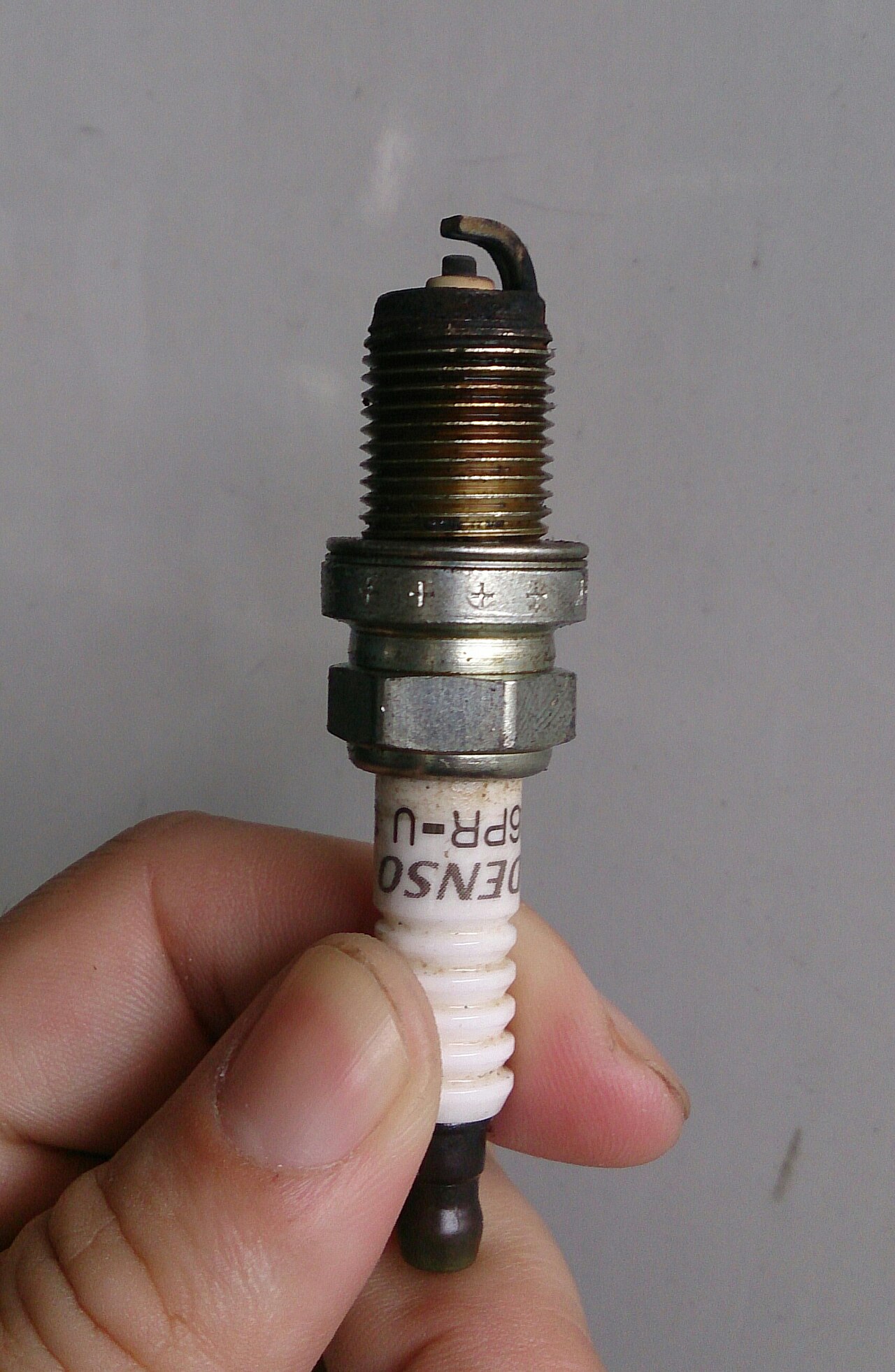
- Check the spark plugs for wear, fouling and the correct gap.
- Swap coils between cylinders. If the misfire moves with the coil, the coil is at fault; if it stays on the same cylinder, it is not. The same swap works for an injector.
- Read the fuel trims with a scan tool. Samarins says a bad airflow sensor often makes the engine run lean and cause a random misfire.
- Test fuel pressure, look for vacuum leaks, then do a compression test to rule out mechanical faults.
Haynes says to clear the code only after the repair, because clearing it first wipes the freeze-frame data. Samarins says the code clears itself after some driving once the fault is fixed.
Also look up manufacturer service bulletins. Samarins lists examples where misfire codes traced to a known ignition-coil or spark-plug fault, such as Honda bulletin 19-038 (2016-2018 Civic 1.5L) and Hyundai bulletin 20-FL-001H (2017 Elantra 2.0L).
How can you prevent misfires?
Haynes advises replacing plugs on schedule, inspecting vacuum hoses for cracks, keeping the oil topped up (very low or old oil can disturb valve timing on some engines) and looking after the battery and alternator, because weak voltage weakens the spark.
Samarins notes that worn plugs need more voltage to spark, which strains the coils; if a coil has failed and the plugs are old, replacing all the plugs is sensible. See how to test a car battery.
Frequently asked questions
Can I drive with a P0300 code?
With a steady light, carefully and only a short distance to a garage. With a flashing light, stop and arrange recovery, according to Haynes. Check your manual, because Samarins says manufacturers differ.
Does P0300 mean bad spark plugs?
Not always. Haynes names worn plugs as the most common cause; Samarins names a failed ignition coil. Check both, along with the cheap vacuum and wiring faults.
What is the difference between P0300 and P0301?
P0301 means cylinder 1 is misfiring; P0300 means misfires are random or on several cylinders, per Samarins.
Will P0300 damage the catalytic converter?
It can. Samarins says unburned gasoline can overheat and melt it, which is why a flashing light means stop driving.
Sources
- Haynes (UK), “How to fix fault code P0300” (June 2026).
- Samarins.com, “P0300-P0308 Cylinder Misfire Detected” (page updated 17 July 2021; an independent site, not a manufacturer).
We give no repair prices and no safe driving distance, because neither source gives one we could verify for U.S. cars.